Food Security and Women’s Unpaid Care in Post-Disaster Zimbabwe
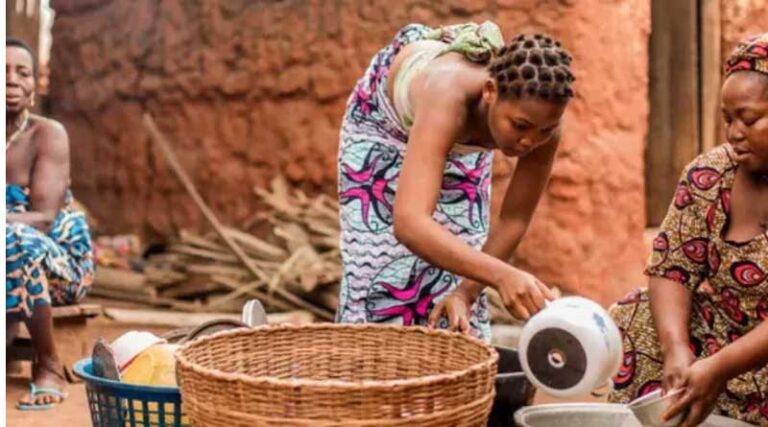
24 December 2025, Zimbabwe: This exchange from the CGIAR Climate Security team’s fieldwork in Ward 14, Chimanimani District, captures something that statistics alone cannot: the relentless reality facing rural women who shoulder both climate impacts and invisible care burdens.
In 2019, Cyclone Idai struck Zimbabwe, Mozambique, and Malawi, triggering floods and landslides that affected an estimated 270,000 people. The impacts of this disaster were deeply gendered, with women finding themselves having to walk longer distances to collect water and firewood. They compensated for disrupted food and water systems, and absorbed additional unpaid care responsibilities within their households.
For many families, these pressures did not end with the cyclone. Instead, they marked the beginning of a longer struggle shaped by climate change, food insecurity, and persistent care burdens.
Since Cyclone Idai, households in Chimanimani have continued to feel the effects of climate change on food and water security. Securing food, water, and energy now takes more time and effort, and this work falls largely on women and girls. Yet this uneven distribution of care and domestic labour is often accepted as normal, even as it places enormous strain on women’s time, health, and livelihoods.
In this blog, we explore the invisibility of unpaid care and domestic work through the experiences of women in Chimanimani District Ward 14, where we researched the links between climate change and security in post-disaster contexts.
We conducted focus group discussions with both displaced and host women, using a participatory approach to map their seasonal activities. We asked the women to share their timelines; the agricultural work, the domestic responsibilities and the caregiving that structures their days and seasons. What emerged was a seasonal calendar that makes visible what is so often invisible.
Climate Change and Care Work
Globally, it is estimated that women and girls spend more than 2.5 times as much time on unpaid care work as men and boys. This work; cooking, cleaning, fetching water, caring for children and elders, forms the backbone of family and community survival. Yet it remains largely unrecognized in economic calculations and policy decisions despite its central role in sustaining rural livelihoods.
These patterns are not accidental. In many contexts, particularly in the Global South, deeply rooted patriarchal norms continue to position women and girls within the reproductive sphere, assigning responsibility for care and domestic labour based on gender rather than choice.
This gendered division of labour shapes everyday life in rural communities and determines who absorbs additional work when climate shocks disrupt food systems, water access, and household stability.
Evidence from UN Women further underscores this imbalance. Gender assessments consistently show that women carry a disproportionate share of unpaid care work even during periods of crisis, while still being expected to maintain their usual domestic and caregiving responsibilities. In post-disaster settings, this “double burden” intensifies, as women take on additional labour linked to recovery, food provisioning, and care, often without corresponding support or recognition.
In Chimanimani, these global patterns are reflected in local realities. The seasonal calendars co-developed with internally displaced and host-community women reveal how unpaid care work expands and contracts across the year, intersecting with agricultural cycles and climate variability.
More than a tool for mapping farming activities, the calendars make visible the rhythms of women’s labour and the social reproduction dynamics that underpin household survival in climate-affected, rural settings.
What did the seasonal calendar tell us?
The seasonal calendar co-created with women in Ward 14 tells a compelling story of the dual burdens women carry in sustaining their households.
Month by month, agricultural tasks shift; from land preparation in July to planting in August, from weeding in January to harvest in April. But one column remains constant throughout: unpaid care work. Cooking, fetching water, gathering firewood, childcare, washing, feeding the family. Every single month, without rest.
Through this calendar, women’s often invisible contributions to both household survival and community well-being come into view, reminding us that unpaid care work is central to the rural economy. At the same time, the calendar brings into sharp relief the gender inequalities embedded in everyday life in rural households, which are reflected below.
- The invisibility of Women’s Labor: Women’s contributions span both agricultural production and household reproduction, yet this dual role goes largely unrecognized. This invisible labor creates time poverty and takes a toll on women’s physical and mental health.
- Compounding climate pressures: As climate impacts worsen, the time required for unpaid care work increases. Women absorb these shocks through their own labor.
- Underappreciated essential labour: The true cost of women’s essential labour remains unnoticed and undervalued.
- Chronic overwork without relief: The calendar shows no off-season. Women balance productive agricultural tasks with constant domestic responsibilities, leading to exhaustion that compounds over years.
- Entrenched gender inequality: Social expectations require women to fulfill both roles. Those who fail to meet these expectations face community sanctions, making it difficult to challenge the status quo.
- Time poverty: Women have limited availability for personal development, work outside the domestic sphere, education, or leisure activities due to overwhelming care responsibilities.
- Health impacts: Continuous demands adversely affect women’s physical and mental health as they juggle multiple roles without adequate support.
- Cultural and economic barriers: The burden of unpaid care restricts women’s participation in income-generating activities and educational opportunities, perpetuating cycles of poverty and dependency. The International Labour Organization estimates that 708 million women worldwide are outside the labor force due to unpaid care responsibilities, with rural women most affected.
Moving Forward
The women of Chimanimani asked us a question we couldn’t answer: when do they get to rest? The seasonal calendar makes clear that under current conditions, the answer is never.
Climate change is not merely an environmental issue but a social one, shaped by who bears the burden of adaptation. Addressing it requires approaches that recognize the gendered dimensions of vulnerability and labor. It requires seeing the women who hold communities together, and building systems that support rather than exploit their essential work.
Global Agriculture is an independent international media platform covering agri-business, policy, technology, and sustainability. For editorial collaborations, thought leadership, and strategic communications, write to pr@global-agriculture.com