Codex Decisions in 2025: What New Pesticide Reference Material Guidelines Mean for Food Safety
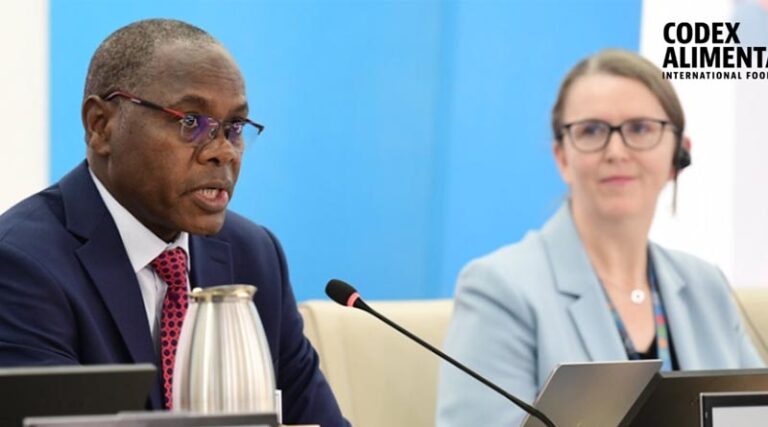
02 January 2026, Rome: At the conclusion of 2025, the Chairperson of the Codex Alimentarius Commission, Allan Azegele (Kenya), sat down with the Code Secretariat to review the outcomes of the 48th Session of the Commission, providing his observations and hopes regarding the future of Codex.
Allan, thanks for your time. Having just chaired your first Commission meeting, what are your initial reflections on the experience?
Chairing my first Codex meeting has been both an honour and a profound responsibility. Guiding discussions that impact food safety and international trade reminds me daily of the trust placed in us by Member countries and consumers worldwide. Balancing diverse perspectives, complex technical issues, and procedural rules can be challenging, yet seeing Members work collaboratively to reach consensus is deeply rewarding. The experience has strengthened my appreciation for the unique role of Codex in protecting consumer health and promoting fair practices in the food trade, and it leaves me inspired to continue fostering inclusiveness, science-based decision-making, and global cooperation.
Tell us something that surprised you about the role – something that you hadn’t anticipated.
Influencing without directing. Unlike when I discharge my responsibilities as the Director of Veterinary Services in Kenya, the role of Chairperson of CAC cannot “decide” outcomes. Success depends entirely on guiding, framing, and facilitating discussions, which can be both empowering and unexpectedly humbling.
Take two or three of the texts adopted CAC48 and cast your thoughts into the future: what will be different in 10 years’ time thanks to the adoption of these texts?
I will focus on two texts that were adopted at CAC48. First of all, CAC48 adopted several updates to the General standard for food additives (GSFA, CXS 192-1995): a comprehensive update of over 500 food additive provisions, including the removal of some outdated additives and the inclusion of new additives where scientifically justified. This will have a long term impact on protection of consumer health by ensuring only safe, evidence-based additives are permitted globally; facilitate fair pratices in international food trade trade by harmonizing additive rules across markets, reducing trade barriers caused by inconsistent national standards; and help regulators and food producers adapt to emerging science and technologies in food formulation.
CAC48 also adopted guidance to improve the quality, stability, and traceability of pesticide Reference Materials (RMs) used in laboratory testing. This will enable laboratories worldwide have access to standardized, high-quality RMs, improving the accuracy of pesticide residue testing; harmonized international trade through consistent testing methods, reducing disputes over residue levels and preventing unnecessary trade barriers; and stronger public health protection through accurate monitoring which helps prevent unsafe pesticide levels from reaching consumers, contributing to safer food supplies globally.
And of all the milestones reached this year, which one stands out as the most significant highlight for you?
The adoption of the Codex Strategic Plan 2026–2031 Monitoring Framework was a key highlight for the year since it translates Codex priorities into measurable action; strengthens scientific integrity and inclusiveness; enhances transparency and accountability; and ensures Codex remains relevant in a rapidly changing global food landscape.
Allan, you’ve been part of the Codex family for over ten years now. With all that experience, is there anything about the way Codex works that you’d change if you had the chance?
Codex stands as a strong and trusted pillar of the global food standards system, built on science, consensus and cooperation. These foundations remain central to our work and to the confidence placed in Codex by Members and stakeholders worldwide. At the same time, the evolving nature of food systems challenges us to continue improving how we work. Greater agility, stronger support for implementation, and more inclusive participation will help ensure that Codex standards remain relevant, practical and widely applied. Clearer communication of our work and its impact can further strengthen trust and understanding. Looking ahead, Codex must remain forward-looking while staying firmly science based. By building on our strengths and embracing thoughtful evolution, we can ensure that Codex continues to protect consumer health and support fair practices in the food trade for years to come.
Talking about changes, CAC will return to a July meeting in 2026 which is in just a few months’ time. What do you think Members will have achieved by the end of the meeting?
There are six committee meetings scheduled before CAC49. It is my expectation that we will be able to among others, adopt some new or revised standards at final steps; advanced work on key emerging issues for science-based risk management; review progress on Codex Strategic Plan 2026-2031; and receive the final financial and budgetary report for the 2024-2025 biennium and discuss budget and resource allocation for upcoming work.
Allan let’s conclude this interview with your end of the year message.
As 2025 comes to a close, I extend my sincere thanks to all Codex Members, Observers, subsidiary body Chairs, Codex Secretariat lead by Sarah Cahill, and FAO and WHO for your dedication and collaboration throughout the year. Together, we achieved important outcomes, including the adoption of new and updated Codex texts that strengthen food safety, support fair trade, and respond to evolving global food systems. The results of the 48th Session of the Codex Alimentarius Commission reflect the power of science-based decision-making, inclusiveness, and consensus.
I thank you for your continued commitment to Codex’s mission and look forward to our shared work in the year ahead to protect consumer health and promote fair practices in the food trade.
Also Read: India’s Rabi Sowing Up by 6.87 Lakh Hectares as of Last Week of December 2025
Global Agriculture is an independent international media platform covering agri-business, policy, technology, and sustainability. For editorial collaborations, thought leadership, and strategic communications, write to pr@global-agriculture.com