National Makhana Board Holds First Meeting; Bihar Institutions to Supply Quality Seeds Under ₹476-Crore Scheme
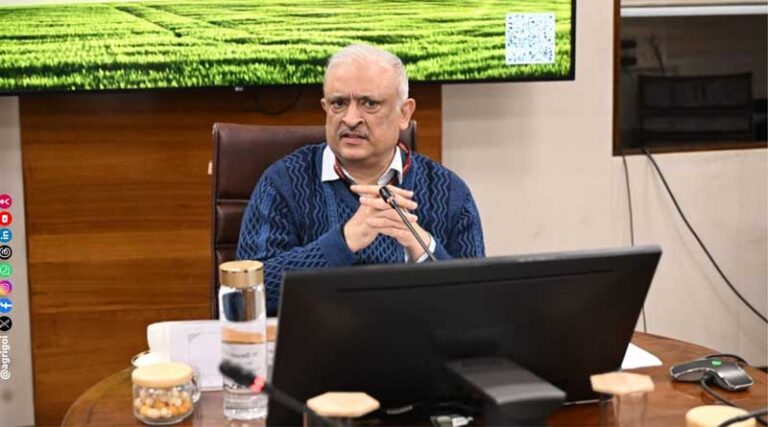
15 December 2025, New Delhi: The National Makhana Board held its first meeting last week at Krishi Bhawan, New Delhi, marking the formal start of the ₹476.03-crore Central Sector Scheme for the holistic development of India’s makhana sector. The meeting, chaired by Dr. Devesh Chaturvedi, Secretary, Department of Agriculture & Farmers Welfare, reviewed Annual Action Plans submitted by states and research institutions and approved budget allocations for key interventions across the value chain.
A major decision of the Board was to consolidate seed requirements of all participating states, with State Agriculture University (SAU) Sabour and Central Agriculture University (CAU) Samastipur, Bihar, designated as the primary suppliers of quality makhana seed for both the current and next year. The Board noted that streamlined seed production will be critical to expanding makhana cultivation in traditional and non-traditional regions.
To strengthen human resource capacity, SAU Sabour, CAU Samastipur, and NRC Makhana, Darbhanga, will conduct ‘training of trainers’ programmes for officials and field personnel from various states. The sessions will focus on modern cultivation practices, improved harvesting and post-harvest management, and emerging technologies in makhana processing.
The Board also highlighted the need for need-based research, development of processing technologies, and creation of infrastructure for grading, drying, popping and packaging. Strengthening these facilities is expected to improve quality, reduce losses, and significantly enhance income opportunities for makhana-growing farmers.
With Annual Action Plans now cleared, states will begin implementing field activities, including farmer training, demonstration of improved practices, and expansion of makhana cultivation into new geographies. The Board emphasised value addition, branding, market linkages and export readiness as priority areas to modernise India’s makhana value chain.
Background
The National Makhana Board was announced in the Union Budget 2025-26 and formally launched by the Prime Minister on 15 September 2025 in Bihar. The Central Sector Scheme, with an outlay of ₹476.03 crore for 2025-26 to 2030-31, aims to strengthen research, innovation, quality seed production, farmer capacity building, processing, value addition, marketing and export promotion.
The first Board meeting has set a coordinated, scientific and market-oriented roadmap for accelerating growth in India’s makhana sector.
FAQ: National Makhana Board’s First Meeting & Seed Supply Plan
1. What is the purpose of the National Makhana Board?
The National Makhana Board has been established to modernise and strengthen the makhana sector through coordinated research, quality seed production, improved cultivation practices, processing infrastructure, value addition, branding, marketing and export promotion.
2. What major decisions were taken in the first Board meeting?
The Board approved state-wise Annual Action Plans, budget allocations, and a roadmap for research, training, infrastructure development and market expansion. It also finalised the institutions responsible for supplying quality makhana seeds.
3. Who will supply makhana seeds to the states?
Quality seed production and supply for the current and next year will be handled by:
- State Agriculture University (SAU), Sabour, Bihar
- Central Agriculture University (CAU), Samastipur, Bihar
4. Why were these Bihar institutions chosen for seed supply?
Bihar is the traditional hub of makhana cultivation and research. SAU Sabour and CAU Samastipur have established expertise in seed development, scientific cultivation practices and varietal improvement, making them suitable for centralized seed production.
5. Which institutions will train state officials and farmers?
Training of trainers will be conducted by:
- State Agriculture University, Sabour
- Central Agriculture University, Samastipur
- NRC Makhana, Darbhanga
They will train state teams on cultivation technologies, harvesting, post-harvest processing and value-chain improvements.
6. What is the financial outlay of the Central Sector Scheme for makhana development?
The scheme has a total allocation of ₹476.03 crore for the period 2025–26 to 2030–31.
7. What areas will the scheme focus on?
Key focus areas include:
- Research and innovation
- Quality seed production
- Improved harvesting and post-harvest practices
- Creation of infrastructure for grading, drying, popping and packaging
- Value addition and branding
- Market linkages and export readiness
- Capacity building and training
8. How will farmers benefit from the scheme?
Farmers will gain access to quality seeds, modern cultivation practices, improved processing facilities, better price realization through branding and value addition, and expanded market opportunities including export.
9. Will makhana cultivation expand beyond traditional areas?
Yes. States have been encouraged to promote makhana in both traditional and non-traditional regions, supported by training and research-driven cultivation technologies.
10. What is the significance of this meeting for the sector?
As the first meeting since the Board’s establishment, it sets the foundation for a coordinated, scientific and market-oriented growth path for the makhana value chain across India.
Also Read: DCM Shriram and Bayer Partner to Expand Work Across Agri-Inputs and Value Chains
📢 If You’re in Agriculture, Make Sure the Right People Hear Your Story.
From product launches to strategic announcements, Global Agriculture offers unmatched visibility across international agri-business markets. Connect with us at pr@global-agriculture.com to explore editorial and advertising opportunities that reach the right audience, worldwide.