Northeast Organic Week Ends with Meghalaya’s Vision for 2028
Meghalaya Concludes 1st Northeast India Organic Week and 4th World IFOAM Organic Youth Summit; State Sets Vision for Expanding Organic Agriculture and Global Market Linkages
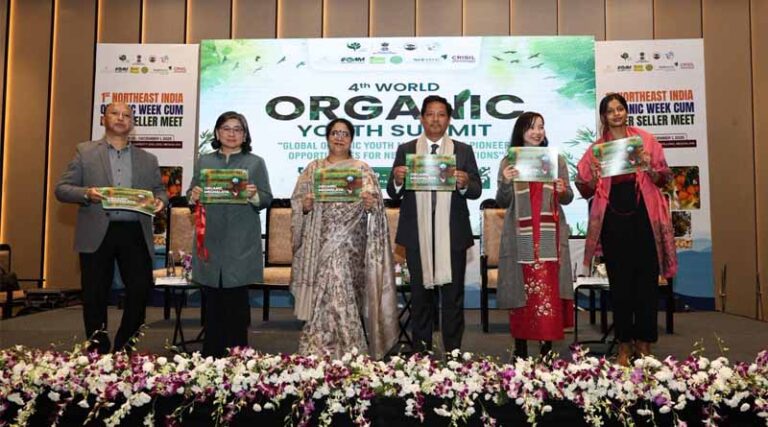
02 December 2025, Shillong: Meghalaya marked the close of the 1st Northeast India Organic Week and the 4th World IFOAM Organic Youth Summit, a joint platform that brought together delegates from 13 countries, policy makers, organic farmers, and youth representatives. The convergence reinforced Meghalaya’s positioning within the global organic sector and outlined the state’s next steps in developing an organised, export-ready organic ecosystem.
Chief Minister Conrad K. Sangma attended the closing ceremony and underlined that the state’s agricultural policies are centred on farmer welfare and long-term sectoral strengthening. He noted that organic farming is embedded in the state’s cultural and traditional practices and reiterated that institutional reforms are being carried out to align with this identity. He cited the expansion of the Shillong airport runway—expected to be completed by 2027—as part of the broader infrastructure plan aimed at improving market access.
The Chief Minister also referred to the upcoming UN International Year of the Woman Farmer and highlighted the rapid expansion of women’s participation in the state’s Self Help Group ecosystem, which has grown from 3–4% in 2018 to 95% in rural areas. He emphasised the potential of linking agriculture and tourism, noting the ongoing scheme to develop 3,000 new homestays with a 75% subsidy to bring economic activity closer to farming communities.
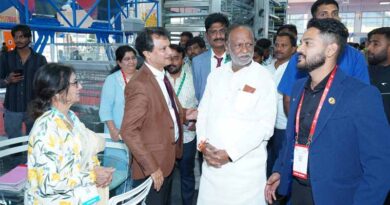
During the ceremony, Conrad K. Sangma launched the Organic Compendium and the MEGNOLIA website, and interacted with farmers and producer groups exhibiting local produce.
APEDA General Manager Vinita Sudhanshu acknowledged Meghalaya’s community-led approach and confirmed plans to facilitate global exposure for two Farmer Producer Organisations from the state by supporting their participation at Gulfood. She said the engagement would help producers understand export requirements and consumer expectations in key importing markets.
IFOAM Asia Executive Director Jennifer Chang noted that Meghalaya’s integrated approach to agriculture, tourism, and community development could serve as a model in Asia. She encouraged continued collaboration and urged the state to take a leading role in promoting the UN International Year of the Woman Farmer.
Earlier in the day, Secretary, Agriculture and Farmers’ Welfare, Isawanda Laloo, detailed the state’s ongoing partnership with APEDA that has enabled the export of more than 50 metric tonnes of premium produce—such as Khasi Mandarin, pineapples, and ginger—to Gulf countries. She outlined the next phase of the organic mission, supported by an estimated investment of Rs 250 crore to strengthen certification, processing, and market linkages, and reaffirmed Meghalaya’s commitment to expanding its presence in global markets.
Representing producer groups, Ibalahun Thangkhiew, CEO of Jirang Organic Agro Farmers Producers Company Ltd., shared the organisation’s journey since its formation in 2017. The group, comprising 433 farmers across 15 villages and 500 hectares, exported its first consignment of Khasi Mandarin to Dubai in 2022 in partnership with APEDA and the Department of Horticulture. She said the initiative demonstrated the potential for small organic producer groups to enter global value chains.
A Malaysian buyer, Miss Selina Gan, engaged during the Chief Minister’s visit, and noted the sweetness of Meghalaya’s pineapples compared with popular commercial varieties.
The final day featured discussions on youth-led policy inputs for organic agriculture, highlighting the need for data-driven methodologies, accessible natural farming solutions, and stronger community education systems. A subsequent plenary session examined ways to strengthen global youth networks working in the organic sector. Delegates from Uzbekistan and Kazakhstan also convened a session on Central Asian organic practices, covering crop rotation, certification and technology adoption.
The event highlighted Meghalaya’s target of certifying 1 lakh hectares of organic land by 2028 under a hub-and-spoke model focused on efficient aggregation and distribution, linking village-level hubs with larger processing facilities.
The summit was organised through a partnership between the Government of Meghalaya, APEDA under the Ministry of Commerce and Industry, Government of India, and IFOAM–Organics Asia. APEDA continues to play a key role in developing market access for Meghalaya’s produce by facilitating direct engagement between farmers and global buyers.
Through the dual summit, Meghalaya reaffirmed its long-standing “organic by tradition” identity and its aim to emerge as a regional leader in climate-resilient organic agriculture while preparing young agripreneurs for future market and environmental challenges.
Also Read: XAG’s New R Series Rover Powers Smart Automation in Specialty Crop Farming
📢 If You’re in Agriculture, Make Sure the Right People Hear Your Story.
From product launches to strategic announcements, Global Agriculture offers unmatched visibility across international agri-business markets. Connect with us at pr@global-agriculture.com to explore editorial and advertising opportunities that reach the right audience, worldwide.