India: Rabi Sowing Picks Up Pace with Wheat, Paddy and Gram Driving Area Expansion
23 December 2025, New Delhi: Ministry of Agriculture & Farmers’ Welfare released the latest Rabi crop area coverage data as on 19 December 2025, offering an early snapshot of how farmers are responding to price signals, weather conditions, and policy cues in the ongoing 2025–26 season.
At 580.70 lakh hectares, total Rabi sowing so far is 8.12 lakh hectares higher than the corresponding period last year, indicating a broadly positive start despite regional weather variability and lingering moisture stress in parts of central and peninsular India. While overall acreage is yet to reach last year’s final tally, the current trend suggests steady farmer confidence, especially in cereals, oilseeds, and select pulses.
Wheat Holds Ground, Rice Shows Seasonal Rise
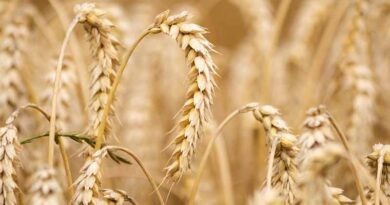
Wheat, the backbone of India’s Rabi season, has been sown across 301.63 lakh hectares, marginally higher than last year’s 300.34 lakh hectares at the same stage. Though still below the normal Rabi area of 312.35 lakh hectares, the early trend suggests wheat acreage may stabilise further as sowing continues in northern states.
Rabi rice, though a smaller component of the season, has registered a notable increase. Area under rice stands at 13.35 lakh hectares, up from 11.52 lakh hectares last year. This rise reflects better water availability in select command areas and farmers leveraging residual soil moisture post-Kharif harvest.
Pulses: Mixed Signals Underneath Overall Growth
Total pulses acreage has reached 126.74 lakh hectares, marking an increase of 3.72 lakh hectares over last year’s corresponding period. However, this growth is unevenly distributed across pulse crops.
Gram (chickpea) continues to anchor the segment, rising sharply to 91.70 lakh hectares, compared to 86.81 lakh hectares last year. In contrast, lentil, urdbean, moongbean, and several minor pulses have either stagnated or declined marginally, indicating farmers’ selective preference for crops with stronger price assurance and lower climatic risk.
Coarse Cereals and Shri Anna: Growth with Internal Shifts
Shri Anna and coarse cereals together have touched 45.66 lakh hectares, slightly higher than last year. Within the segment, maize and barley have expanded, while jowar has seen a contraction.
Maize area has risen to 18.34 lakh hectares, reflecting demand from feed, ethanol, and industrial users. Barley has also shown a solid increase, often benefiting from stable procurement and lower input requirements. On the other hand, jowar acreage has dropped by nearly 1.78 lakh hectares, suggesting continued structural shifts away from traditional coarse cereals in some regions.
Oilseeds Stay Firm on Mustard Strength
Oilseeds remain one of the most stable segments this Rabi season. Total oilseed acreage stands at 93.33 lakh hectares, marginally higher than last year.
Rapeseed and mustard dominate this growth, expanding to 87.80 lakh hectares, an increase of 1.23 lakh hectares. This reflects sustained farmer confidence driven by price support, strong domestic demand, and policy emphasis on edible oil self-reliance. Groundnut and linseed, however, have seen noticeable declines, while minor oilseeds such as safflower and sunflower have posted modest gains.
Rabi Crop Area Coverage (as on 19 December 2025)
Area: Lakh Hectares
| Crop | Normal Rabi Area | Final Rabi Area 2024-25 | Progressive Area Sown 2025-26 | Corresponding Period 2024-25 | Increase / Decrease |
|---|---|---|---|---|---|
| Wheat | 312.35 | 328.04 | 301.63 | 300.34 | +1.29 |
| Rice | 42.93 | 44.73 | 13.35 | 11.52 | +1.83 |
| Pulses (Total) | 140.42 | 134.08 | 126.74 | 123.02 | +3.72 |
| Gram | 100.99 | 91.22 | 91.70 | 86.81 | +4.89 |
| Lentil | 15.13 | 16.99 | 15.76 | 15.83 | -0.08 |
| Fieldpea | 6.50 | – | 7.92 | 8.27 | -0.35 |
| Urdbean | 6.16 | 6.18 | 3.13 | 3.48 | -0.34 |
| Moongbean | 1.41 | 1.36 | 0.42 | 0.43 | -0.01 |
| Shri Anna & Coarse Cereals | 55.33 | 59.05 | 45.66 | 45.05 | +0.61 |
| Jowar | 24.62 | 25.17 | 19.62 | 21.39 | -1.78 |
| Maize | 23.61 | 27.80 | 18.34 | 16.90 | +1.45 |
| Barley | 5.63 | 6.08 | 6.78 | 6.08 | +0.70 |
| Oilseeds (Total) | 86.78 | 93.49 | 93.33 | 92.65 | +0.67 |
| Rapeseed & Mustard | 79.17 | 86.57 | 87.80 | 86.57 | +1.23 |
| Groundnut | 3.69 | 3.37 | 2.36 | 2.83 | -0.47 |
| Linseed | 1.93 | 1.69 | 1.61 | 2.00 | -0.39 |
| Total Crops | 637.81 | 659.39 | 580.70 | 572.59 | +8.12 |
Top Crops Driving Growth and Contraction in Rabi Sowing
Among all Rabi crops, gram (chickpea) has emerged as the strongest gainer this season, with acreage expanding by 4.89 lakh hectares over the corresponding period last year. The sharp rise reflects farmers’ continued confidence in gram, supported by relatively stable prices, manageable input costs, and its resilience under variable moisture conditions. Rabi rice has also recorded a significant increase, with sown area rising by 1.83 lakh hectares, aided by improved water availability in select regions and better utilisation of residual soil moisture. Maize has followed closely, registering an increase of 1.45 lakh hectares, driven by sustained demand from the feed, starch, and ethanol sectors, making it an increasingly attractive option for Rabi cultivation.
On the other hand, certain crops have witnessed a contraction in acreage during the current Rabi season. Jowar has seen the steepest decline, with area reducing by 1.78 lakh hectares, indicating a continued shift away from traditional coarse cereals in favour of more remunerative alternatives. Groundnut acreage has fallen by 0.47 lakh hectares, reflecting competition from mustard and other oilseeds offering better price visibility. Linseed has also recorded a notable decline of 0.39 lakh hectares, suggesting subdued farmer preference amid limited market demand and price realisation challenges.
Global Agriculture is an independent international media platform covering agri-business, policy, technology, and sustainability. For editorial collaborations, thought leadership, and strategic communications, write to pr@global-agriculture.com