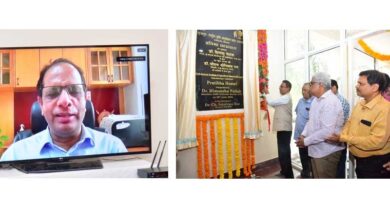
India’s Fertiliser Production Reaches 51 MT, Industry Prepares a New Climate-Smart Management Strategy at FAI 2025
10 December 2025, New Delhi: The Fertiliser Association of India (FAI) is set to host its Annual Seminar 2025 from 10–12 December in New Delhi, marking a defining moment for the country’s transition toward sustainable, technology-driven nutrient management. The event will be inaugurated by Jagat Prakash Nadda, Union Minister for Chemicals & Fertilizers and Health & Family Welfare, as India prepares for a decade of digitised, resilient and climate-smart agriculture.
A Platform Shaping the Future of Nutrient Management
Centered on the theme “Fertiliser Management for a Green Future: Catalyzing Farmers’ Empowerment,” the seminar aims to bring together leaders from government, industry, science, and global organisations. Ms. Anupriya Patel, Hon’ble Minister of State, and Rajat Kumar Mishra, Secretary, Department of Fertilizers, will join experts, technology innovators and farmer representatives to explore emerging pathways in nutrient efficiency, green production technologies and evolving market trends.
Over four technical sessions and sixteen expert-led presentations, delegates from India and abroad will deliberate on policy evolution, sustainable nutrient application, decarbonisation in fertiliser manufacturing and the role of digital tools in transforming farm advisory systems. The discussions come at a time when India is intensifying its focus on soil health, integrated nutrient management and long-term food security.
FAI Chairman and Coromandel International MD & CEO, Mr. S. Sankarasubramanian, noted that the fertiliser sector is undergoing a profound transformation. He emphasized that the Annual Seminar will serve as a comprehensive forum for building a shared roadmap for greener, more efficient nutrient management. Highlighting the industry’s commitment to innovation and resource efficiency, he said the sector will continue working closely with policymakers to achieve Atmanirbharta and ensure India’s agricultural resilience in the coming decades.
A Decade of Growth, Innovation and Rising Demand
India’s fertiliser industry has expanded rapidly, with domestic production rising to 51 million tonnes in 2024–25 from 38 million tonnes a decade earlier. More than 150 companies now contribute to nearly three-fourths of the country’s nutrient requirements, with imports bridging the remaining demand. Despite limited mineral resources, Indian manufacturers have strengthened global competitiveness through improved productivity and adoption of emerging technologies, including renewable-energy-based production and early steps toward green ammonia.
Serving over 140 million farming households, India is now the world’s second-largest consumer of fertilisers, with usage touching nearly 70 million tonnes annually. Growing irrigation coverage, diversification into high-value crops and an evolving focus on soil health continue to influence nutrient demand patterns.
FAI Director General Dr. Suresh Kumar Chaudhari noted that the fertiliser ecosystem is entering a decisive decade, one driven by innovation, sustainability and digital intelligence. He emphasized that integrated nutrient management, climate-resilient products and soil health enhancement will be central pillars of the sector’s future growth, making this year’s seminar a crucial platform for shaping India’s next-generation fertiliser landscape.
Government Push for Balanced and Affordable Nutrition
Integrated Nutrient Management (INM) is emerging as the cornerstone of India’s fertiliser strategy, blending conventional fertilisers with alternate nutrients and smart technologies. This shift aligns closely with major national initiatives such as PM-PRANAM, the Natural Farming Mission, Soil Health Cards, Paramparagat Krishi Vikas Yojana, GOBARdhan, Namo Drone Didi, and the strengthening of Kisan Suvidha Kendras.
Together, these programmes aim to build a balanced, sustainable, farmer-friendly ecosystem that promotes responsible use of plant nutrients.
Recognizing the sector’s role in national food security, the Government continues to ensure year-round supply and affordable prices through robust subsidy mechanisms. In FY 2024–25, fertiliser subsidies crossed ₹1.9 lakh crore under the Urea and Nutrient-Based Subsidy frameworks. At the same time, new capacity creation and strategic bilateral partnerships with resource-rich nations such as Saudi Arabia, Jordan, Morocco, Qatar and Russia are strengthening India’s supply resilience amid global uncertainties.
Also Read: Cargill Chair and CEO Brian Sikes joins Deere & Company’s Board of Directors
📢 If You’re in Agriculture, Make Sure the Right People Hear Your Story.
From product launches to strategic announcements, Global Agriculture offers unmatched visibility across international agri-business markets. Connect with us at pr@global-agriculture.com to explore editorial and advertising opportunities that reach the right audience, worldwide.