A Simple Shift in Pigeonpea Planting Could Lift Yields by 20%: ICRISAT Study
Transplanting pigeonpea shows strong potential to improve farmer incomes and climate resilience in India’s rainfed regions.
29 January 2026, Hyderabad: A new study by the International Crops Research Institute for the Semi-Arid Tropics (ICRISAT) has found that transplanting pigeonpea seedlings instead of direct seeding can increase crop yields by nearly 20 percent, raising productivity from around 2.5 tonnes per hectare to close to 3 tonnes per hectare. The approach also reduces climate risk and shortens crop duration, offering a practical solution for rainfed farming systems.
Unlike conventional direct sowing, transplanting involves raising pigeonpea seedlings in a nursery and then planting healthy young plants in the main field at the optimal time. This method helps establish stronger plants early in the season, improves the use of available soil moisture, and protects crops from early-season droughts and erratic rainfall.
Pigeonpea is largely cultivated under rainfed conditions in India, where average productivity remains low at about 0.8 to 0.9 tonnes per hectare, despite a yield potential of 1.8 to 2.5 tonnes per hectare. According to ICRISAT, this gap is mainly due to farming practices that do not fully support the crop’s biological potential.
The research indicates that transplanting can sustainably bridge this yield gap while enhancing climate resilience. Highlighting the significance of the findings, ICRISAT Director General Dr Himanshu Pathak said transplanting is a traditional practice that has long transformed irrigated crops such as rice. “Our research now shows that it can do the same for crops like pigeonpea, unlocking the crop’s full commercial productivity potential under rainfed conditions,” he said.
Field trials conducted by ICRISAT demonstrated that transplanted pigeonpea consistently outperformed direct-seeded crops across different climatic conditions. The productivity gains were largely driven by stronger and better-developed root systems in transplanted seedlings, which improved nutrient and water uptake and enhanced tolerance to climate variability.
ICRISAT Deputy Director General – Research & Innovation, Dr Stanford Blade, noted that transplanting also shortens the crop duration by approximately 12 to 18 days. Earlier maturity reduces the crop’s exposure to declining soil moisture during the post-rainy season. “The approach is both viable and immediately scalable, allowing farmers to adapt to climate variability with minimal additional inputs or infrastructure. Sometimes, the best solution isn’t a new innovation, it’s returning to basic science,” Dr Blade said.
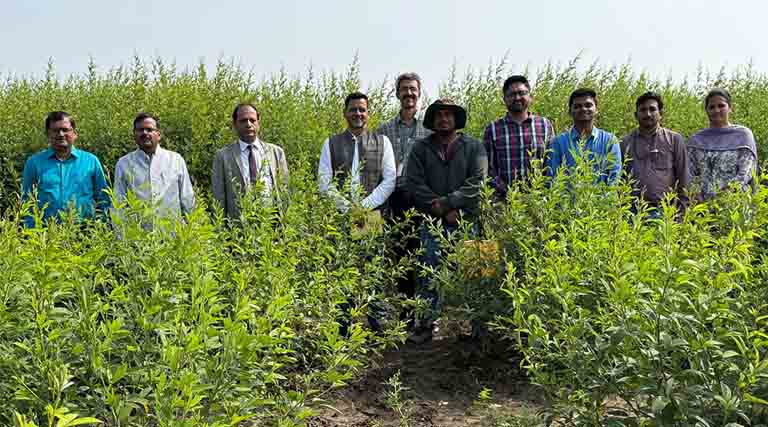
With proven results in the field, the focus has now shifted to scaling up adoption among farmers. To support this, ICRISAT recently convened a multi-stakeholder consultation in Odisha to standardize transplanting protocols and promote climate-resilient technologies for sustainable pigeonpea production.
The consultation brought together representatives from research institutions, extension agencies, government departments, and farmer groups involved in field trials and the scale-up process.
During the inaugural session, Dr Pathak officially released the Seedling Transplanting Protocols for Sustainable Pigeonpea Production in the Semi-Arid Tropics. The protocols mark a key milestone in standardizing transplanting practices and ensuring quality and consistency in field implementation.
Welcoming the initiative, Mr Arun Kumar Behera, representing the Department of Agriculture, Government of Odisha, said, “We are extremely encouraged by the project’s progress, particularly the field trial results and the positive feedback from research partners and farmers.”
The research and field trials were led by ICRISAT scientists Dr Ramesh Singh, Theme Leader – Regenerative Landscapes; Dr Shalander Kumar, Deputy Global Research Program Director – Transforming Agrifood Systems; and Dr Gajanan Sawargaonkar, Principal Scientist – Systems Agronomy.
Also Read: ISARC Director Awarded with Uttar Pradesh’s Highest Civilian Award
Global Agriculture is an independent international media platform covering agri-business, policy, technology, and sustainability. For editorial collaborations, thought leadership, and strategic communications, write to pr@global-agriculture.com