Bringing Next-Generation CIMMYT Wheat Varieties to Farmers
10 February 2026, New Delhi: CIMMYT’s Accelerated Genetic Gains in Wheat (AGG) project is advancing the adoption of heat- and rust-resilient wheat varieties through participatory trials with farmers in Central India, helping strengthen climate resilience, productivity, and nutrition in one of the world’s most important wheat-growing regions.
Led by CIMMYT and jointly funded by the Gates Foundation and the UK Foreign, Commonwealth & Development Office (FCDO), the AGG project delivered substantial global impact between 2020 and 2025. By modernizing wheat breeding pipelines, accelerating varietal turnover, and integrating advanced genomic tools, the project has contributed to improved food and nutrition security across major wheat-producing regions worldwide.
Accelerated Genetic Gains and Economic Impact
Upgraded breeding pipelines and the application of advanced genomic selection tools have significantly improved selection efficiency, enabling the faster development of climate-resilient wheat varieties.
Between 2019 and 2025, these innovations contributed to:
- 7.5% gains in terms of yield potential, and
- 10% gain increase in grain zinc (Zn) concentration, enhancing nutritional quality.
In economic terms, the newly developed wheat varieties could add an estimated 5 million tons of additional wheat if adopted on at least 50% of India’s total 40 million hectares of wheat-growing area. This would translate into approximately USD 1.25 billion in additional farmer income, highlighting the strong economic value of accelerated breeding efforts.
Farmer–Scientist Interaction: Scaling Improved Wheat Lines in India
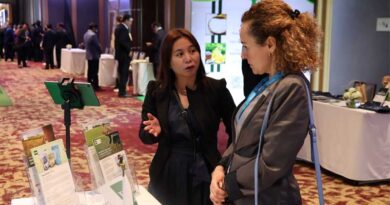
As part of AGG’s scaling activities, a Farmer–Scientist Interaction Meeting was recently held at the Shri Vaishnav Institute of Agriculture (SVVV) in Indore, Madhya Pradesh, India. The event saw enthusiastic participation from farmers from nearby villages, including Baroli and Katakya.
The meeting was coordinated by Uttam Sharma, Coordinator at the Shri Vaishnav Institute of Agriculture, and was graced by Yogesh Goswami, Hon’ble Vice Chancellor of SVVV, as the chief guest. In his welcome address, Goswami applauded the active involvement of farmers and encouraged open dialogue on crop management practices.
Chhavi Tiwari, Head of the Department of Plant Science, outlined the objectives of the meeting, emphasizing participatory varietal development of heat-tolerant and rust-resistant wheat lines suitable for late-sown conditions in Central India.
These 20 wheat germplasm lines were selected from the AGG project derived ‘Target Population of Environments 3’ (TPE-3 ) trial, 180 entries received from CIMMYT. These wheat lines are heat tolerance and rust resistance and composed for Central zone of India.
An interactive discussion allowed farmers to raise questions and share experiences. Many expressed strong interest in conducting field trials with the distributed wheat lines.
The event concluded with a vote of thanks by Suhas Mane, and Priyanka Chand served as master of ceremonies. The collective efforts of faculty, staff, and students ensured the event’s success.
Partnership between CIMMYT and SVVV, Indore:
CIMMYT and SVVV recently entered the Memorandum of Understating (MoU) towards testing and commercialization of new wheat lines and student/faculty capacity development programs and joint research on wheat improvement.
Acknowledgement: this would not be possible without the dedicated team efforts and support from Mexico based breeding pipelines and extended support and coordination from Dr Pradeep Bhati from the Borlaug Institute for South Asia (BISA), India.
Also Read: Tanmiah Partners with PHYLA and RECYCLEE to Bolster Circular Economy and Food Security
Global Agriculture is an independent international media platform covering agri-business, policy, technology, and sustainability. For editorial collaborations, thought leadership, and strategic communications, write to pr@global-agriculture.com