CIFOR-ICRAF and TERRAGRN Partner to Scale a Proven, Science-Led Model for Landscape Restoration and Climate Resilience
31 January 2026, London: The Center for International Forestry Research and World Agroforestry (CIFOR-ICRAF) and TERRAGRN have announced a strategic partnership to accelerate the delivery of high-integrity, science-led landscape restoration programmes, building on a proven model already delivering measurable benefits for local communities, local economies and the climate in Mpumalanga, South Africa.
The partnership brings together CIFOR-ICRAF’s global leadership in agroforestry science and landscape restoration with TERRAGRN’s established on-the-ground delivery model, one that is demonstrating how regenerative land-use systems can be implemented at scale, sustained commercially, and embedded within local livelihoods.
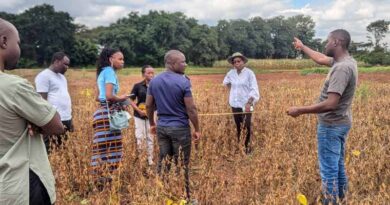
At the centre of the collaboration is the Mpumalanga Restoration Programme, which has begun with a 50‑hectare pilot focused on regenerative croplands, demonstrating how science‑led agroforestry systems can be implemented and managed with local communities. Building on the evidence and learning from this pilot, the partners are now working to scale the programme to an initial 5,000 hectares that will encompass degraded grasslands, croplands and wetlands in Mpumalanga, as a critical stepping stone toward a 50,000‑hectare landscape transformation. This phased multi-year approach demonstrates how restoration can simultaneously:
- Improve ecosystem function, increase biodiversity, and water security
- Strengthen local livelihoods and smallholder productivity through employment and skill development of youth and women
- Create new local economic activity and enterprise opportunities
- Deliver verifiable climate and nature outcomes aligned with international standards, tracked by Gold Standard
This programme now serves as a scalable blueprint for expansion within South Africa and beyond.
Under the partnership, CIFOR-ICRAF will lead scientific and technical design, providing landscape frameworks, restoration system typologies, research protocols, and robust environmental and social safeguards. This ensures programmes are grounded in the best available science and aligned with global evidence and policy. TERRAGRN will lead implementation and scale, drawing on its established delivery platform to mobilise communities, manage operations, deploy digital tools, and translate scientific design into durable, real-world outcomes.
The partners will jointly mobilise catalytic and blended finance, including grant, concessional, and risk-tolerant capital – to support programme development and early-stage scale-up. TERRAGRN will also structure and securelong-term offtake and revenue mechanisms, spanning nature-based commodities and services, to underpin financial sustainability and reduce reliance on short-term funding cycles.
Key areas of collaboration include:
- Science-led landscape and agroforestry system design
- Large-scale restoration delivery and adaptive management to enhance climate mitigation, resilience, and ecosystem function
- Integrated Measurement, Reporting and Verification (MRV), combining field data, remote sensing, and digital platforms
- Mobilisation of climate, nature, and development finance
- Development of bankable commercial models with secured offtake
- Investing in local skills, empowering women and youth and cultivating an entrepreneurial ecosystem grounded in inclusive community participation
- Knowledge sharing, policy engagement, and global learning
“By partnering with TERRAGRN, CIFOR-ICRAF combines its scientific credibility with a commercial restoration model that is already delivering at scale,” said Dr Eliane Ubalijoro, Chief Executive Officer of the Center for International Forestry Research and World Agroforestry (CIFOR-ICRAF) and Director General of ICRAF.. “This creates a two-way exchange: science informing delivery, and commercial discipline strengthening how restoration programmes are designed, financed, and scaled across CIFOR-ICRAF’s wider portfolio.”
The partnership is structured as a long-term, non-exclusive collaboration, with joint governance to ensure quality, transparency, and alignment with international environmental and social standards. While South Africa is the initial focus, the partners intend to replicate and adapt this model across Africa and other regions where regenerative land-use systems can deliver lasting ecological, social, and economic value.
“Mpumalanga has shown that regeneration works when science, communities, and markets are aligned,” said Sundar Bharadwaj, CEO of TERRAGRN. “With CIFOR-ICRAF, we are strengthening the scientific foundations of a model that is already delivering, so it can scale with integrity, attract long-term capital, and endure well beyond pilots and projects.”
Over the coming decade, CIFOR‑ICRAF and TERRAGRN aim to build a global portfolio of high‑integrity restoration programmes that can mobilise billions in climate and nature finance, support country NDCs, and provide a practical blueprint for governments, investors and communities seeking to regenerate degraded land at scale.
Also Read: Sahyadri Farms: A Farmer-Led Collective Transforming Indian Agriculture
Global Agriculture is an independent international media platform covering agri-business, policy, technology, and sustainability. For editorial collaborations, thought leadership, and strategic communications, write to pr@global-agriculture.com