Climate Change, Conflict And Inequality: Why The Middle East And North Africa Region Needs A Gender-responsive Learning Agenda
16 January 2026, Africa: Climate change is accelerating at an unprecedented pace, wreaking havoc across food, land and water systems around the world. Women—who hold essential roles in these systems—are often the most affected. Lacking equal access to the resources, tools and information needed to adapt, women face disproportionate impacts. Yet, in their resilience, women are also leading local responses and driving transformations within their food systems.
In the Middle East and North Africa (MENA) region, climate pressures are compounded by conflict, making it one of the most fragile regions globally. These overlapping crises widen gender gaps and drive inequality to new heights. Although women make up nearly half of the agricultural, aquaculture and fisheries labour forces in several contexts, their contributions remain undervalued, and structural barriers continue to undermine their potential.
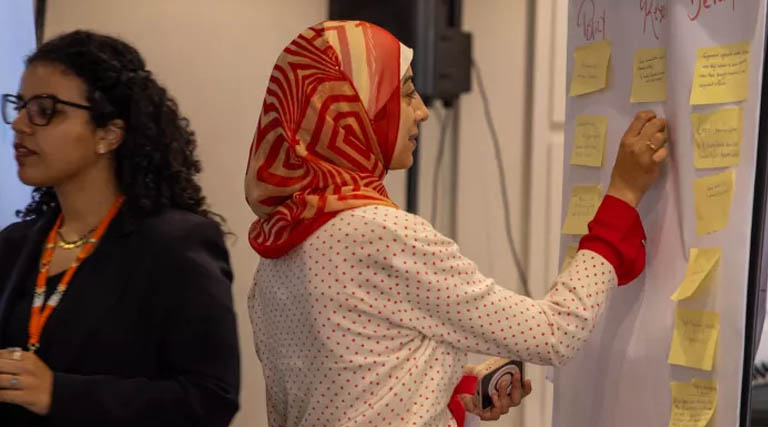
“We must act urgently to accelerate transformation in these food systems,” said Ranjitha Puskur, a Principal Scientist from International Rice Research Institute (IRRI), who facilitated CGIAR Gender Equality and Inclusion Accelerator co-organized regional workshop “Co-creating a Gender and Social Inclusion Learning Agenda for Food, Land and Water Systems in MENA”, held from 19–20 November 2025 in Cairo, Egypt.
The food, land and water systems of the MENA region already struggle with limited natural resources and slow technological advancement. At the same time, socio-cultural norms and gendered constraints often go unaddressed, further exacerbating the challenges women face. Women face both biophysical limitations and intra-household barriers that restrict their access to and use of innovations, highlighting the need for gender-inclusive approaches in designing these technologies and innovations and a call for gender-responsive extension services.
Despite this urgency, the evidence base on gender equality and social inclusion (GESI) in MENA’s food, land and water systems remains scarce and fragmented. Without solid evidence, it becomes difficult for policymakers and practitioners to set priorities and identify impactful opportunities.
“We need more evidence recognizing women as farmers—legally and socially,” said Dina Najjar, Senior Gender Scientist at the International Center for Agricultural Research in the Dry Areas (ICARDA).
Why action is needed
As climate shocks and conflicts intensify inequalities, the MENA region urgently needs stronger evidence to inform effective policy. Globally, efforts are underway to close gender gaps in food systems, but projections show that, at the current pace, it will take 142 years to close the gender gap in the region. Participants at the workshop unanimously recognized that waiting for more than a century to achieve gender equality is unacceptable and demands immediate, transformative action.
“We keep doing a lot of diagnosis, but it’s time we focus on what works—finding solutions for women. We need to move analysis to action, accelerating progress toward gender equality,” said Puskur.
No silver bullet: bundling innovations for greater impact
Workshop participants stressed that transforming food systems for women requires multisectoral solutions. Bundling innovations—technical, social, financial and institutional—was highlighted as being critical.
Country experiences show how innovative solutions can be shared and adapted. For example, in Palestine, Oxfam is piloting agricultural insurance to support farmers from losses from their farms due to extreme weather and conflict. In Jordan, with the scarcity of water, the International Union for Conservation of Nation (IUCN) advocating via the Smart Desert Project for the use of hydroponic and aquaponic technologies to reduce the use of water. With extension services far from being gender responsive and inaccessible to most women farmers, Abdul Latif Jameel Poverty Action Lab (J-PAL) is using SMS for extension services, sending farmers important information such as the weather forecasts.
Access to finance remains a major challenge for women across the region. With low land ownership, women struggle to secure collateral for agricultural loans. Women’s access to finance is lower and more difficult than for men. Many financial institutions still do not view agriculture as a profitable sector, pointing to the need for awareness-raising within the finance sector. For example, in Palestine, Oxfam’s IPTKA project is boosting women’s access to finance by offering agricultural loans and co-investing in women-led ventures.
Bridging the gap between research, policy and implementation
Strengthening the connection between research and policy is also critical. According to the 2023 The Status of Women in Agrifood Systems, published by the Food and Agriculture Organization of the United Nations, while more than 75 percent of agricultural policies acknowledge women’s roles and challenges in agriculture, only 19 percent explicitly prioritize gender equality or women’s rights as core policy objectives. This disconnect highlights the gap between recognition and action. Workshop participants emphasized the need for deliberate pathways that translate evidence into policy, ensuring that women’s lived realities meaningfully inform national strategies and investment decisions.
Natural resource management—particularly land and water—remains one of the most pressing challenges in the region. Farmers are increasingly compelled to manage scarce resources under conditions of climate stress, conflict, and uncertainty, forcing a fundamental shift in how resilience is understood and practiced.
“We are relearning the concept of resilience,” said Sukaina Samahan, from Oxfam Palestine.
Why a learning agenda?
To address this gap, the CGIAR Gender Equality and Inclusion Accelerator, together with CGIAR centers including the International Rice Research Institute (IRRI), WorldFish and ICARDA, convened policymakers, government representatives, non-government organizations, and civil society organizations to co-develop the region’s Gender Equality and Inclusion Research for Development (R4D) learning agenda.
A learning agenda provides an overview of the existing evidence, learning priorities (in this case for CGIAR and its partners and donors), and a sample of activities that contribute to the agenda’s overall goal of advancing learning and good practice. The MENA region’s Gender Equality and Inclusion Research for Development (R4D) learning agenda will provide a roadmap for investment in evidence generation, synthesis, communication and policy engagement.
The co-developed learning agenda will identify evidence gaps; map barriers, enablers, and innovations; and define priority research and policy-engagement pathways. A regional stakeholder meeting will allow for validation of the learning agenda, sharing practice-based insights, and refining learning questions. Subsequent thematic syntheses will help prioritize actionable research questions, investment areas and opportunities for collaboration, knowledge exchange and capacity strengthening across countries.
By moving beyond diagnosis toward implementation, and by recognizing women as both beneficiaries and central actors in food, land and water systems, the learning agenda can assist the MENA region to accelerate progress toward a more resilient, inclusive and sustainable future.
Also Read: Tagros Chemicals to Acquire Bayer’s Global Flubendiamide Business
Global Agriculture is an independent international media platform covering agri-business, policy, technology, and sustainability. For editorial collaborations, thought leadership, and strategic communications, write to pr@global-agriculture.com