COP30 in Belém: Implications for the Future Work of the MFL Program
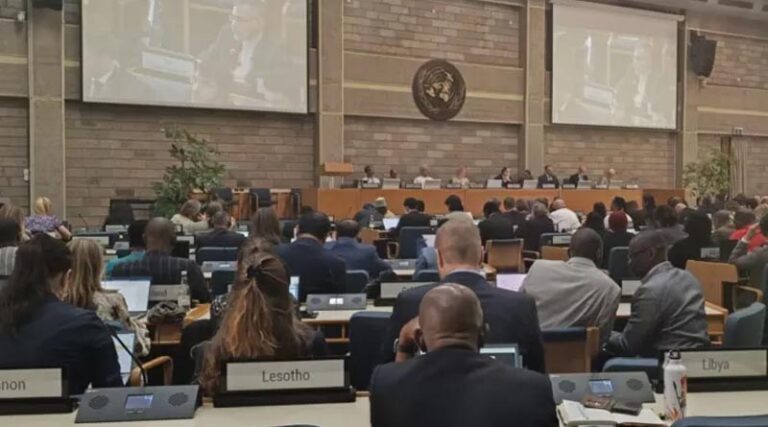
11 December 2025, Belém: COP30 in Belém leaves behind a complex political atmosphere, shaped by global divisions and even the unexpected drama of a fire in the venue. As the dust settles and initial assessments appear, one central question remains: a decade after the Paris Agreement, was this COP any different?
Inside negotiation rooms, several high-profile issues were ultimately excluded from the final decision texts. Yet, beyond the formal negotiations, the COP witnessed meaningful advances for nature, land restoration, and implementation. New finance initiatives were announced for forests, including the launch of the Tropical Forests Forever Facility (TFFF). Another major announcement was RAIZ — the Resilient Agriculture Investment for Net-Zero Land Degradation initiative, designed to help governments map degraded farmland, identify viable restoration options, and develop financing tools capable of mobilizing private capital. The Brazilian Presidency also announced its intention to move forward the roadmaps on fossil fuels and deforestation outside the formal UNFCCC process.
Agriculture and Food Security
Expectations were particularly high for agriculture, given the Brazilian Presidency’s action agenda and its relevance to adaptation, food security, and ecosystem resilience. Discussions took place under the Sharm el-Sheikh Joint Work on Agriculture and Food Security (SJWA), informed by the workshop held during SB62.
Despite constructive exchanges, including references to agroecology, food systems across the value chain, links to biodiversity, and market-based incentives, at the end the Parties were unable to reach consensus, and the outcomes was only procedural. The Subsidiary Bodies will continue consideration of the work at SB64 in June 2026, preceded by a second workshop. Parties and observers will have an opportunity to shape the agenda through submissions due 1 March 2026.
Meanwhile, the Sharm el-Sheikh online portal remains significantly underutilized. Strengthening its use will be essential, as the portal is central to the SJWA’s mandate of enhancing research, knowledge-sharing, and showcasing concrete climate action. For the MFL program, this represents an opportunity to contribute evidence and landscape-level innovations that support adaptation and food security goals.
Adaptation and the indicators of the Global Goal on Adaptation
Adaptation was expected to be the key outcome of COP30, and in this respect, the summit delivered the adoption of the Belém Adaptation Indicators, a long-awaited set of metrics to track global progress under the Global Goal on Adaptation (GGA).
Over the past two years, experts compiled a list of nearly 1,000 potential indicators, which was narrowed to around 100 following the Bonn discussions. At COP30, after intense and at times contentious negotiations, 59 indicators were finally agreed.
However, the final package comes with significant caveats: the indicators are voluntary, non-prescriptive, country-driven, and must not create additional reporting burdens. To address these challenges, Parties launched a two-year “Belém–Addis Vision” to refine methodologies and strengthen metadata, supported by a technical taskforce. While the compromise was approved in plenary, several regions expressed dissatisfaction, describing the text as rushed and incomplete.
At the COP30 Food & Agriculture Pavilion, the CGIAR Multifunctional Landscapes (MFL) Program convened a session on Climate-resilient landscapes for the GGA: Indicator-aligned innovations for land, water and biodiversity restoration, highlighting indicator-aligned innovations for land, water, and biodiversity restoration. The session showed how countries are advancing climate-resilient food systems and how these experiences can support GGA implementation.
Evidence from CGIAR and partners emphasized the value of integrated soil–water–crop–livestock–forestry systems and agrobiodiversity approaches. Participants highlighted the importance of linking innovation and policy, strengthening regional research platforms, and developing monitoring systems that combine biophysical and governance indicators. The shared message: scaling adaptation depends on strong partnerships, open data, and policy-anchored, locally led action.
The Adaptation Finance Gap
Beyond the technical work on indicators, political attention centered on the financing needed to make adaptation a reality. The COP30 political text, known as the “global mutirão,” calls for efforts to triple adaptation finance compared to 2025 levels and reaffirms the Glasgow goal of doubling adaptation finance by 2025. However, the deadline for tripling finance was pushed from 2030 to 2035, and the reference to a clear baseline was removed. UNEP’s Adaptation Gap Report indicates that developed countries provided only USD 26 billion in 2023, far below the USD 310 billion per year developing countries require.
Strengthening the Science–Policy Link
Although several negotiation tracks in Belém did not reach the outcomes many had anticipated, COP30 nevertheless highlighted a growing demand for practical, science-informed approaches to soil health, biodiversity, and resilient food systems. This momentum was also reflected in the Road to COP30 series: Biological solutions for low-carbon agriculture—two webinars held prior to the COP and a side event during COP30—organized by the CGIAR Multifunctional Landscapes (MFL) program together with CGIAR Climate Action, Embrapa, and Brazil’s Ministry of Agriculture and Livestock (MAPA). These exchanges brought together experts from across regions to examine the role of biosolutions in strengthening climate-resilient landscapes. As a direct outcome of this collaboration, CGIAR, Embrapa, and MAPA launched a joint statement outlining a shared ambition to scale biosolutions for soil health. This partnership provides a strong foundation for continued collaboration with Embrapa and MAPA, opening pathways to deepen scientific cooperation, and explore future joint opportunities to advance evidence-based action across international processes.
📢 If You’re in Agriculture, Make Sure the Right People Hear Your Story.
From product launches to strategic announcements, Global Agriculture offers unmatched visibility across international agri-business markets. Connect with us at pr@global-agriculture.com to explore editorial and advertising opportunities that reach the right audience, worldwide.