Making Aquatic Foods Count at Climate COPs
18 December 2025, Belém: As the dust settles on COP30 in Belém, one thing is clear: aquatic foods are no longer a side conversation in climate negotiations. What was once discussed on the margins has moved firmly into the mainstream of climate action—creating both momentum and responsibility as the world turns its attention toward COP31.
This shift did not happen overnight. Momentum has been building for more than a decade: the first Ocean Day appeared in the Green Zone in 2009, moved into the Blue Zone by 2016, and was reinforced through the UNFCCC’s Ocean and Climate Change Dialogues beginning in 2020. COP27 marked a breakthrough with a dedicated ocean section in the cover decision, followed by COP28’s Declaration on Food and Aquaculture, which explicitly recognised sustainable blue foods as part of global climate solutions.
At COP30, that trajectory found its footing. Fisheries and aquaculture were treated not as niche concerns, but as core components of climate adaptation, mitigation, and food security. Across pavilions and official sessions in Belém, governments, fisher organisations, and research institutions showcased solutions that are ready to scale now—provided the right partnerships and financing follow.
National plans signal a turning point
The arrival of the next generation of national climate plans (NDC 3.0) revealed a clear and encouraging pattern. Well over half of ocean states now include fisheries and aquaculture within their adaptation priorities, while roughly a quarter are also setting mitigation objectives for aquatic food systems.
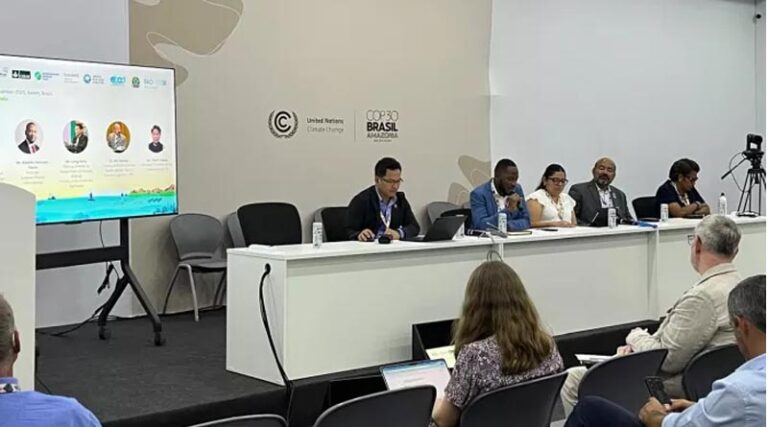
At an official COP30 side event co-hosted by WorldFish and partners, countries outlined concrete pathways for climate action through aquatic foods. Brazil highlighted its national sustainable aquaculture plan, stronger support for artisanal fisheries, and expanded low-carbon aquaculture. Cambodia emphasised community fisheries, climate-smart aquaculture, and protection of freshwater ecosystems such as Tonle Sap. Fiji described investments in renewable-energy fisheries infrastructure, habitat restoration, and regional ocean governance. Mexico detailed plans to integrate aquatic foods into its forthcoming Sustainable Ocean Plan and ocean-focused NDC components.
From Africa, negotiators underscored that many countries—including Senegal, Mozambique, South Africa, and Somalia—are embedding fisheries and aquaculture into NDCs and National Adaptation Plans, linking them to coastal protection, ecosystem restoration, and food security for small-scale fishing communities.
Regional bodies are also moving. The Forum Fisheries Agency is helping Pacific Island countries respond to shifting tuna stocks through climate-adaptive fisheries planning, while the High-Level Panel for a Sustainable Ocean Economy is advancing blue food transformation through its 2026–2030 workplan.
From ambition to implementation
COP30 was not only about recognition; it was about delivery. The COP30 Action Agenda brought together dozens of initiatives at the intersection of food systems, nature, and climate. Within this landscape, WorldFish is supporting the Plan to Accelerate Aquatic Foods as Climate Solutions, led through FAO’s Blue Transformation. The plan focuses on practical pathways: strengthening governance, embedding aquatic foods into NDCs and NAPs, expanding sustainable aquaculture, and improving access to markets and finance—particularly for women, youth, and coastal communities.
Across discussions in Belém, three messages surfaced repeatedly. First, small-scale fishers and farmers are central to climate resilience; secure rights and co-management strengthen both ecosystems and livelihoods. Second, better data and coordination across ministries are essential if climate commitments are to translate into real-world outcomes. Third—and most starkly—finance remains the critical bottleneck: less than one percent of global climate finance currently reaches aquatic food systems.
What this means for CGIAR climate research and partnerships
For CGIAR, COP30 reinforced a clear role on the road to COP31: helping countries move from ambition to implementation by providing credible evidence, decision-support tools, and partnership platforms that unlock finance and scale solutions.
WorldFish’s contribution in Belém reflected this approach. Building on its 2024 guidelines for integrating aquatic foods into national climate strategies, the program released country deep dives for Ghana, Indonesia, Mexico, and Vietnam, and contributed to new regional analyses on climate vulnerability in fisheries and aquaculture. At COP30, CGIAR research was visible not just in reports, but in action—through digital tools such as Peskas and the Blue Resilience climate information platform, nature-based aquaculture systems like IMTA and rice–fish, climate-resilient species and seed systems, and solar-powered processing that reduces waste while improving nutrition.
Many of these innovations are already scaling through government partnerships. The challenge now is less about inventing new solutions, and more about validating, financing, and integrating what already works into national systems and investment pipelines.
Looking ahead to COP31
Between now and COP31, attention will shift decisively toward implementation and accountability. Countries will be expected to operationalise NDC 3.0 commitments, demonstrate progress through national adaptation planning, and show how climate finance is reaching frontline food producers. For aquatic foods, success will depend on whether commitments made in Belém translate into funded programmes, strengthened institutions, and measurable outcomes for ecosystems and communities.
COP30 marked the moment when aquatic foods moved into the centre of the climate agenda. The road to COP31 will test whether that recognition delivers real change. For CGIAR and its partners, the task ahead is clear: turn rising ambition into durable, country-led climate action that secures sustainable aquatic food systems for a warming world.
Also Read: Indian Sugar Production Jumps 28%, but Falling Prices Raise Alarm for Mills and Farmers
📢 If You’re in Agriculture, Make Sure the Right People Hear Your Story.
From product launches to strategic announcements, Global Agriculture offers unmatched visibility across international agri-business markets. Connect with us at pr@global-agriculture.com to explore editorial and advertising opportunities that reach the right audience, worldwide.