Strengthening Sheep and Goat Breeding in Tunisia
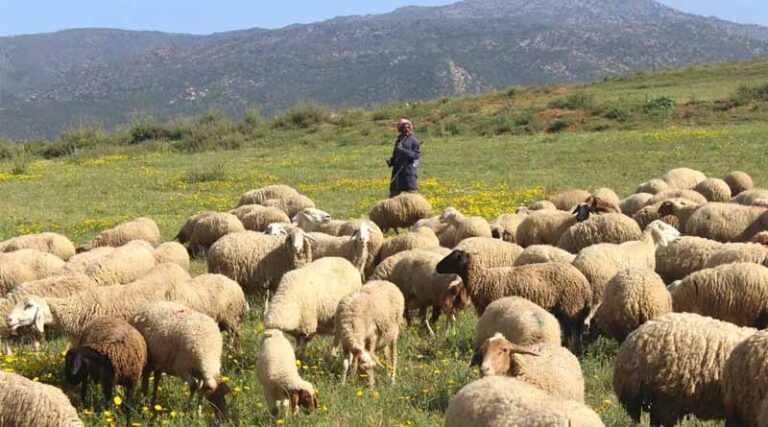
12 December 2025, Tunisia: Supported by CGIAR’s Sustainable Animal and Aquatic Food Systems and Multifunctional Landscapes programs, ICARDA and Tunisia’s Office de l’Élevage et des Pâturages (OEP) are rebuilding one of the region’s pioneering sheep and goat breeding programs.
ICARDA and OEP have developed a joint roadmap to overhaul Tunisia’s sheep and goat breeding program, which has been operating since the 1970s.
The roadmap highlighted several priority actions, including:
- Updating breeding objectives to match current production and environmental goals.
- Simplifying and outsourcing performance recording protocols.
- Optimizing data flow for more timely and accurate genetic evaluations.
- Reorganizing dissemination pathways for improved genetics.
- Integrating economic, social, and environmental considerations into breeding strategies.
- Expanding partnerships with professional organizations and communities seeking quality sires and dams, and piloting alternative breeding approaches.
To accelerate change, the workshop emphasized the need for pilot projects that demonstrate the potential of Community-Based Breeding Programs (CBBPs) as a complement to conventional state-run programs. ICARDA scientists and OEP technical staff identified pilots across multiple geographic areas and production systems, including:
- The genetically threatened Noire de Thibar sheep in the Northwest.
- Local goat improvement initiatives along the agrosilvopastoral transect from south to north, encompassing:
- Intensive goat production in Ariana
- Steppe-based grazing in Kairouan
- Oasis-integrated goat farming in Tozeur and Kebili
How to Optimize Dissemination Pathways
A successful breeding program relies on two interlinked axes: advancing genetic improvement and disseminating it effectively. In Tunisia, while the former faces some challenges, the latter has weakened considerably. The number of improved rams available to sheep farmers has declined sharply, and the activity of the central small ruminant reproductive laboratory providing artificial insemination (AI) services is limited. Further challenges include institutional, financial, and procedural barriers, as well as a loss of technical expertise over the past decade.
Rebuilding human capacity at both central and regional OEP levels is a priority. To support this, experts in small ruminant reproduction and physiology at ICARDA and national universities facilitated the first Training of Trainers (ToT) module, held on 5 – 6 November 2025, focusing on integrated reproductive management in sheep and goat breeding programs. Nineteen technicians – 16 from OEP and 3 from the selection base (the national program’s top-contributing farms) – participated, receiving guidance from ICARDA and national university experts. The training covered:
- Interlinkages between genetically improved animals and pathways to disseminate the improved genetics in the population
- Reproductive physiology of Tunisian breeds
- Management of reproduction under natural mating
- Co-designing community-adapted protocols for fixed-time AI
- Ultrasound pregnancy diagnosis for improved reproductive management
Plenary discussions also explored animal health management, rearing of candidate sires and dams, and strategies to ensure only superior genetics are propagated.
Pilot Best-to-Best Mating Programs
Prior to the workshop, from May to August 2025, ICARDA and OEP implemented pilot best-to-best mating programs in the identified communities. For the Noire de Thibar sheep, the top 150 ewes, selected based on prolificacy and offspring growth performance, were mated with top rams using fresh, cooled semen. In the goat communities, 280 does were synchronized and inseminated with improved Boer (for meat production) or Alpine (dual-purpose meat and milk) frozen semen. These pilots are creating the foundation for selecting candidate sires within community flocks, enabling broader dissemination of improved genetics in the future.
Through these initiatives, ICARDA and OEP are setting the stage for a modernized, sustainable, and community-integrated sheep and goat breeding system in Tunisia to preserve genetic diversity while enhancing productivity and economic value for sheep and goat producers.
Also Read: DCM Shriram and Bayer Partner to Expand Work Across Agri-Inputs and Value Chains
📢 If You’re in Agriculture, Make Sure the Right People Hear Your Story.
From product launches to strategic announcements, Global Agriculture offers unmatched visibility across international agri-business markets. Connect with us at pr@global-agriculture.com to explore editorial and advertising opportunities that reach the right audience, worldwide.