Zambia Advances Community Conservation as Chiefs Sign MoU for Mize Lukuni Conservancy under SWM Programme
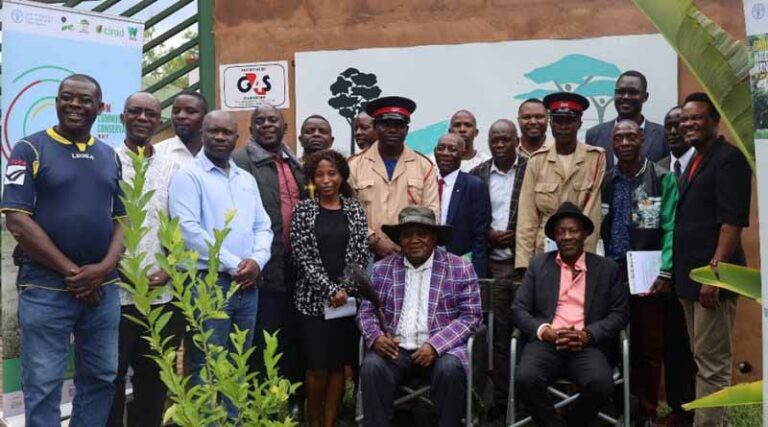
23 December 2025, Zambia: A major milestone for community-led conservation in Zambia was marked today as Musokotwane and Nyawa chiefdoms formally signed a Memorandum of Understanding (MoU) for the establishment and management of the Mize-Lukuni Community Conservancy (CC) under the Sustainable Wildlife Management (SWM) Programme, funded by the European Union. Hosted at the CIFOR-ICRAF office in Livingstone, the signing ceremony brought together traditional leadership, government representatives, development partners, and the SWM Programme team to celebrate a shared commitment to sustainable natural resource governance.
In a country where nearly 95 percent of land is held under customary tenure and administered by traditional leaders, this MoU marks a pivotal moment for Zambia’s conservation landscape. It signals a meaningful step towards strengthening the country’s contribution to the 30 by 30 target under the Global Biodiversity Framework (GBF), by anchoring conservation commitments in the very lands where biodiversity and people coexist.
The significance of this MoU is heightened by the complex realities surrounding customary land governance in Zambia, where long-standing boundary disputes and litigation between chiefdoms have often undermined conservation and development efforts. In this part of Kazungula District, unclear and contested chiefdom boundaries have been one of the most persistent barriers to the establishment of a CC. By providing a clear, jointly agreed framework for collaboration, this MoU helps unlock a long-standing impasse laying the foundation for locally legitimate, legally defensible and durable conservation on customary land.
The signing of the MoU marks a major step forward under the SWM Programme, reinforcing the central role of communities as custodians of wildlife and natural resources across a shared and ecologically connected landscape. While programme implementation has historically been anchored in the Mize CC under Chief Nyawa’s chiefdom, activities have long engaged neighbouring communities in Musokotwane chiefdom, reflecting deep social ties, shared resource use, and ecological interdependence. Formalizing collaboration between the two traditional authorities therefore represents the culmination of years of dialogue, technical support and trust-building facilitated by CIFOR-ICRAF and partners, and responds directly to the growing recognition that fragmented governance and weak community participation remain key challenges to effective conservation within the Kavango Zambezi Transfrontier Conservation Area (KAZA TFCA).
The formal inclusion of Chief Musokotwane was a strategic and necessary step to promote inclusivity, cohesion and shared ownership of conservation efforts across this critical transboundary landscape. The transition from the Mize CC to the Mize–Lukuni Community Conservancy reflects an expanded, landscape-scale vision; one that strengthens wildlife connectivity, reduces boundary-related conflict, and aligns local governance with broader KAZA connectivity objectives. By enabling the SWM Programme to extend livelihood and conservation interventions such as fish farming, beekeeping and livestock production into Musokotwane chiefdom, the MoU helps secure key wildlife corridors, reduce pressure on natural resources, and demonstrate how empowered communities can play a decisive role in sustaining ecological connectivity and long-term conservation outcomes in the world’s largest TFCA, and the most important landscape for the conservation of elephants in the KAZA.
Beyond its immediate objectives, this MoU opens new possibilities for conservation engagement in parts of the landscape that have historically been difficult to reach through formal conservation or development initiatives. Musokotwane chiefdom is home to Bombwe, a community originally established by former workers of a now-defunct timber logging enterprise, and one that has evolved under complex social, economic and historical circumstances. Like many marginalized areas, Bombwe has long remained outside mainstream conservation programmes, often due to limited trust, weak service delivery, and a legacy of exclusion rather than a lack of interest or commitment from its residents.
The leadership shown by Chief Musokotwane in bringing these communities into the conservation dialogue marks a significant and hopeful shift. By extending legitimacy, protection and opportunity to people who were previously on the margins of conservation, this collaboration signals a new pathway for inclusive, community-driven conservation in Zambia. If nurtured carefully, it has the potential to become one of the most important recent examples of how trust, traditional leadership and shared ownership can transform challenging landscapes into spaces of opportunity for both people and nature.
Speaking as Guest of Honour, Mr Elias Siambila, District Commissioner for Kazungula District in Southern Zambia, described the MoU as a turning point for conservation and development in the two chiefdoms.
“The Sustainable Wildlife Management Programme will promote wildlife conservation while improving the livelihoods of communities in both Musokotwane and Nyawa chiefdoms,” Mr Siambila said. “This agreement shows that conservation can work when communities are empowered to manage their land and resources in a way that benefits present and future generations.”
The establishment of the Mize-Lukuni CC provides a locally anchored platform for integrated land-use planning, wildlife management and sustainable livelihood development. It is expected to strengthen collaboration between traditional leadership structures, local authorities and conservation institutions, while supporting food security, income generation and biodiversity protection.
The SWM Programme places strong emphasis on assisting communities with land-use planning and strengthening governance and leadership systems, recognizing that effective conservation depends on clear rights, responsibilities and inclusive decision making. The MoU outlines shared principles for managing the conservancy, clarifying roles between the two chiefdoms and setting the foundation for long-term cooperation.
Mr Griffin Shanungu, SWM Site Coordinator at CIFOR-ICRAF, highlighted the significance of the agreement within the broader goals of the programme.
“The signing of this MoU is a milestone achievement under the SWM Programme in Zambia,” Mr Shanungu said. “It demonstrates what is possible when traditional leaders, communities and partners work together with a shared vision. Through the Mize-Lukuni CC, we are strengthening community governance, supporting participatory land-use planning, and ensuring that wildlife conservation contributes directly to livelihoods and local development.”
He added that CIFOR-ICRAF and its partners remain committed to providing technical and institutional support as the conservancy moves from establishment to implementation.
As custodians of the land and wildlife resources, Chief Nyawa expressed appreciation to all partners for respecting traditional leadership and for supporting a process that places communities at the centre of conservation.
He noted that the Mize-Lukuni CC offers an opportunity for communities to protect their natural heritage while creating pathways for sustainable livelihoods, especially for young people and future generations.
Similarly, Chief Musokotwane welcomed the agreement as a symbol of unity and shared responsibility between the two chiefdoms.
He emphasized that the MoU is not an end in itself, but the beginning of a journey that requires continued collaboration, transparency and commitment to the values agreed upon.
With the MoU now signed, attention turns to implementation, translating agreements on paper into action on the ground. Planned next steps include further participatory land-use planning, capacity building for community institutions, and the integration of trained community game scouts to support monitoring, patrols and conflict mitigation within the conservancy.
The establishment of the Mize-Lukuni CC stands as a strong example of how community leadership, supported by science, policy and development partnerships, can drive sustainable wildlife management. As Zambia continues to advance community-based conservation models, today’s signing marks a hopeful and practical step towards a future where biodiversity conservation and human well-being go hand in hand.
Global Agriculture is an independent international media platform covering agri-business, policy, technology, and sustainability. For editorial collaborations, thought leadership, and strategic communications, write to pr@global-agriculture.com