Enhanced Efficiency Fertilizer Can Cut Emissions, But Soil Type Matters
12 February 2026, North Carolina: A three-year study on nitrous oxide and ammonia emissions from North Carolina corn fields is giving NC State University researchers a better handle on when and where using enhanced efficiency fertilizers could benefit the environment and what that means for farmers’ bottom lines.
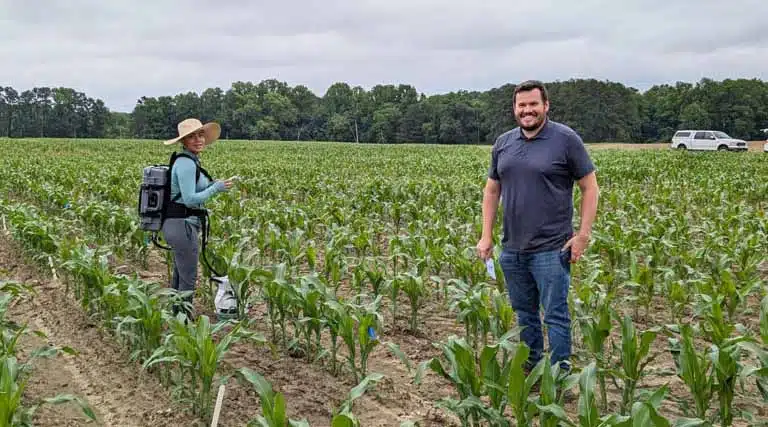
Since 2023, Alex Woodley, an associate professor in the Department of Crop and Soil Sciences and an N.C. Plant Sciences Initiative faculty affiliate, has been studying the effects of one kind of these fertilizers on emissions and crop yields at 18 North Carolina farms that lie between Greensboro and the coast.
While conventional synthetic fertilizers significantly boost yields, allowing farmers to produce more food on less land, they’re expensive. Not only that, only 40-60% of nitrogen fertilizer is actually taken up by crops. And when plants don’t use that nitrogen, it can be converted to nitrous oxide and ammonia. Nitrous oxide is a potent greenhouse gas that can deplete the ozone, and ammonia can harm air and water quality and degrade ecosystems.
The type of enhanced efficiency fertilizer Woodley is studying is designed to get around these problems. Called a dual urease and nitrification inhibitor, it is added to conventional fertilizers to slow the conversion of two forms of nitrogen, urea and ammonium, giving plants more time to access the nitrogen while it’s in their root zones.
Findings from Woodley’s Beyond Yield study could help farmers more accurately weigh the financial costs and benefits of using inhibitors, while providing policymakers with data to determine if governments should offer farmers incentives to offset those costs.
“What this research will do is allow farmers to have a couple things on paper. If it works, they can reduce their nitrogen inputs and apply the nitrogen they do need more effectively,” he says. “What it can also do is potentially unlock economic incentives in the future for more sustainable nitrogen use.”
Also Read: Indian Agricultural Products Will Get Zero-tariff Market Access In The US
Global Agriculture is an independent international media platform covering agri-business, policy, technology, and sustainability. For editorial collaborations, thought leadership, and strategic communications, write to pr@global-agriculture.com