
Agdia Launches New ImmunoStrip® and ELISA Test Kits for Pseudomonas spp
11 December 2025, Elkhart: Agdia is pleased to announce the commercial launch of two new diagnostic products to detect plant-pathogenic bacteria in the Pseudomonas genus. The field deployable ImmunoStrip® kit and lab-based ELISA kit for Pseudomonas spp. are available to order now.
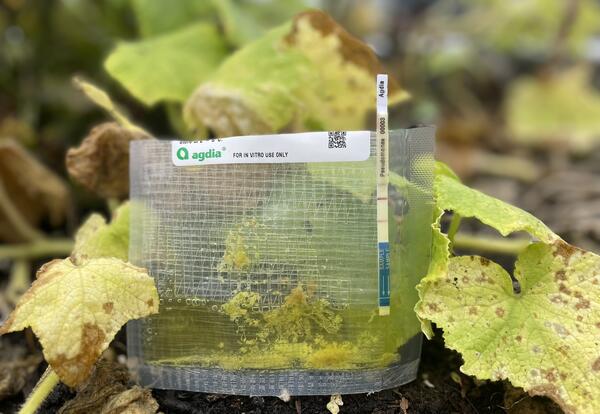
For those interested in sending plant samples to Agdia for analysis, their Testing Services diagnostic laboratory now offers services to test for Pseudomonas spp. Agdia’s Testing Services laboratory provides expert guidance on crop screening and rapid turnaround time of test results.
The Pseudomonas genus consists of nearly 350 species of gram-negative bacteria, many of which can cause disease in a wide range of plants including fruits, vegetables, grains, root crops and ornamental species.

The most prominent phytopathogenic species is Pseudomonas syringae, which is among the most widely-studied plant pathogens. Pseudomonas syringae consists of over 50 pathovars (pathogenic varieties, or pv.) which are generally host-specific. Diseases caused by Pseudomonas syringae occur most rapidly in cool & moist environmental conditions.
While symptoms of Pseudomonas infection can vary widely by host, common symptoms include:
- Necrotic leaf spots
- Stem cankers
- Discolored leaf veins
- Shoot-tip dieback in woody species
- Flower blast (blossom blast)
The table below shows notable phytopathogenic Pseudomonas species detected by both of the new ImmunoStrip® and ELISA kits. For a full list of species detected and other validation results, see the validation reports available on each product webpage.
Table 1: Pseudomonas species & pathovars detected by the new test kits
| Species / Pathovar | Disease names & affected crops | Detected by ELISA? | Detected by ImmunoStrip? |
| Pseudomonas aeruginosa | Bacterial soft rot of fruits and vegetables | Yes | Yes |
| Pseudomonas amygdali pv. lachrymans | Angular leaf spot of cucurbits | Yes | Yes |
| Pseudomonas amygdali pv. morsprunorum | Bacterial canker of prunus trees | Yes, low sensitivity | Yes |
| Pseudomonas cannabina pv. cannabina | Leaf and stem rot of cannabis | Yes, low sensitivity | Yes |
| Pseudomonas cannabina pv. alisalensis | Bacterial leaf blight in crucifers (broccoli, radish, etc.) | Yes | Yes |
| Pseudomonas capsici | Bacterial leaf spot of pepper, tomato & many other crops | Yes | Yes |
| Pseudomonas cichorii | Bacterial leaf spot of celery, lettuce, pepper, chrysanthemum & other crops | Yes | Yes |
| Pseudomonas corrugata | Tomato pith necrosis | Yes | Yes |
| Pseudomonas savastanoi pv. glycinea | Bacterial blight of soybean | Yes | Yes |
| Pseudomonas savastanoi pv. phaseolicola | Halo blight disease of Phaseolus vulgaris (common bean) | Yes, low sensitivity | Yes, low sensitivity |
| Pseudomonas syringae pv. aptata | Bacterial leaf spot disease of sugar beet | Yes, low sensitivity | Yes |
| Pseudomonas syringae pv. atrofaciens | Bacterial disease of cereal crops, basal glume rot of wheat | Yes, low sensitivity | Yes, low sensitivity |
| Pseudomonas syringae pv. japonica | Bacterial black node of barley and wheat, seedling blight and bacterial grain rot of rice | Yes | Yes |
| Pseudomonas syringae pv. pisi | Pea bacterial blight | Yes | Yes |
| Pseudomonas syringae pv. syringae | Infects many plant species: Blights, cankers, dieback of woody ornamentals, bacterial canker or blast of pome & stone fruits, brown spot disease of bean, etc. | Yes | Yes |
| Pseudomonas syringae pv. tomato | Bacterial speck disease of tomato | Yes | Yes |
| Pseudomonas syringae pv. aceris | Infects maple trees | No | Yes |
| Pseudomonas viridiflava | Infects many plant species: bacterial leaf spot of lettuce, bacterial blight of pea & kiwifruit, necrosis of tomato, rot of cucumber, carrot and alfalfa, bacterial canker in prunus trees, etc. | Yes | Yes |
ELISA and ImmunoStrip® Platforms
Both ELISA and ImmunoStrip® platforms utilize immunochemistry, and results are visualized via an antibody-antigen reaction in infected samples.
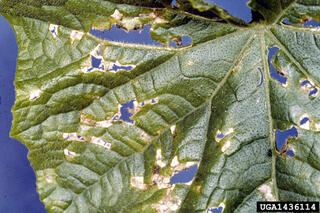
The ELISA platform has been used for more than 50 years and is widespread throughout the plant diagnostic community. This trusted, lab-based technology offers unparalleled cost efficiency in high-throughput applications.
The Pseudomonas spp. ELISA kits are sold in two formats. Reagent sets include capture and detection antibodies along with 96-well microtiter plates (buffers are sold separately. Pathoscreen® kits include pre-coated microtiter plates, detection antibody, buffers and positive controls.
Agdia’s ImmunoStrip® platform provides end-users with unrivaled utility; samples can be tested in the field or lab by those having no previous diagnostic experience, and results are visualized within 30 minutes. This product includes everything necessary to perform a test and does not require special equipment. The testing protocol is simple and includes:
- Sample collection and extraction in Agdia buffer bags.
- Placing the ImmunoStrip® in the sample extraction bag.
- Allowing results to develop.
Test results are visualized as a single control line or a control and test line for negative or positive results, respectively. The introduction of Agdia’s ImmunoStrip® for Pseudomonas spp. expands their catalog to 57 plant pathogen products on this platform.
The Pseudomonas spp. ImmunoStrip® is sold in kits of 5 or 25 strips, and kits include everything necessary to perform a test.
Agdia provides a one-year warranty and comprehensive customer support on all purchased products.
📢 If You’re in Agriculture, Make Sure the Right People Hear Your Story.
From product launches to strategic announcements, Global Agriculture offers unmatched visibility across international agri-business markets. Connect with us at pr@global-agriculture.com to explore editorial and advertising opportunities that reach the right audience, worldwide.