Agricultural Sources Are Estimated to Account for 58 Percent of Global Methane Emissions: FAO
19 January 2026, Rome: As the world confronts the twin challenges of increasing food production while curbing greenhouse gas emissions, agriculture remains a critical focus area. A range of technological and policy solutions is being developed to address these pressures. One such approach involves the use of environmental inhibitors (EIs)—substances that can help reduce methane emissions from cows and other livestock, while also limiting nitrogen losses from fertilizers used in crop production.
The Food and Agriculture Organization of the United Nations has released a new report, Environmental Inhibitors in Agrifood Systems – Considerations for Food Safety Risk Assessment, along with a supporting technical brief. These publications are intended to assist policymakers, regulators, and stakeholders in evaluating potential food safety risks associated with the use of environmental inhibitors in agrifood systems.
FAO notes that while environmental inhibitors offer significant potential to reduce the climate footprint of agriculture, the possible transfer of residues into the food chain requires careful evaluation. Comprehensive food safety risk assessments are essential to minimise potential risks to human health and to avoid disruptions to domestic and international trade.
Focus areas of the FAO report
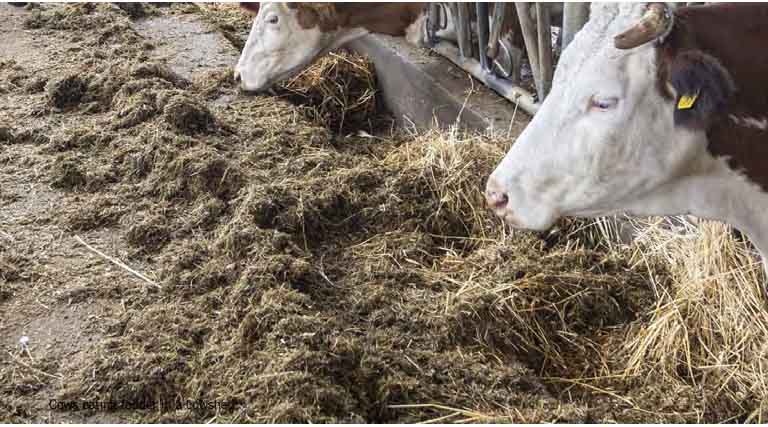
The report examines two broad categories of environmental inhibitors. The first includes methanogenesis inhibitorsadministered to cows and other ruminant animals to reduce methane (CH₄) emissions generated during digestion. These compounds work through different mechanisms, including blocking key enzymes involved in the final step of methane production by microorganisms in the rumen. Depending on national regulatory systems, such substances may be classified as veterinary drugs in some jurisdictions and as feed additives in others, resulting in differing risk assessment approaches.
The second category covers nitrogen inhibitors applied to soils to reduce nitrogen losses and lower nitrous oxide (N₂O) emissions from crop production. Nitrogen is a critical nutrient for plant growth but is often lost to the environment through volatilisation, leaching, runoff, and related processes when applied as fertiliser. Nitrogen inhibitors are designed to improve nitrogen use efficiency, but because they are applied directly to soils, their potential movement into crops or animal feed, or direct ingestion by grazing animals, must be carefully considered in food safety evaluations.
FAO experts will also discuss the findings of this work in a webinar taking place as part of the organisation’s ongoing efforts to address emerging food safety issues in agrifood systems.
Regulatory and policy considerations
The report highlights that regulatory frameworks for environmental inhibitors remain fragmented globally, with varying data requirements and evaluation schemes across regions. FAO supports the development of a more harmonised approach through scientific advice provided by international expert committees, which forms the basis for global food standards developed under the Codex Alimentarius Commission.
The publication forms part of FAO’s Food Safety Foresight Programme, which aims to identify and monitor emerging food safety challenges in rapidly evolving agrifood systems.
Emissions context
According to the Intergovernmental Panel on Climate Change, agricultural sources account for an estimated 58 percent of global methane (CH₄) emissions and 52 percent of nitrous oxide (N₂O) emissions. FAO projections indicate that, without effective mitigation, greenhouse gas emissions from agrifood systems could rise by more than 30 percent between 2010 and 2050.
FAO emphasises that irrespective of how environmental inhibitors are classified, the foundation of food safety assessment lies in establishing whether residues are present in food. Clear, science-based minimum data requirements are essential to ensure that climate mitigation strategies in agriculture progress without compromising food safety, consumer confidence, or trade.
Also Read: Beyond the Grain: How Rice-Field Ponds are Forging Climate Resilient Livelihoods in Cambodia
Global Agriculture is an independent international media platform covering agri-business, policy, technology, and sustainability. For editorial collaborations, thought leadership, and strategic communications, write to pr@global-agriculture.com