BBNJ Agreement Comes into Force: FAO Welcomes Landmark Treaty to Protect Marine Biodiversity Beyond National Jurisdiction
19 January 2026, Rome: The Food and Agriculture Organization of the United Nations (FAO) has welcomed the entry into force of the Agreement under the United Nations Convention on the Law of the Sea on the Conservation and Sustainable Use of Marine Biological Diversity of Areas beyond National Jurisdiction, known as the BBNJ Agreement, and has expressed its readiness to contribute to its implementation.
After two decades of negotiations, the BBNJ Agreement—currently with 145 signatories and 81 Parties—entered into force on 17 January 2026. The legally binding global treaty is aimed at ensuring the conservation and sustainable use of biodiversity in ocean areas beyond national jurisdiction. It focuses on four key areas: marine genetic resources; area-based management tools; environmental impact assessments; and capacity building and technology transfer.
The Agreement calls for a cross-sectoral approach that integrates and builds on existing arrangements managing human activities in areas beyond national jurisdiction (ABNJ), including fishing, shipping, mining and research exploration. It also establishes that benefits derived from marine genetic resources—commonly used in pharmaceuticals, food supplements and cosmetics—must be shared fairly and equitably.
“The BBNJ Agreement is an important next step in addressing critical gaps in the governance of areas beyond national jurisdiction. FAO is equipped with the know-how to assist parties and institutions to implement the Agreement, and has expertise, data and systems that will be critical to achieve its goals,” said Manuel Barange, FAO Assistant Director-General and Director of Fisheries and Aquaculture.
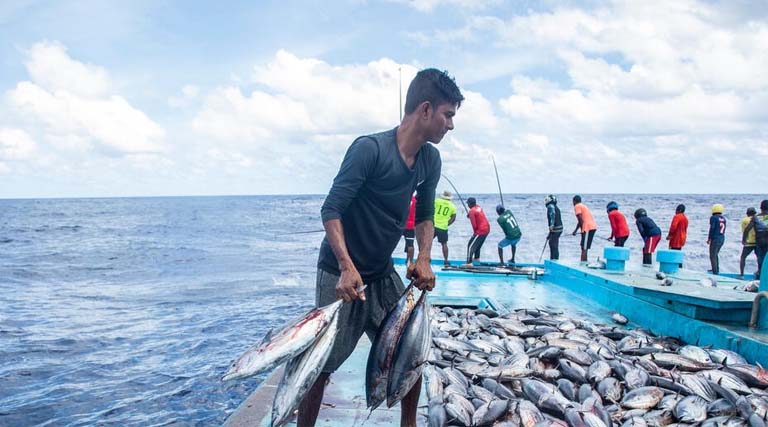
Areas beyond national jurisdiction account for nearly two-thirds of the world’s oceans and represent close to a majority of the planet’s total living space. Fishing activities in these waters are governed by an existing network of rules and regional fisheries management organizations, although geographical gaps remain. Fisheries operating in ABNJ catch around 11 million tonnes of aquatic animals each year, primarily tunas, bonitos, billfishes and elasmobranchs from the epipelagic zone.
Regional fisheries management organizations have established binding measures to regulate fishing across many ABNJs. These include observation and monitoring systems, science-based catch limits, allocation and bycatch rules, and closures where necessary to reduce pressure on marine resources. With decades of experience in managing and conserving marine biodiversity, these organizations will be central to the success of the BBNJ Agreement through capacity development, science-based management systems, data collection and monitoring, Barange noted.
“Just as healthy and biodiverse ecosystems are the foundations of sustainable fisheries, the institutions designed to govern the latter can contribute greatly to ensuring human use can coexist with and support biodiversity,” he said.
How FAO Can Help
Reliable data will be central to the effective implementation of the BBNJ Agreement. FAO’s fisheries data—covering production, trade, employment, fleet capacity and consumption of aquatic resources—along with its regular assessments of the state of marine fishery resources and the Fisheries and Resources Monitoring System (FIRMS), will be particularly valuable.
Capacity building remains essential for the success of international treaties. FAO has long supported countries in strengthening their ability to implement and comply with agreements such as the Agreement on Port State Measures to combat Illegal, Unreported and Unregulated fishing, as well as in the use of compliance-related tools including the Guidelines on Transshipment and the Global Record of Fishing Vessels. These tools are directly applicable and relevant to ABNJ ocean areas. Through the Common Oceans Program, funded by the Global Environment Facility, FAO and its partners have demonstrated how global and cross-sectoral collaboration can support effective and sustainable management of ABNJ, delivering measurable benefits for tuna stocks and improving the survival prospects of vulnerable species such as albatrosses and sharks.
For decades, FAO has worked closely with approximately 50 regional fisheries bodies, developing a networking model that will be vital for the new treaty. The organization is already supporting countries and regional fishery bodies as they prepare to implement the BBNJ Agreement. While operational details of the Agreement are still being developed, FAO’s data systems, technical expertise, networking platforms and capacity-building activities will be essential to its implementation.
“Marine biodiversity underpins sustainable fisheries and global food security. The BBNJ Agreement presents a unique opportunity to enhance global oceans governance and improve outcomes for everyone,” Barange said.
Also Read: Beyond the Grain: How Rice-Field Ponds are Forging Climate Resilient Livelihoods in Cambodia
Global Agriculture is an independent international media platform covering agri-business, policy, technology, and sustainability. For editorial collaborations, thought leadership, and strategic communications, write to pr@global-agriculture.com