
Desert Locust Outbreak Persists in Northwestern Africa: Control Measures Must Increase To Avoid Further Spread In 2026
23 December 2025, Rome: The Food and Agriculture Organization (FAO) warns that a serious desert locust outbreak continues in Northwestern Africa, with the situation remaining critical in Mauritania. A third generation of breeding is expected to worsen conditions in January, with larger hopper bands likely to appear.
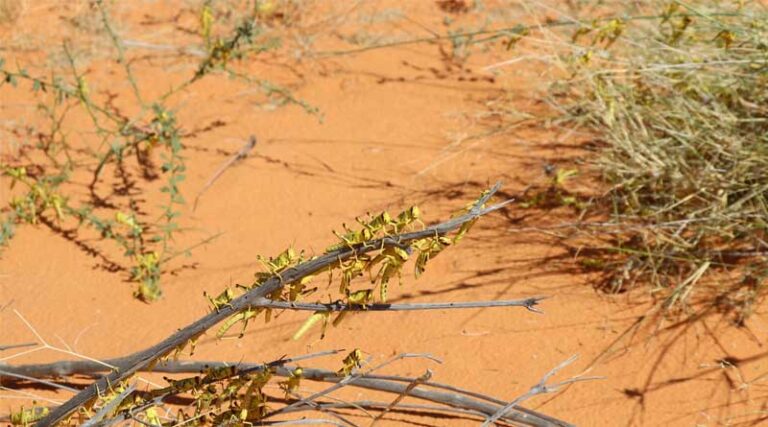
Locust activity increased from September through November in Mauritania, particularly following average and above average rains in October. Populations were increasing with numerous hopper groups and bands present in November, and new immature adult groups and small swarms appearing, some reaching Senegal. In Morocco, a mature adult group was reported near Tiznit in November, while breeding persisted in the south.
Increasing threat to crops and pastureland
FAO forecasts since November have indicated that breeding and new band formation would start this December in affected areas. If left unchecked, these bands could develop into swarms from February to March and spread into other countries of northern Africa, increasing the risk to crops and pastureland.
“The situation in Northwestern Africa remains serious and requires sustained surveillance and rapid response,” said Shoki Al-Dobai, Team Leader for FAO’s Locusts and other Transboundary Plant Pests and Diseases. “We call on affected countries, with support from partners, to increase their control operations and prepare for further breeding in the coming weeks.”
Unusual rainfall increases breeding risk
Earlier in the year, spring outbreaks were largely controlled, but prevailing winds allowed escaped locusts to concentrate in Mauritania. Summer rains in the Sahel were less favourable for locust breeding than last year; however, Mauritania experienced good breeding conditions, and small groups began reproducing during the summer.
After a first generation of hopper groups in August, a second generation appeared in October on a large scale. This second generation is now spreading along the western coast of Africa from the Senegal River to the Atlas Mountains in Morocco and will breed again in the coming months.
Cyril Piou, Locust Forecasting Officer at FAO’s Desert Locust Information Service (DLIS), explained: “Generally, rains stop at this time of year in Mauritania. Unfortunately, this year over northwestern Africa, rains are occurring in December and expected to continue in January. This creates very favourable conditions for a third generation of breeding in Mauritania and beyond.”
Regional solidarity urgently needed
The ongoing efforts of affected countries, supported by the FAO’s Commission for Controlling the Desert Locust in the Western Region (CLCPRO), are crucial to reducing risks. However, a third generation of breeding will require renewed and intensified operations, which is more challenging when rain persists. Surveys and control operations are particularly important in areas where summer and autumn rains have created suitable breeding conditions.
FAO recommends intensifying ground surveys and control operations where locust breeding is likely to occur. These areas span from the Senegal River in Mauritania to the Atlas Mountains in Morocco. Sufficient rainfall in these regions has supported vegetation growth, creating favourable conditions for locust development.
“The ongoing outbreak reminds us that regional solidarity is our strongest asset. Over the past weeks, CLCPRO has stood by its member countries by mobilizing technical teams, deploying the Western Region Intervention Force Intervention units on the ground, and activating the Regional Locust Risk Management Fund to ensure rapid support where it is most needed” said Mohamed Lemine Hamouny, Executive Secretary of the CLCPRO.
Hamouny added: “The generous donation of 100 000 liters of pesticide from the Kingdom of Morocco to Mauritania is a powerful illustration of this spirit of mutual assistance. As breeding conditions remain highly favourable, we encourage all countries to intensify surveys, strengthen cross-border coordination, and stay fully alert. CLCPRO remains committed to supporting national efforts and ensuring a united and effective regional response.”
The desert locust remains one of the world’s most destructive migratory pests. A single swarm can cover one to several hundred square kilometers. Just one square kilometer of swarm can contain up to 80 million adults, capable of consuming the same amount of food in one day as 35 000 people. Early detection and rapid response are critical to preventing a wider crisis.
FAO, through its Desert Locust Information Service (DLIS) and Commission for Controlling the Desert Locust in the Western Region (CLCPRO), continues to provide technical guidance, real-time updates and operational support to affected countries.
Global Agriculture is an independent international media platform covering agri-business, policy, technology, and sustainability. For editorial collaborations, thought leadership, and strategic communications, write to pr@global-agriculture.com


