SWAC 34 Concludes With Strong Commitment Toward Collaboration And Innovative Approaches To Locust Management
13 December 2025, Rome: The 34th Session of the FAO Commission for Controlling the Desert Locust in South-West Asia (SWAC) concluded with a renewed commitment to enhance regional cooperation and preparedness against future locust threats. Members endorsed a set of strategic recommendations aimed at strengthening coordination, data management, field operations, and long-term planning.
The recommendations emphasized having a structured platform to share real-time updates on the locust situation, review progress on planned activities, and ensure collective readiness for potential outbreaks.
Shoki Al-Dobai, SWAC Executive Secretary, commended the member countries for their continued efforts, noting that in 2024–2025 they have successfully translated lessons from the 2019–2021 desert locust upsurge into stronger, more resilient systems on the ground despite the comparatively calm period since.
Participants also underscored the importance of interregional collaboration, encouraging continued exchanges with other FAO Desert Locust Commissions in the Central (CRC) and Western Regions (CLCPRO) to harmonize survey and control methods, conduct joint activities, and share best practices and tools.
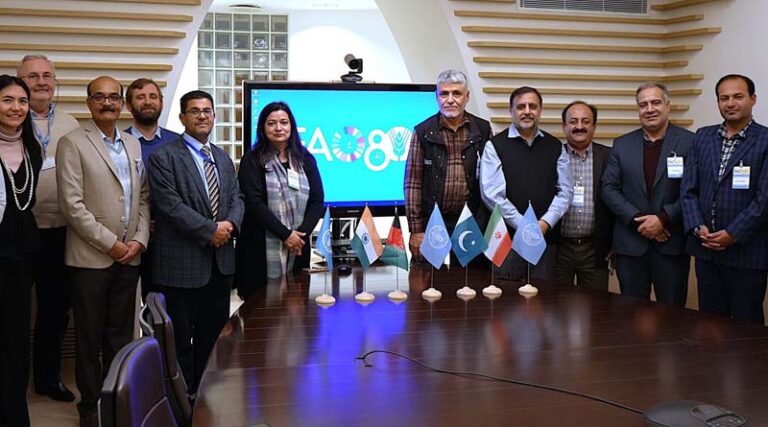
The four-day Session ( 9–12 December 2025) in Rome, hosted at the FAO SWAC Secretariat, brought together around 15 participants, including delegates from SWAC member countries: India, the Islamic Republic of Iran and Pakistan, and experts from FAO Afghanistan Office, and the Executive Secretaries of CRC and CLCPRO regions, as well as Expert from Shandong Academy of Agricultural Sciences, China Agricultural University, also took part at the opening day.
Strengthening innovation and technology adoption
Field operations will be further reinforced through wider deployment of eLocust4 devices used in data collection, expanded use of drones in surveillance and control operations, and comprehensive training on the operation, maintenance, and field testing of these technologies. These activities aim to improve functionality, reliability, and user readiness across the region.
SWAC highlighted the need to enhance preparedness through updated national contingency plans. Member countries were encouraged to maintain monthly joint cross-border surveys using the improved approach introduced in 2022, and to jointly review results and take coordinated action where needed.
“Prevention costs far less than response. Therefore, every improvement made to early warning, data sharing, training, and financing saves crops, conserves resources, and protects livelihoods,” Al-Dobai emphasized at the closing of the meeting.
SWAC also committed to continue building and strengthening partnerships that enhance regional preparedness and resilience.
The 34th Session took place as SWAC commemorated the 61st anniversary of its establishment in 1964, making it the oldest among the three regional FAO Desert Locust Commissions. Ends
Also Read: DCM Shriram and Bayer Partner to Expand Work Across Agri-Inputs and Value Chains
📢 If You’re in Agriculture, Make Sure the Right People Hear Your Story.
From product launches to strategic announcements, Global Agriculture offers unmatched visibility across international agri-business markets. Connect with us at pr@global-agriculture.com to explore editorial and advertising opportunities that reach the right audience, worldwide.