U.S. Invokes Defense Production Act to Secure Phosphorus and Glyphosate Supply Chains
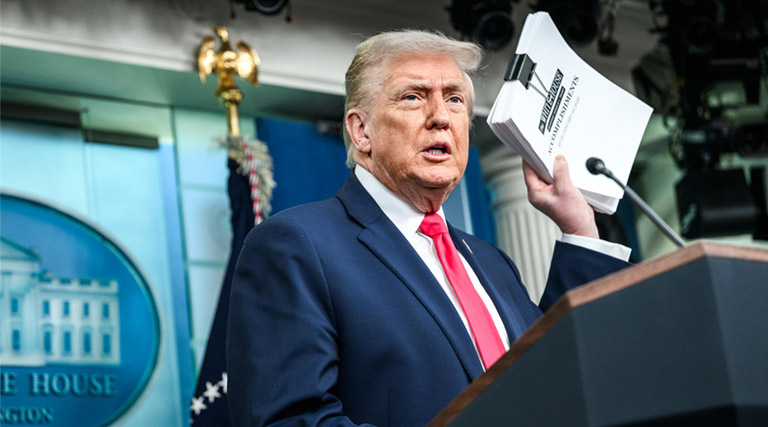
21 February 2026, Washington: In a move linking agricultural resilience with national security priorities, U.S. President Donald J. Trump has signed an Executive Order invoking the Defense Production Act (DPA) to safeguard domestic production of elemental phosphorus and glyphosate-based herbicides—inputs considered essential for both defense readiness and agricultural productivity.
Strategic Inputs Under National Security Lens
The Order highlights the strategic importance of maintaining uninterrupted access to elemental phosphorus, a material used across multiple defense-related applications, including smoke and illumination systems, semiconductor components for radar and sensing technologies, solar cells, optoelectronics, and advanced lithium-ion battery chemistries deployed in modern weapons systems.
Beyond defense applications, phosphorus is also a critical precursor in the manufacture of glyphosate-based herbicides, among the most widely used crop-protection tools in U.S. agriculture. These herbicides play a major role in ensuring efficient production of food and livestock feed, thereby supporting stable and affordable food supply chains.
The Administration noted that the United States currently relies on a single domestic producer for both elemental phosphorus and glyphosate-based herbicides, while national demand significantly exceeds existing production capacity. Any disruption, officials warned, could expose defense manufacturing and agricultural systems to supply vulnerabilities linked to external actors.
Defense Production Act Authorities Delegated
Under the Executive Order, presidential authorities provided by the Defense Production Act have been delegated to the U.S. Secretary of Agriculture. The Secretary is empowered to require the prioritization of contracts and allocate materials, services, and facilities necessary to maintain adequate production levels of these critical inputs. Implementation will take place in consultation with defense authorities, with additional regulations and directives to be issued as required.
The action reflects a broader interpretation of national defense that includes food security, recognizing the interdependence between agricultural inputs, industrial supply chains, and geopolitical stability.
Balancing Immediate Needs and Future Innovation
While reaffirming support for research into next-generation crop protection technologies, the Administration emphasized that sustaining reliable access to existing agricultural inputs remains essential in the near term. Policymakers argue that ensuring continuity in production today is necessary to prevent shocks to food systems while innovation pathways mature.
Also Read: FMC and the Two-Engine Dilemma: When the Present Devours the Future
Global Agriculture is an independent international media platform covering agri-business, policy, technology, and sustainability. For editorial collaborations, thought leadership, and strategic communications, write to pr@global-agriculture.com