‘Future-In-Charge’ Skilling Programme Expands Training to Pune, Bengaluru, and Kolkata
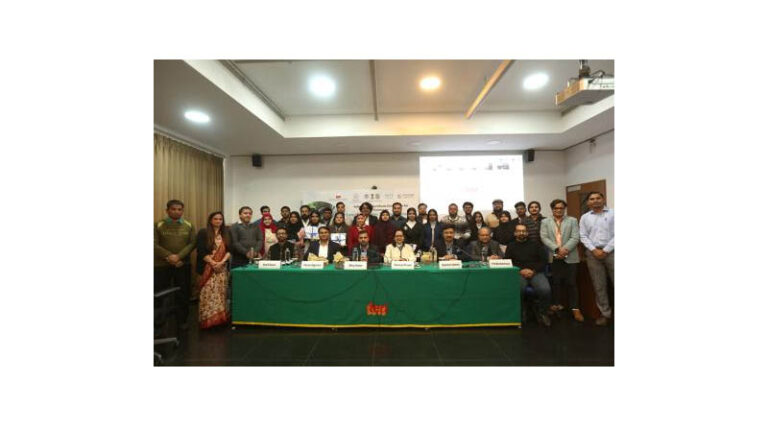
12 December 2025, New Delhi: The Energy and Resources Institute (TERI), in collaboration with Mercedes-Benz Research and Development India (MBRDI), announced the expansion of its Future-In-Charge (FIC) skilling programme—India’s first National Council for Vocational Education and Training (NCVET)-approved curriculum dedicated to EV charging infrastructure operations and maintenance. With continued support from the Ministry of Environment, Forest and Climate Change (MoEFCC) and MBRDI, the programme is now scaling beyond Delhi/NCR to Pune, Kolkata and Bengaluru and additional EV-active regions as part of Phase 2 implementation. The expansion announcement coincided with the Valedictory & Certificate Distribution Ceremony for the inaugural cohort, held today at the TERI Seminar Hall, India Habitat Centre, New Delhi.
The programme builds on the findings of the joint TERI–MBRDI whitepaper, EV Charging in India: Ecosystem Perspectives and Skilling Opportunities, which identifies critical gaps in skilled manpower for charge point operations and highlights the need for a national, industry-aligned skilling framework. The whitepaper informed the design of the NCVET-approved curriculum, developed with the support of the Ministry of Environment, Forest and Climate Change (MoEFCC) and the Skill Council for Green Jobs (SCGJ). Insights from consultations with charge point operators (CPOs), original equipment manufacturers (OEMs), academia, and policymakers informed the design of the FIC curriculum.
The module provides a blend of theory and intensive practical training, including:
- Fundamentals of EVs and battery systems
- Installation & commissioning of EV charging stations (including IoT integration)
- Diagnostics, safety, and operations
- Hands-on training with central management systems and charging hardware
- Exposure to the CPO landscape through case studies and field interactions
The pilot cohort—comprising 60 students trained at TERI’s Gwal Pahari campus—achieved promising outcomes, with nearly 50% securing placements with charge point operators (CPOs), EV service providers, and allied companies soon after completion. As part of Phase 2, TERI is working with State EV Missions, CPOs, and academic institutions to establish additional training hubs across major EV corridors.
Recognizing the programme’s demonstrated impact and the rising demand for skilled EV professionals, the MoEFCC has extended its support to scale up the Future-In-Charge (FIC) initiative to new geographies. The programme, currently operational in Delhi/NCR, is now expanding to Pune and Kolkata with support from MoEFCC, and to Bengaluru with support from MBRDI. Each training batch will include 30 students, with the capacity to train approximately 90 students across centres as the programme expands. These cities have been strategically selected owing to their rapidly increasing EV penetration, higher density of charging infrastructure, and the growing need for trained technicians and service professionals to support the sector’s accelerated growth.
Designed for young technicians, vocational students, and recent engineering or technical graduates aiming to build careers in electric mobility and charging infrastructure management, this curriculum is currently being piloted with a cohort of students under the Future-In-Charge project. Under the expansion plan, TERI will strengthen partnerships with State EV Missions, Charge Point Operators (CPOs), and leading EV manufacturers to scale FIC nationally.
“Green skilling is an essential enabler of India’s climate goals and energy transition. As we expand EV infrastructure and renewable integration, our workforce must be equipped with the competencies required for this shift. The Future-In-Charge programme is an excellent example of how diverse institutions can work together to create a curriculum that is technically robust, industry-driven, and capable of becoming a national model for EV-related skill development. The success of India’s electric mobility transition ultimately rests on a skilled and competent workforce—technicians who can install, operate, and maintain charging infrastructure with precision and safety,” said Ms Nameeta Prasad, Joint Secretary, MoEFCC, who delivered the Valedictory Address and emphasized the importance of skilling initiatives for India’s climate goals.
About the importance of public-private partnerships in building the green mobility economy, Mr Abhay Kumar, Head, Business Development, JBM Group shared, “The electric mobility sector in India has transformed rapidly over the last five years. From last-mile logistics to public transport, EV adoption is visible across Tier 1 to Tier 5 cities, and the future is extremely bright for those entering the charging and mobility domains. Public–private partnerships have been pivotal in India’s EV transition—from FAME I and FAME II to the upcoming PM e-Drive programme. With tenders for 10,000 electric buses, the scale of opportunity in charging infrastructure is immense. In just a decade, we have moved from small-capacity chargers to megawatt charging solutions. The pace of innovation underscores the need for skilled technicians who understand these advanced systems.”
Dr Dipankar Saharia, Senior Fellow & Senior Director, TERI, reiterated the need for sustained investments in EV skilling, innovation, and knowledge systems and said, “The Future-In-Charge programme reflects our commitment to preparing a future-ready workforce aligned with the country’s transition goals. Our collaborations with NCVET, the Skill Council for Green Jobs, NSDC, and key ministries ensure that our programmes stay aligned with national skilling priorities. Future-In-Charge is a powerful example of how industry, academia, and government can jointly strengthen India’s EV charging ecosystem. Through Future-In-Charge, TERI is working to address the urgent need for skilled EV charging technicians as India scales charging infrastructure and integrates renewable solutions. The strong response from trainees demonstrates the relevance of this initiative.”
The coming years will see FIC emerge as a cornerstone of India’s green mobility skilling landscape. With Phase 2 underway and expansion to multiple cities, TERI envisions FIC becoming a national reference model for EV charging workforce development, enabling:
- Standardized EV charging operations training across states
- Greater industry–academia collaboration
- Higher employability for technicians
- Increased reliability and safety in India’s charging network
Also Read: DCM Shriram and Bayer Partner to Expand Work Across Agri-Inputs and Value Chains
📢 If You’re in Agriculture, Make Sure the Right People Hear Your Story.
From product launches to strategic announcements, Global Agriculture offers unmatched visibility across international agri-business markets. Connect with us at pr@global-agriculture.com to explore editorial and advertising opportunities that reach the right audience, worldwide.