IDF International Symposium on Sheep, Goat, Camel and Other Non-Bovine Milk Concludes at NDDB Anand
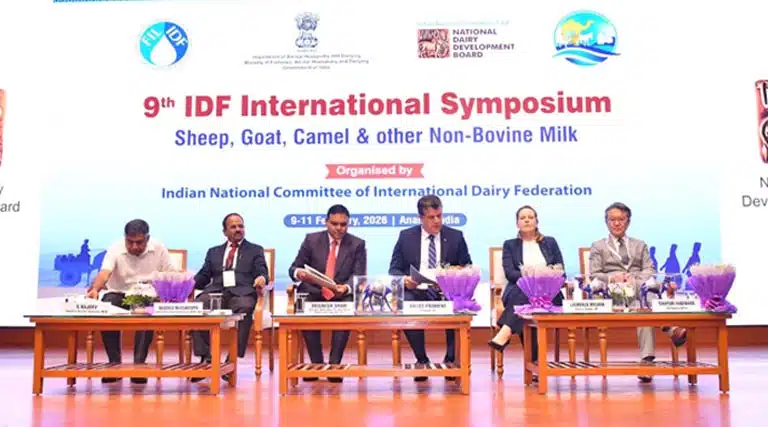
12 February 2026, New Delhi: The 9th International Dairy Federation (IDF) Symposium on Sheep, Goat, Camel and Other Non-Bovine Milk, organised by the Indian National Committee of the International Dairy Federation (INC-IDF), was successfully held at the National Dairy Development Board (NDDB), Anand, from 9–11 February 2026. The event brought together global experts, policymakers, industry leaders, researchers and dairy professionals to discuss innovation, sustainability and the future of non-bovine dairy systems.
The inaugural session was attended by Mr Gilles Froment, President, IDF; Dr Meenesh Shah, Chairman, NDDB, Board Member, IDF and Secretary, INC-IDF; Dr Naveena B. Maheswarappa, Animal Husbandry Commissioner, Department of Animal Husbandry and Dairying, Government of India; Mr Takayuki Hagiwara, FAO Representative in India; and Ms Laurence Rycken, Director General, IDF, along with IDF board members, academics, milk producers, processors and policymakers.
The symposium hosted more than 90 international and national delegates and featured seven technical sessions addressing key themes including emerging markets and consumer trends, smallholder empowerment and socio-economic impacts of non-bovine dairy, farm management strategies for resource optimisation and sustainability, processing technologies and quality innovations, nutritional and bio-functional aspects of non-bovine dairy products, biosecurity and disease management, and global standards and policies. The event also showcased research posters and exhibitions highlighting innovations, technologies and services related to non-bovine milk.
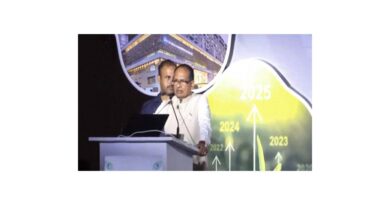
In his address, IDF President Mr Gilles Froment highlighted the importance of goat, sheep and camel milk as sustainable dairy options for regions facing harsh climatic conditions. He outlined six priority areas for the sector—environment, animal welfare, nutrition, food safety, health and inclusivity—and noted that while global milk production has surpassed one billion tonnes, growth remains uneven. Emphasising India’s 25 percent share of global milk production, he called for expansion of the non-bovine dairy sector through improved food safety standards, innovation and stronger nutritional data. He also stressed the need for enhanced collaboration and climate-resilient practices, particularly in the context of FAO’s 2026 International Year of Rangelands and Pastoralists.
Dr Meenesh Shah underscored the growing relevance of non-bovine milk, describing it as climate-resilient, nutritionally valuable and often managed by women farmers. He reflected on India’s dairy transformation from scarcity to self-sufficiency through Operation Flood and highlighted continued growth through cooperative structures and scientific initiatives such as the National Dairy Plan. He outlined NDDB’s initiatives, including the Animal Disease Control Programme providing free vaccination against foot-and-mouth disease and brucellosis, disease management programmes and advanced breeding technologies such as sex-sorted semen and genomic tools to enhance productivity. He also highlighted progress in goat artificial insemination and camel milk marketing through Amul’s Sarhad Dairy, calling for scaling up such models to help farmers capture greater consumer value and unlock the full potential of non-bovine dairy.
Dr Naveena B. Maheswarappa emphasised the symposium’s relevance in view of the United Nations’ 2026 International Year of Grazing Lands and Pastoralists. He noted India’s sustainable food consumption patterns and increasing demand for diverse sources of animal protein. He advocated the promotion of non-bovine milk as a nutrient-rich, climate-friendly product produced through organic and free-range systems, describing sheep, goat and camel value chains as low-carbon production systems. He stressed the importance of advanced processing technologies, certification systems, traceability and cluster-based scientific approaches to develop nature-positive, high-value products and resilient value chains.
Mr Takayuki Hagiwara highlighted the growing importance of camel, goat and sheep milk in India’s dairy future and emphasised the need to strengthen value chains, marketing and promotion of products such as goat cheese. Referring to experiences in Rajasthan and Kutch, including NDDB’s Sarhad Dairy initiative, he noted increasing recognition of camel milk’s nutritional value and called for greater scientific research collaboration with the Indian Council of Medical Research (ICMR). He reaffirmed FAO’s commitment to working with NDDB and the Government of India to improve pastoralist livelihoods and support the development of the non-bovine dairy sector.
Ms Laurence Rycken acknowledged India’s leadership in science-driven and inclusive dairy development and thanked the Indian National Committee and NDDB for hosting the symposium. She noted that climate change, urbanisation and changing consumer preferences are reshaping the dairy sector, positioning non-bovine milk as an important solution for regions such as India, the Middle East and Africa. She highlighted India’s diverse dairy systems and the significant role of women in the sector, calling for data-driven and practical strategies to overcome value-chain barriers, strengthen sustainability and enhance global collaboration.
Also Read: Indian Agricultural Products Will Get Zero-tariff Market Access In The US
Global Agriculture is an independent international media platform covering agri-business, policy, technology, and sustainability. For editorial collaborations, thought leadership, and strategic communications, write to pr@global-agriculture.com