
VERU North Zone Strengthens Disaster Preparedness among Veterinary Students at Palampur Agriversity
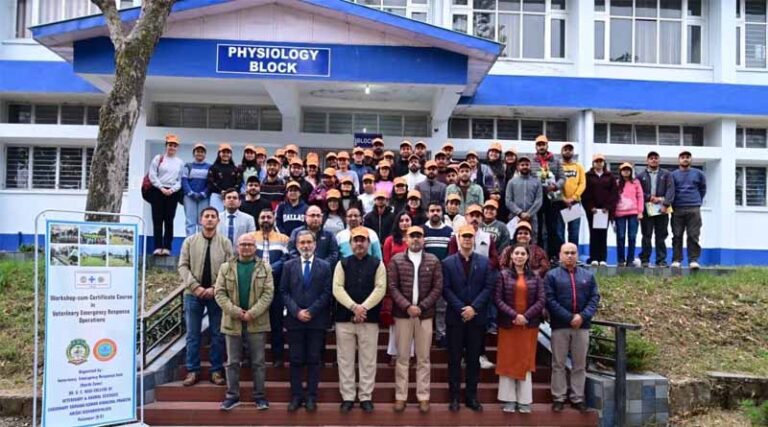
25 December 2025, Palampur: Chaudhary Sarwan Kumar Himachal Pradesh Krishi Vishvavidyalaya Palampur, through the Veterinary Emergency Response Unit (VERU), North Zone, successfully concluded its 10th Block Certificate Course on Veterinary Emergency Response Operations, reinforcing the University’s commitment to capacity building in disaster management and emergency veterinary services.
The Valedictory Function was graced by the Vice-Chancellor, CSKHPKV Palampur, Prof. Dr. A.K. Panda, along with Prof. Dr. Adarsh Kumar, Heads of Departments, faculty members and invited experts. Certificates were distributed to the successful participants on the occasion.The intensive training programme was organized under the guidance of Convener, VERU North Zone at College of Veterinary and Animal Sciences and coordinated by Prof. Dr. Subhash Verma. The course execution was efficiently managed by the core organizing team comprising Dr. Ankur Sharma, Dr. Rishika Vij and Dr. Ankaj Thakur, who ensured effective conduct of academic sessions, practical demonstrations, field exposure and evaluation activities.
A total of 48 final-year B.V.Sc. & A.H. students of the University participated in the programme, which included over 17 expert lectures and hands-on demonstrations aimed at enhancing preparedness and response capabilities during disasters. Resource persons from the Fire Brigade Centre, Dog Squad (Kangra), mountaineering experts and the National Disaster Response Force (NDRF) contributed to the multidisciplinary learning experience.
The participants received practical training in fire safety, search and rescue operations, casualty evacuation in hilly terrain, including improvised stretcher-making using ropes and bamboo, and life-saving first-aid skills such as CPR, management of choking, severe bleeding, fractures and head injuries. Demonstrations of advanced NDRF rescue equipment further enriched the experiential learning process, with active student involvement throughout.
A field visit was also organized to provide exposure in data collection, field assessment and stakeholder interaction, enhancing situational awareness and decision-making during emergency situations. The programme concluded with a formal evaluation examination to assess learning outcomes.
The successful conduct of the course marks a significant step by the university in building disaster-resilient veterinary human resources, especially suited to the needs of fragile and challenging hill ecosystems, and reflects the University’s proactive role in strengthening emergency response capabilities among future veterinarians.
Also Read: White Paper on Data Exclusivity in India’s Agrochemical Sector Released by CCFI
Global Agriculture is an independent international media platform covering agri-business, policy, technology, and sustainability. For editorial collaborations, thought leadership, and strategic communications, write to pr@global-agriculture.com


