
Growth In Organic Fruit And Vegetables: Opportunities For Retailers
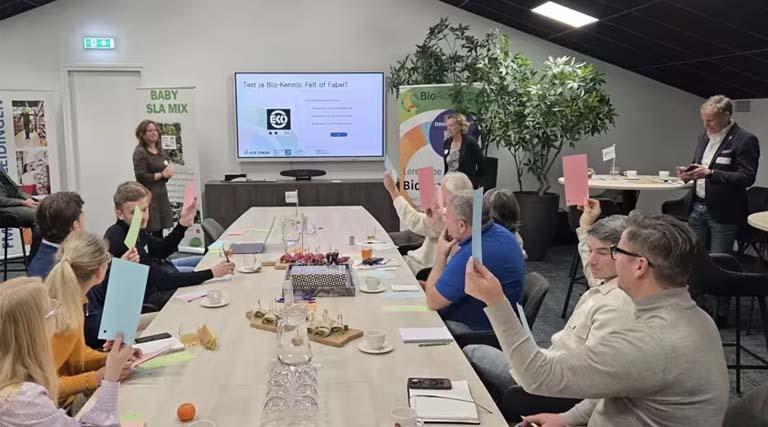
16 January 2026, Netherlands: Organic fruits and vegetables are rapidly gaining ground in Dutch supermarkets. But how can that growth be accelerated? The answer lies in knowledge, inspiration and a carefully considered approach to shelf space, according to BioAcademy and Rijk Zwaan. They have taken the initiative to co-develop the very first e-learning programme for fresh produce category managers and employees. Dutch retailers got a sneak preview during the Bio AGF Kennisdag event held at Green Specialties on 11 December 2025.
Growth ambitions in organics
Statistics show that organic fresh produce was the fastest growing category in Dutch supermarkets in the first half of 2025. Ruud van Manen, Fruit Category Manager at Jumbo Supermarkets, has first-hand experience of this. “We used to have to push organic fruits and vegetables more actively, but demand is now rising naturally,” he said. “Our customers are increasingly choosing organic products, mainly for health reasons. In recent years, we have further expanded our range and organised additional promotional activities. Such initiatives are also contributing to the growth. Our goal is that organic products will account for 10% of our total fruit and vegetable sales by 2027.”
Several members of purchasing organisation Superunie have also set targets for their organic fresh produce category, according to Junior Buyer Tine Scholtze who was representing the company at the event
82% choose organics for health reasons
The Bio AGF Kennisdag event offered inspiration for further accelerating growth in this segment. One example was the new e-learning programme for fresh produce managers and employees. BioAcademy’s Geertje Schlaman gave attendees a sneak peek at the content with a mini quiz: “True or false: consumers mainly choose organics for health reasons?” she asked. The correct answer was ‘true’. “The environment used to be a factor in the purchasing decision for organics, but 82% of consumers now say they buy them for health reasons,” she stated.
Tempting the ‘light green’ fresh-produce shopper
In addition to providing facts about organic products, the e-learning programme also contains marketing knowledge. This is based on the retail expertise of Edwin Vels and Gert Bloemendal from the professional training company FMCG Opleidingen. At the event, they explained how to tempt the ‘light green’ fruit and vegetable shopper. “That starts with the right organic range, clear information about the price, targeted promotion and effective presentation,” they said.
Nudging helps
Another effective way to stimulate sales of organic fresh produce is nudging. This was illustrated in the presentation by Jochem Wolthuis, a multifaceted fruit and vegetable expert: “In stores, a gentle push in the right direction really seems to help.”
In real-world trials at Dutch supermarket chains Jumbo and Albert Heijn, on-shelf messaging such as ‘Choose organic, choose taste’ and ‘95% of people buy organic’ led to a 20% increase in sales. “Positive attention works,” said Jochem.
In addition to nudging, he believes that staff in the fruit and vegetable department play a crucial role. “Fresh produce is the most beautiful but also most difficult section, so treat your employees well and invest in their training,” he added.
Praise for the initiative
According to Jumbo’s Ruud, the e-learning programme can form part of the training activities. “It’s not suitable for all our stores, but it is for the pacesetters,” he commented. Tine also praised the BioAcademy initiative: “As Superunie, we have no say in how our store formulas organise their own sales, but we can certainly draw their attention to it.”
Geertje was pleased with that initial feedback. “Hopefully, this initiative will help us accelerate the sale of organic fresh produce together,” she reacted.
Organic cultivation requires investment
The event concluded with a delicious tasting session and guided tour by Noralie van den Einden of Green Specialties. The family business specialises in the cultivation, processing and sale of spinach, rocket and babyleaf vegetables, of which 10% are grown organically. Attendees were particularly impressed to see the LaserWeeder, a chemical-free solution for controlling weeds using precision lasers and AI. “Growing organically is challenging, but this machine helps us to keep going,” stated Adrie van den Einden. The fact that large investments of this kind make organic cultivation more expensive is an interesting extra piece of information for inclusion in the e-learning programme.
Keen to know more about the e-learning programme? Send an email to info@bioacademy.nl or check out BioAcademy’s full knowledge and learning offering. (Dutch)
Also Read: Tagros Chemicals to Acquire Bayer’s Global Flubendiamide Business
Global Agriculture is an independent international media platform covering agri-business, policy, technology, and sustainability. For editorial collaborations, thought leadership, and strategic communications, write to pr@global-agriculture.com


