
Managing Resistant Blight Strains Now In The UK
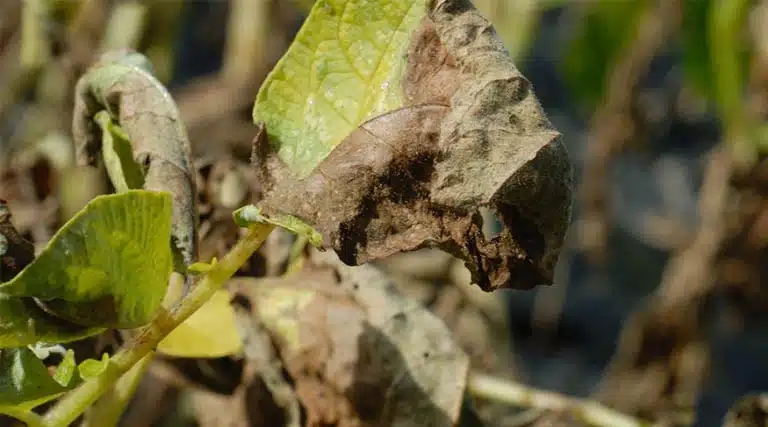
12 February 2026, UK: Independent monitoring by the Fight Against Blight initiative has confirmed the UK’s first recorded instance of EU_43 blight, sampled from a volunteer potato plant in Suffolk last November.
Further analysis of the sample indicates the strains could show resistance to CAA and OSBPI fungicides fungicide active groups.
Despite this new information, it is important to acknowledge that growers and agronomists should still utilise these valuable fungicide groups this season and manage blight populations through an effective strategy.
It is well documented that compromised actives can still be used effectively in a good mixing and alternating approach, to reduce the outbreaks of resistant strains, (Van den Bosch et al. 2014)1.
Using this mixing and alternating policy, has the reduced the population of EU_43 in Denmark down from 64% in 2022 to just 4% in 20252.
REVUS® remains effective against all other blight strains in the UK3 and has consistently shown within independent field trials to be one of the most potent blight fungicides.
Syngenta Technical Manager, Andy Cunningham, advocates: “To ensure CAA & OSBPI chemistry retain their effectiveness, and to avoid selecting for any further resistant strains, products containing these actives should always be used in mix with a complementary blight fungicide with an alternative mode of action. This includes actives such as: fluazinam, propamocarb, cyazofamid and amisulbrom.
“This has been the Syngenta recommended strategy over recent seasons, to minimise the risk of blight resistance developing and retain the efficacy of REVUS® and other fungicides for growers.”
Andy added that the isolated case of EU_43 in a volunteer potato, long after the crop had been lifted, reinforces the importance of field hygiene to minimise exposure of unprotected plants.
“Volunteers are always at high risk for blight infection. Given the mild and wet autumn and direction of wind currents blowing over northern France, untreated plants could inevitably pick up the infection,” he warns.
“It remains crucial to minimise the number of volunteers, through harvesting set-up and weed control strategies, as well as monitoring plants and dumps for any signs of early infection, to prevent disease foci.
“These measures, along with an effective mixing and alternating blight strategy, will be best placed to prevent issues of EU_43, or other blight strains, from developing.”
Syngenta is also working on a pipeline of products that will be introduced to the market over the coming years that will further mitigate the impact of these resistant strains.
David Cooke, plant pathologist at the James Hutton Institute (JHI), stressed that the EU43 detection in the UK was limited to a single, late-season volunteer sample and was not associated with commercial crop failure.
“This does not mean EU43 is suddenly widespread in the UK, but it does mean we need to be alert.
“Being forewarned is being forearmed. Knowing EU43 is here allows us to make smart decisions now, rather than reacting after control failures occur.
“This is one of the main objectives of the Fight Against Blight program that, thanks to industry sponsorship, will continue into the 2026 season,” he concluded.
Also Read: Indian Agricultural Products Will Get Zero-tariff Market Access In The US
Global Agriculture is an independent international media platform covering agri-business, policy, technology, and sustainability. For editorial collaborations, thought leadership, and strategic communications, write to pr@global-agriculture.com


