Beyond The Machines Is Africa’s Smart Farming Future
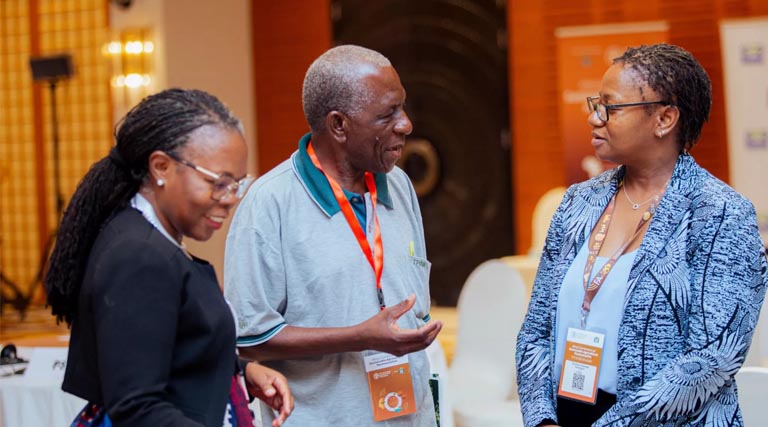
28 February 2026, Tanzania: The Africa Conference on Sustainable Agricultural Mechanization (ACSAM) wraps up with a shared practical vision for scaling sustainable mechanization on the continent. Climate-smart agriculture also became a constant topic of discussion, as delegates hammered home on the need to close yield gaps by transforming Africa’s agri-food systems to be more efficient, inclusive, resilient, and sustainable. The 3-day conference was organized by the Food and Agriculture Organization of the United Nations (FAO) and hosted by the Government of the United Republic of Tanzania to build partnerships, address issues, and bolster successful models and future trends for more pronounced, scalable solutions for African farmers.
In a manifesto that the conference shared, they outlined five action areas to pose mechanization as a major driver of agricultural systems transformation in Africa:
- Action Area 1: Policy Alignment and Institutional Coordination for sustainable agricultural machines (SAM)
- Action Area 2: Financing and Investment Mechanisms for SAM
- Action Area 3: Mechanization Service Provision, Supply Chains, and Market Systems
- Action Area 4: Research, Innovation, Digitalization, and Knowledge Exchange
- Action Area 5: Human Capital Development and Inclusive Participation
The Coalition for African Rice Development (CARD) reported that the rising consumption of rice on the continent is constrained by both supply and demand faults. FAO recently cited that limited access to farm machinery is one of the major causes of yield gaps on the continent. Promoting mechanization in rice farming can help close yield gaps by significantly reducing labor and capital, while boosting production and income.
“IRRI has supported countries to develop mechanization strategy and policy for its implementation as requested by partner countries.”, stated IRRI Senior Scientist Dr. Rabe Yahaya, “Research is the core business of IRRI. That is why we observe, investigate, identify problems, and give them solutions.”, he continued. Together with partner CGIAR Centers based on the continent, Dr. Yahaya also shared that IRRI has provided capacity-building to help put policies into action and encouraged scaling especially of mechanized rice technologies.
Dr. Yahaya moderated the parallel session on “Research, Innovation, and Knowledge Exchange for Sustainable Agricultural Mechanization” where research and development’s (R&D) role in advancing SAM in Africa became a key point of discussion. R&D remains significantly underfunded by governments despite the African Union’s target for member states to allocate 1% of their agricultural Gross Domestic Product (GDP). This is also causing periodic closures and reopenings of curricula in multiple colleges focusing on agriculture. Panelists and participants called to drive funding for research for development tailored for African contexts, as well as bolstering university-research-government partnerships to secure commitment, as priority action points to improve agricultural research and education, and bridge the disconnect between universities and local farming communities.
IRRI also participated in the Youth Masterclass on mechanization hire services as a business model. Sustainability and financing became key discussion points as Dr. Rabe discussed successful service provision models from Ethiopia, Burkina Faso, Zimbabwe, and India. He highlighted five elements for creating a sustainable mechanization service provision business model for impact: understanding hire service as a business enterprise; understanding the local area and market; selection of appropriate machinery; operation and maintenance of agricultural equipment for hire service business; and managing hire service as a business.
Promoting mechanization in rice farming is an essential step towards enhancing productivity and reducing pre- and post-harvest losses. “In Tanzania, IRRI’s strategy is to forge public-private partnerships to promote scale-appropriate mechanization technologies that save time and labor and to improve the timeliness of operations across the rice production cycle, to reduce drudgery, especially for women who are often burdened with more time-consuming farm activities.”, said IRRI Country Representative for Tanzania Dr. Pauline Chivenge.
IRRI’s efforts in IRRI Tanzania include conducting training workshops, collaborating with local stakeholders to ensure access to appropriate machinery, and providing technical support to farmers in implementing mechanized practices. IRRI plans to create a comprehensive strategy that addresses the mechanization challenges facing African agriculture and to influence policies that enable adoption of mechanization across the continent, paving the way for a more productive and resilient agricultural sector. “This strategic approach directly addresses the challenges identified by both CARD and FAO. Furthermore, in partnership with CGIAR Centres, we can leverage our collective expertise and resources to facilitate the development and dissemination of innovative technologies suitable for different farming contexts.”, Dr. Chivenge continued.
During the conference days, the CGIAR centers including IITA, ILRI, IRRI and WorldFish had a joint booth displaying the centers’ brochures, flyers and factsheets providing first-hand information to the delegates. The conference ended with the field visit to the IITA Youth Incubation Center in Kwembe, Ubungo municipality, where delegates experienced how the Center’s model can be used as the blueprint for implementing the conference’s pathways and recommendations. The Center addresses youth employment through targeted investment and financing; and building local partnerships to strengthen sustainable mechanization. The local partnership between IITA and the local artisan serves as an umbrella for CGIAR mechanization innovations where the manufacturers does not only work on cassava processing machines but also rice weeder, feed choppers for animal feeds and threshers for rice and beans.
Also Read: Cargill Opens Largest Dairy Feed Plant in South Asia in Punjab
Global Agriculture is an independent international media platform covering agri-business, policy, technology, and sustainability. For editorial collaborations, thought leadership, and strategic communications, write to pr@global-agriculture.com