Farmer-focused, Demand-driven Crop Breeding Through Product Advancement Meetings
06 February 2026, Nigeria: “Breeding must respond to real-life challenges. When women processors speak about grain hardness or we see farmers struggle with varieties that are difficult to shell, it becomes clear that our work must be grounded in their realities.” Penda Sissoko, Scientific Coordinator, IER, Mali
To ensure that crop breeding delivers varieties responsive that respond to real-world challenges and opportunities, CIMMYT continues to champion inclusive, data-driven, and market-oriented approaches. Stakeholder-inclusive product advancement meetings, such as those recently held in Mali and Nigeria, are a core component of the Africa Dryland Crops Improvement Network (ADCIN) approach to achieving greater impacts from crop improvement efforts.
The growing momentum behind this approach was clearly evident during last month’s product advancement meetings, which focused on sorghum, pearl millet, and groundnut—three crops that are essential to food security and livelihoods across the region.
“These crops, traditionally seen as staples, must now be viewed as strategic assets in addressing food insecurity and climate challenges,” said Jibrin Mohammed, Director of the Centre for Dryland Agriculture (CDA) in Kano, Nigeria.
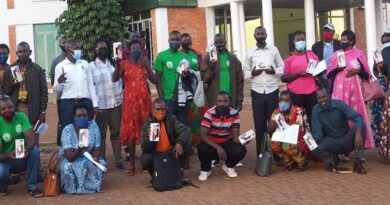
The meetings brought together farmers, scientists, processors, seed companies, and other value chain actors to evaluate progress, align on market needs, and shape the next steps in varietal development and release. They also underscored a growing shift in crop breeding—one that is inclusive, data-driven, and attunedto the real-world needs of end users.
“We are no longer breeding in isolation. These meetings ensure that what we advance is not only scientifically strong but practically relevant to those who depend on it.” Baloua Nebie, CIMMYT sorghum breeder.
Advancing local solutions in Mali
In Sotuba, Bamako, Mali, stakeholders met from May 1–2, 2025 to assess the performance of sorghum, pearl millet, and groundnut cultivars from the 2024 cropping season. Led by the Institut d’Economie Rurale (IER), with support from CIMMYT and the International Crops Research Institute for the Semi-Arid Tropics (ICRISAT), the event aimed to align breeding efforts with market demands and farmer needs.
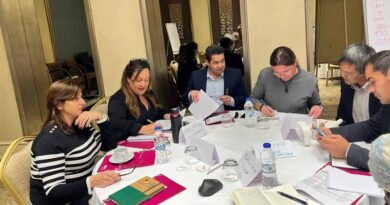
The meeting brought together a diverse group of stakeholders, including researchers, farmers, seed producers, extension agents, traders, and processors. Participants validated promising lines and hybrids for each market segment by comparing their performance to the threshold of key traits defined by the product design team (PDT).
The group also agreed on the next steps for the advancement, release, and deployment of these cultivars marking another milestone in inclusive, demand-driven crop improvement for dryland regions.
Key highlights included:
- Sorghum: Four medium duration open-pollinated varieties (OPVs) were selected for advancement toward national release. Additionally, 12 OPVs (short and medium duration) and 14 hybrids (short and medium duration) were selected for participatory trials with farmers in 2025. Discussion emphasized the need to incorporate feedback from women processors, particularly around grain hardness and culinary quality. Improved technician training and better field documentation were also identified as priority areas.
- Pearl Millet: The early-maturing hybrid CzMH22 001 met all advancement criteria and was recommended for further development. Several hybrids showed strong yield potential. However, threshing efficiency remains a challenge. Stakeholders identified a gap in the release of early-maturing varieties and agreed to fast-track the development of such entries.
- Groundnut: Market segments were updated to reflect evolving demand, including aflatoxin resistance and seed size. Four top-performing lines were selected for national performance trials. The program committed to enhance forward planning and integrate improved germplasm from ICRISAT and IER.
Nigeria charts a strategic course
At Bayero University in Kano (BUK), Nigeria, the product advancement meeting was held on May 5 and 9 for the three crops. Organized by the Lake Chad Research Institute (LCRI) and the Institute for Agricultural Research (IAR), in collaboration with BUK, CIMMYT and ICRISAT brought together about 70 participants, including scientists, processors, extension experts, farmer representatives, and CGIAR representatives from CIMMYT, ICRISAT, and IITA.
Some highlights included:
- Sorghum: Trials were redesigned to reflect farmer priorities—grain and stover, pest resistance, and ease of harvesting. Six OPVs and three hybrids were selected for multi-locations trials that will be followed by the release process. Farmer-managed TRICOT trials provided critical insights into preference ranking and adaptation zones.
- Pearl Millet: Breeding teams focused on biofortified hybrids rich in iron and zinc,addressing Nigeria’s pressing malnutrition challenges. Promising lines were advanced with the dual promise of yield and nutrition. Recommendations were made to ensure training of technicians for better data quality.
- Groundnut: Several high-yielding lines were prioritized for advancement, while others required broader testing due to variable performance across zones. Emphasis was placed on screening for leaf spot resistance and short-duration maturity traits.
Ignatius Angarawai, Country Representative, ICRISAT Nigeria aptly noted, “We must build resilient seed systems anchored in climate-smart crops like pearl millet, sorghum, and groundnut.”
Shared lessons
Both countries emerged from their respective meetings with renewed focus and actionable plans. Key shared recommendations included:
- Earlier planning cycles: Holding advancement meetings by January will better align seed multiplication and trial schedules.
- Data quality: Stronger trait scoring, data curation, and statistical analysis are urgently needed.
- Stakeholder inclusion: Farmers, processors (especially women), and market actors should be involved earlier in the breeding process.
- Integrated Evaluation: Traits related to culinary quality, nutritional value, and market preference must be assessed alongside agronomic performance.
- Partnership for scale: Integrating germplasm and research expertise across institutions partners such as IER, LCRI, ICRISAT, IAR, and CIMMYT, is vital for sustainable impact.
“Our work is not just about science,” said Kevin Pixley, Director of the Dryland Crops Program at CIMMYT. “It’s about asking: does this variety help a farmer feed her/his family, earn some income, and adapt to climate change?” he concluded.
Also Read: UPL Q3FY26: Revenue Up 12%, EBITDA Up 13% as Seeds and Crop Protection Drive Growth
Global Agriculture is an independent international media platform covering agri-business, policy, technology, and sustainability. For editorial collaborations, thought leadership, and strategic communications, write to pr@global-agriculture.com