International Experts Convene in China to Strengthen National Defense Against Wheat Blast
03 March 2026, China: Wheat blast is an emerging fungal disease that threatens global wheat production. The pathogen has spread across borders, overcoming host resistance and reducing the effectiveness of fungicide regimes, raising alarm among major wheat-producing countries. China produces over 140 million tons of wheat annually with 17% of the total wheat production globally, making early prevention critical for both national and global food security.
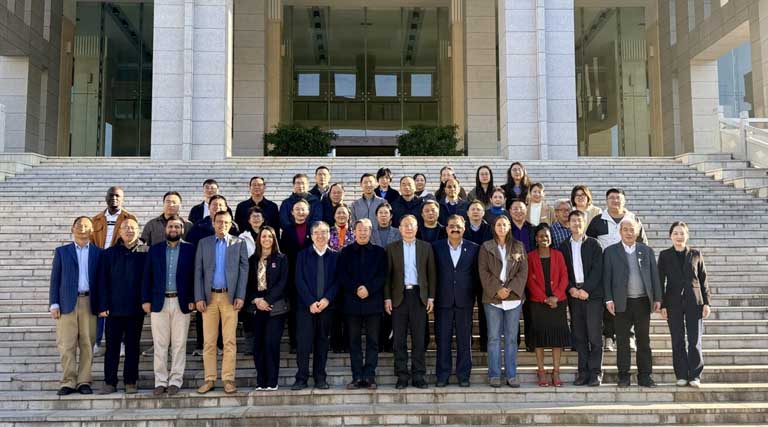
To understand and develop management strategies, International and Chinese agricultural scientists convened in Kunming during January 29-30, 2026, for the “Symposium on the Management and Biosafety of Hazardous Wheat Diseases,” co-organized by Yunnan Agricultural University, CIMMYT, Chinese Academy of Agricultural Sciences, and other Chinese agricultural research institutes.
While the threat of rusts and Fusarium head blight was also addressed, the primary focus of the discussions was the proactive defense against wheat blast, a highly destructive fungal disease identified as a serious emerging threat to China’s wheat production.
Predictive modeling presented at the symposium indicates that several regions in southern China are climatically suitable for wheat blast establishment, underscoring the urgency of prevention before the disease enters the country.
Scientists from seven countries presented their research findings and exchanged experiences, stressing that an effective response demands a multi-layered strategy. Such a strategy should merge international research collaboration with reinforced national frameworks for disease surveillance, seed health, rapid varietal development and capacity development.
Building a Proactive Shield for Chinese Wheat
The consensus reached at the symposium outlines a multi-layered defense strategy for China:
- Prevention First: Experts emphasized that keeping the disease out is the most effective strategy. This will involve strengthening seed health systems, implementing strict phytosanitary measures, and deploying early-warning surveillance in high-risk zones.
- Preparedness on the Ground: Experts outlined practical management tools for farmers, including accelerating the development of blast-resistant wheat varieties through international breeding collaborations and validating safe fungicide protocols for emergency deployment.
- Strengthening the Safety Net: A key outcome was the commitment to enhance national monitoring networks, rapid diagnostic capabilities, and institutionalize real-time data sharing between research institutions and border provinces.
A Unified Call for Action
Participants agreed that proactive coordination, rather than reactive crisis management — will determine the effectiveness of China’s defense.
“The time for isolated efforts is over,” said Zhonghu He, distinguished scientist and the country representative in China, at the closing session. “This meeting has forged a clear path forward, i.e., integrating international expertise with national mobilization to protect our food security before a crisis begins.”
The event underscored China’s commitment to leveraging global scientific partnerships, such as with CIMMYT, to safeguard its agriculture. The strategy positions China not only to safeguard its own wheat production, but also to contribute actively to regional and global wheat health security through shared surveillance, research, and rapid response mechanisms.
Also Read: Atish Chandra Assumes Charge as Secretary, Department of Agriculture & Farmers Welfare
Global Agriculture is an independent international media platform covering agri-business, policy, technology, and sustainability. For editorial collaborations, thought leadership, and strategic communications, write to pr@global-agriculture.com