IRRI: New Whole-Grain ‘Super Rice’ Could Boost Nutrition and Climate Resilience
09 December 2025, Laguna: As the world moves toward a population of nine billion, the challenge is no longer just producing enough food but ensuring it is nutritious and sustainably grown. With climate pressures increasing and agricultural lands becoming more limited, researchers continue to explore innovations that can help secure the future of rice-based food systems.
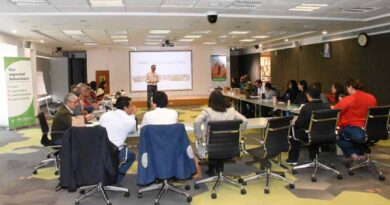
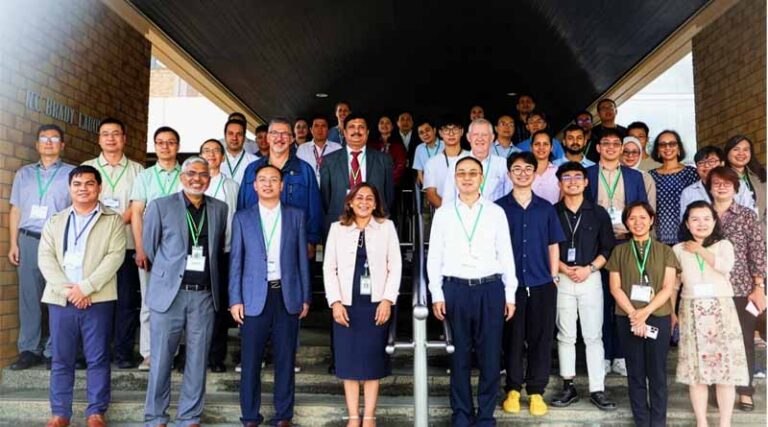
To support this goal, scientists at IRRI and their global partners convened for an international workshop to discuss the potential of Green Nutritious Super Rice (GNSR) – a new generation of nutritious, climate-resilient, and environmentally sustainable rice varieties.
Building on the Green Super Rice (GSR) initiative launched in 2008, a collaboration between IRRI and the Chinese Academy of Agricultural Sciences (CAAS) with support from the Chinese Government and the Gates Foundation (formerly Bill & Melinda Gates Foundation), the program developed “super rice” varieties that are high-yielding, multi-stress tolerant, and resilient to key abiotic stresses such as drought, floods, and salinity. Also, these varieties perform well even with reduced fertilizer and pesticide applications, which are costly and can harm both people and the environment.
Dr. Qifa Zhang, Director of Hubei Hongshan Laboratory, highlighted the pressures of traditional rice production in China. He said, “We produce over a third of the world’s rice on only 25% of the area, using just 8% of arable land, but consuming 35% of fertilizers and pesticides. This intensive production created major sustainability challenges. GSR was a newsworthy science project that pioneered solutions for climate-resilient rice.”
Dr. Michael Quinn, IRRI Research Director for Rice Breeding Innovations, emphasized the potential of whole-grain rice as a prototype model for GNSR to unlock proteins, vitamins, minerals, fiber, and bioactive compounds that go far beyond calories. “Even small increases in nutrient content can have meaningful health impacts for billions who rely on rice daily. Realizing this vision requires collaboration across plant breeding, nutrition, food science, policy, and the private sector, alongside public education to encourage whole‑grain rice consumption,” he added.
Dr. Lizhong Xiong, Director of the National Key Laboratory of Crop Genetic Improvement at the Huazhong Agricultural University (HZAU), Wuhan, emphasized the need to strengthen the long-standing partnership between the two institutions. He urged “the need for renewed scientific collaboration with IRRI on the GNSR and reaching millions of rice consumers globally.” HZAU has already developed and released a rice variety of Huamoxiong3, the first prototype of GNSR in the form of whole grain black rice (WGBR).
Dr. Jauhar Ali, IRRI Principal Scientist and Research Leader for Hybrid Rice Technology, highlighted the key achievements of the GSR initiative. It has released 78 varieties globally, covering 44 million hectares cumulatively, including multi-stress-tolerant inbreds and hybrids that can withstand drought, flooding, salinity, and heat.
Farmers growing these varieties have seen significant yield and income gains. In the Philippines, NSIC Rc 480 (GSR8), one of the country’s most widely adopted stress-tolerant rice variety, is cultivated on over 0.7 million hectares. It can withstand drought, salinity, and flooding, with yields doubling from 4.4 t/ha up to 8.3 t/ha under rainfed lowland and irrigated conditions, respectively.
Mestiso 120 is the world’s first low-methane hybrid and has been licensed to Tao Foods Company in the Philippines. IRRI showcased the IR 173374H, a newly developed heat-tolerant hybrid that thrives at 38°C. Biofortified cultivars have reached 15 ppm iron and 30 ppm zinc, nearly double the conventional levels, while low-GI and low-methane varieties such as NSIC Rc 514 combine health benefits with environmental sustainability.
The GNSR breeding program aims to develop new whole-grain rice varieties with enhanced traits, including longer shelf life, palatability, improved taste, low glycemic index, and reduced rancidity. Dr. Ali emphasized that these efforts go hand in hand with research on natural pigmentation to increase the antioxidant levels and micronutrient content, while being safe for heavy metals such as arsenic to ensure the rice remains safe for consumers.
Emphasizing urgency, Dr. Ali said, “Rice is consumed by 55% of the global population. The time is right. If we cannot act now, the opportunity may be lost. It is now or never.” “We are developing a new generation of whole-grain rice, including improved embryos, anthocyanins, and bioactive elements. These varieties will be evaluated, demonstrated, and released to ensure higher yields and income,” he added.
The workshop also showcased advances in whole-grain and black rice, like multi-omics research, gene editing to expand nutrient density, shelf life, and accessibility.
Commenting on GNSR potential, Dr. Yvonne Pinto, Director General of IRRI said, “Building on these advances, this workshop is an excellent opportunity to explore ways to accelerate the development of climate-resilient, climate-positive, and nutritious GNSR varieties.”
“These efforts support IRRI’s 2025–2030 strategy, providing targeted, demand-driven solutions that deliver measurable impact to benefit farmers and communities globally. As partners in this mission, we can drive the transformation of rice-based agri-food systems toward resilience, nutrition, and sustainability,” she ended.
Also Read: Cargill Chair and CEO Brian Sikes joins Deere & Company’s Board of Directors
📢 If You’re in Agriculture, Make Sure the Right People Hear Your Story.
From product launches to strategic announcements, Global Agriculture offers unmatched visibility across international agri-business markets. Connect with us at pr@global-agriculture.com to explore editorial and advertising opportunities that reach the right audience, worldwide.