New Initiative Empowers Civil Society To Safeguard Forests
08 December 2025, Kinshasa: Civil society organisations (CSOs) are calling for stronger governance and more effective policies to protect the Congo Basin tropical forests, which are essential for regulating the global climate, safeguarding biodiversity and sustaining the livelihoods of millions of people who rely on them for food, energy and income.
The CSOs, brought together under the Renovated Climate Working Group for REDD+ (GTCR-R), emphasise the need to promote bottom-up governance models that place local communities and civil society at the centre of decision-making.
This call to action was made during the launch of a transformative project known as SC-REDD+ (Support to Civil Society for the Decentralised Monitoring of REDD+ Projects and Programmes in the DRC), which is funded by FONAREDD and CAFI.
The new three-year project (2025–2028), implemented by CIFOR-ICRAF and the GTCR-R, brings together more than 100 grassroots environmental CSOs across the DRC.
The project aims to strengthen the constructive and informed participation of civil society in the REDD+ process, enhance collaboration with government and technical partners and increase public awareness of the drivers of deforestation.
REDD+, which stands for Reducing Emissions from Deforestation and Forest Degradation, is a global framework under the UNFCCC that helps developing countries reduce carbon emissions through forest conservation and sustainable land management, while improving livelihoods and protecting biodiversity.
“The contribution of civil society is fundamental to shaping inclusive and effective policies, and to advancing efforts to combat deforestation on the ground. We are pleased to work alongside GTCR-R to achieve the goals of this project,” said Stibniati Atmadja, SC-REDD Project Co-Lead at CIFOR-ICRAF.
Speaking at the launch, Guy Kajemba, the GTCR-R National Coordinator in the DRC, emphasised the importance of empowering civil society as a driving force in safeguarding the Congo Basin forests and ensuring that climate action and forest conservation initiatives genuinely reflect community priorities.
“For too long, decisions about our forests have been made without the full involvement of the people who depend on them. Through this project, civil society will be better equipped to monitor REDD+, expose destructive practices and ensure that forest governance in the DRC is transparent, accountable and centred on communities,” he said.
The GTCR-R advocates for stronger environmental governance and mobilises support for action on forest protection, natural resource management and climate change. It also provides trusted insights on the drivers of deforestation and tracks the implementation of REDD+ and its impacts on local and Indigenous communities.
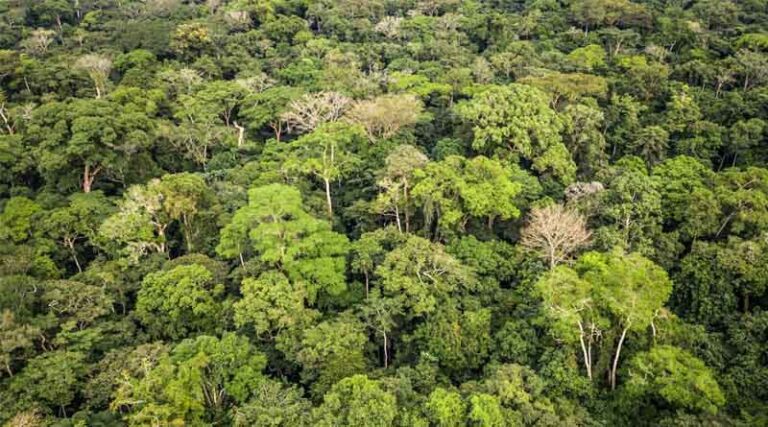
The Congo Basin forests, which span six countries (the DRC, Republic of Congo, Cameroon, Central African Republic, Gabon and Equatorial Guinea) are the world’s second-largest tropical forest.
A recent World Bank assessment of the Forest Ecosystem shows that the DRC contains 122 million hectares of these forests, which is the largest share in the entire region. This represents 53 percent of the country’s land area, making the DRC not only the most forest-rich nation in Africa but also the ecological heart of the Congo Basin.
Yet the condition of the DRC’s Congo Basin forests has been declining more rapidly than in any other country in the region. According to the Global Forest Watch (GFW) platform, the DRC lost 7.45 million hectares of humid primary forest between 2002 and 2024, accounting for roughly 36 percent of its total tree-cover loss over that period.
Regionally, across the six Congo Basin countries, the World Bank reports that the value of ecosystem services provided by the forests – including carbon storage, timber, fuelwood, water regulation, soil protection and non-wood forest products (e.g., honey, nuts, mushrooms, bushmeat and medicinal plants) – nearly doubled over two decades, rising from USD 590 billion in 2000 to USD 1.15 trillion in 2020. Over the same period, the total forest asset value increased markedly, from USD 11.4 trillion to USD 23.2 trillion.
As the country with the largest share of this forest estate, the DRC is a major contributor to these trends. With livelihoods and the national economy so closely tied to the health of the forest, these trends reinforce the crucial role of civil society in driving more accountable and inclusive forest governance.
Also Read: Biotalys Receives Regulatory Approval by U.S. EPA for EVOCA
📢 If You’re in Agriculture, Make Sure the Right People Hear Your Story.
From product launches to strategic announcements, Global Agriculture offers unmatched visibility across international agri-business markets. Connect with us at pr@global-agriculture.com to explore editorial and advertising opportunities that reach the right audience, worldwide.