Rethinking Land Optimization: Balancing Nature, People And Productivity
27 February 2026, Africa: With the global population projected to reach around 8.5 million by 2050, the pressure on land is intensifying. Rising demand for food, energy, and urban space, coupled with global challenges such as food security, climate change, and industrialization, is pushing today’s landscapes to their limits.
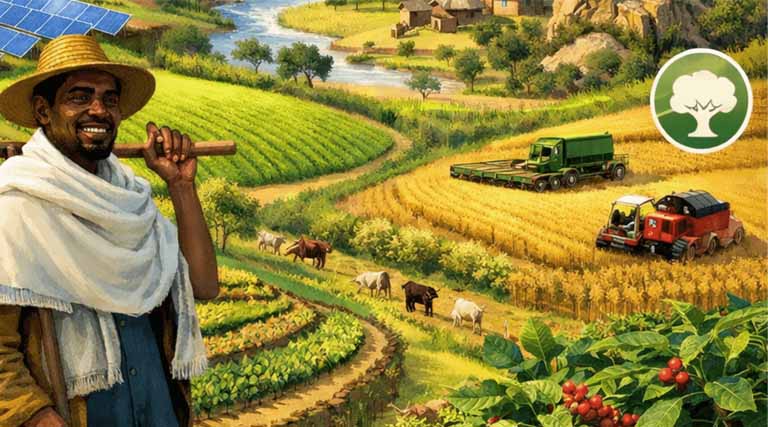
Landscapes, therefore, must simultaneously produce food, conserve biodiversity, regulate water, store carbon, and sustain livelihoods, often within the same spatial footprint.
Multi-functionality of landscape offers a strategic approach to address these overlapping pressures, providing nature-based solutions that enable humans and ecosystems to coexist harmoniously. This is due to the fact that land itself is an integrator of those global challenges, allowing multiple objectives to be considered together rather than in isolation. Multifunctional Landscapes (MFLs) by definition embraced the coexistence of multiple, sometimes incommensurable functions, dynamic socio-ecological interactions, and diverse stakeholders with varying priorities. Trade-offs are a therefore an inevitable feature of MFLs: expanding agriculture may reduce habitat quality, protecting forests may limit short-term economic gains, and intensifying production may undermine soil health.
Also Read: Cargill Opens Largest Dairy Feed Plant in South Asia in Punjab
Global Agriculture is an independent international media platform covering agri-business, policy, technology, and sustainability. For editorial collaborations, thought leadership, and strategic communications, write to pr@global-agriculture.com