The Right People In The Room: How Zim AEKN Is Turning Agroecology Conversations Into Coordinated Action
24 February 2026, Zimbabwe: Conversations are the engines that turn shared ambition into shared direction. When partners pursue the same vision through different initiatives, it is easy for evidence, lessons, and innovations to sit in separate lanes, valuable, but fragmented. Bringing those lanes together is how ideas meet reality, how gaps become visible, and how a movement gains momentum. That is why CIMMYT Zimbabwe continues to embed itself in national conversations, to help shape research and policy agendas, and to ensure that what works on the ground can be strengthened, adapted, and scaled.
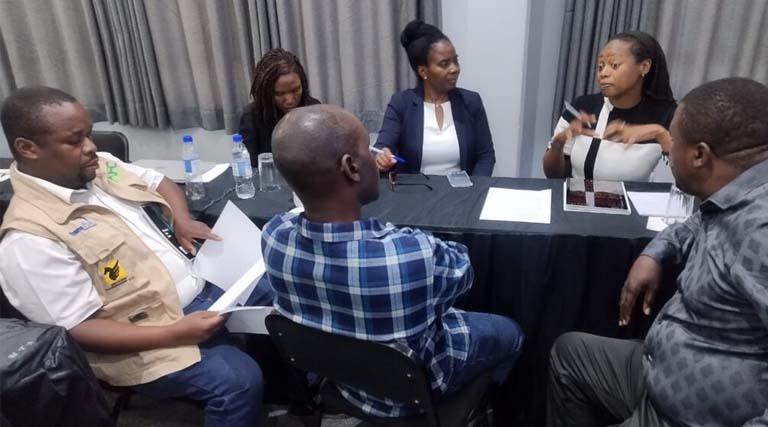
One such opportunity of collective alignment came during a two-day workshop on Deepening the Development of the Zimbabwe Agroecology Knowledge Network (Zim AEKN). Researchers, academics, practitioners, and farmer representatives, from more than 13 different organizations and institutes from across Zimbabwe who echoed the same urgency. The diversity in institutes was not incidental, but it was the point. Agroecology requires coordination across disciplines and communities, because the challenges it seeks to address, from degraded soils, climate stress, biodiversity loss, food and nutrition insecurity are interconnected.
Established in 2024, Zim AEKN emerged in response to the urgent need to transform Zimbabwe’s food and agricultural systems. Anchored in agroecology principles, the network brings together universities, research institutions, civil society organizations, policymakers, and farming communities to advance sustainable farming practices and foster resilient livelihoods. CIMMYT is proud to be part of this network, bring its expertise and experiences from the CGIAR agroecology Initiative and the Multifunctional landscape science program.
The 2025 workshop focused on deepening the foundations of Zim AEKN and charting a collective pathway for its growth and effectiveness. To unlock honest exchange and avoid the usual “presentation-heavy” rhythm of meetings, part of the group discussions were structured using a World Café format. Participants worked through each of the designated thematic areas, building on each other’s ideas and challenging assumptions in real time. Three themes guided the dialogue, from Soil Health, Seed Systems, and Indigenous Crops and Livestock Systems. The format did something subtle but powerful, as it softened institutional boundaries. A researcher could listen to a farmer representative describe the realities of depleted fields and erratic rains, while a practitioner could question what “scaling” means when inputs are expensive or labor is scarce; and a policymaker could hear where enforcement fails and where incentives could work better.
Soil health as the anchor of resilience
In the Soil Health group, convened by Dr. Vimbayi Chimonyo, Scientist at CIMMYT, a key message was repeated in different ways. “Soil health sits at the heart of agroecology and climate resilience. Without healthy soils, productivity gains are short-lived, biodiversity declines, and climate shocks hit harder.” Yet the group also surfaced persistent challenges that keep soil health from moving beyond rhetoric. Participants noted the limited availability of long-term data on soil restoration strategies and the uneven access farmers have to soil health measurement tools. Even where tools exist, they are often underused, because they can be expensive, technically demanding, or poorly aligned with farmers’ decision-making cycles. The group raised the need for standardized, user-friendly instruments that can translate soil science into practical choices: what to apply, when to apply it, and what outcomes to expect.
The group also highlighted research gaps that reflect today’s overlapping crises: how soil health can address climate stress while supporting biodiversity and food security; how soil functions connect with ecosystem diversity; and how agriculture contributes to soil pollution. Just as importantly, participants stressed that soil is not managed only by farmers. The conditions that shape soil management also sit with policymakers, extension and law enforcement structures, youth groups, and traditional leaders. Broad stakeholder involvement was framed not as a courtesy, but as a necessity.
From dialogue to action
On the second day, each thematic group consolidated and prioritized research topics, identifying potential projects and outputs for the year ahead and beyond, assessing required resources, and outlining future activities. The Soil Health group focused on evaluating the effectiveness of restoration strategies and examining how community interactions both shape and are shaped by soil degradation. Members emphasized the need for context-specific interventions, which are tailored to Zimbabwe’s ecological and socio-economic realities, rather than importing “one-size-fits-all” solutions.
To keep momentum beyond the workshop, the group committed to monthly meetings, active advocacy, and collaborative research within Zimbabwe and with partners across Africa. These commitments matter because networks can easily become lists of members rather than engines of action. Regular convening turns relationships into working partnerships and working partnerships into measurable outcomes.
As the workshop drew to a close, participants finalized the establishment of thematic working groups on soil health, seed systems, and indigenous crops and livestock. Each group began defining short- and long-term goals, identifying challenges and opportunities, and clarifying knowledge gaps requiring further research. Possible outputs ranged from state-of-the-art reviews and policy briefs to farmer-focused webinars, demonstrations, and learning exchanges, each with tentative timelines to keep ambition grounded.
Linking Zim AEKN with CGIAR Multifunctional Landscapes work
Across the two days, one thread remained clear on how Zim AEKN’s priorities align strongly with CIMMYT’s work, particularly under MFL. The network’s emphasis on soil health resonates with CIMMYT’s agroecology living lab research approaches on soil organic carbon, mulching, and organic amendments, where farmer-led trials are already generating practical insights that can inform restoration pathways at scale. Likewise, the focus on indigenous crops and livestock reinforces the value of documenting and strengthening systems that are already adapted to local conditions, work that connects with ongoing trials and learning on small grains, legumes, and integrated livestock practices in smallholder contexts.
In this way, MFL offers more than a parallel initiative as it provides scientific evidence, participatory models, and learning systems that can help Zim AEKN translate its vision into coordinated action. And Zim AEKN, in turn, offers a national platform where evidence can meet policy, where farmer realities can shape research priorities, and where partners can move together, toward the same horizon.
Because transformation rarely begins with a perfect plan. More often, it begins with the right people in the same room, asking better questions and choosing to stay in conversation long enough to build something lasting.
Also Read: Bayer Launches Multi-Crop Seed Brand ‘newgold®’ to Help Farmers Tap the Low-Carbon Biofuel Economy
Global Agriculture is an independent international media platform covering agri-business, policy, technology, and sustainability. For editorial collaborations, thought leadership, and strategic communications, write to pr@global-agriculture.com