Cargill Opens Largest Dairy Feed Plant in South Asia in Punjab
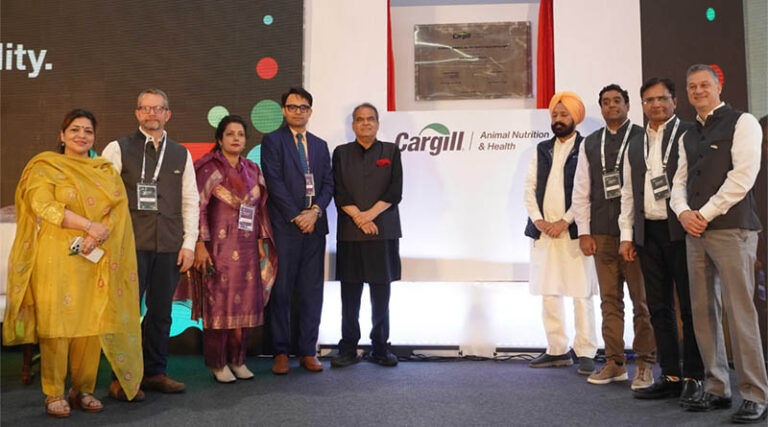
26 February 2026, Chandigarh: Cargill Animal Nutrition & Health has strengthened its long-term commitment to India’s fast-growing livestock sector with the inauguration of a state-of-the-art dairy feed manufacturing facility in Wazirabad, Punjab. Built with an investment of ₹300 crore, the plant marks a significant expansion of the company’s footprint in one of India’s most productive dairy belts and reinforces Punjab’s strategic importance in Cargill’s South Asia growth plans.
Spread across 15 acres, the facility has an annual production capacity of 400,000 metric tons, making it Cargill’s largest dairy feed plant in South Asia. It is the company’s second manufacturing unit in Punjab, following its existing plant in Bathinda. The project is expected to generate over 1,000 direct and indirect employment opportunities, contributing to local livelihoods and strengthening the regional agri-economy.
Supporting India’s Dairy Self-Reliance
The new plant aligns with India’s broader vision of self-reliance in key agricultural inputs under the ‘Atmanirbhar Bharat’ initiative. By expanding domestic manufacturing capacity for high-quality dairy feed, Cargill aims to reduce supply gaps and improve consistent access to safe, science-based nutrition solutions for dairy farmers.
Products manufactured at the Wazirabad facility will be marketed under Cargill’s globally recognized brands, including Provimi and Purina. These offerings will cater to multiple customer segments, including dairy farmers, commercial producers, and feed mills, with specialized formulations for young calves and high-yielding milking cows.
Strategically located in a high-density dairy region, the plant brings production closer to farming communities, improving supply reliability while reducing logistics timelines. Equipped with advanced automation and built to global standards for safety and biosecurity, the facility is designed to ensure consistent product quality and compliance with BIS guidelines.
Strengthening Punjab’s Dairy Ecosystem
Speaking at the inauguration, Sanjeev Arora, Punjab’s Minister of Industries & Commerce, highlighted the state’s strong agricultural foundation and growing attractiveness for agri-food investments. He noted that investments by multinational companies such as Cargill would further energize Punjab’s industrial ecosystem, create employment, and enhance rural prosperity. The Punjab government, he added, remains committed to supporting such initiatives and positioning the state as a preferred destination for agri-sector investments.
Ravinder Balain, President, Cargill India and Senior Managing Director, Cargill Animal Nutrition & Health, India, stated that expanding manufacturing capacity closer to key dairy clusters would enable farmers to access high-quality, low-toxin feed more reliably. He emphasized that improved feed availability would enhance milk yields, animal health, and farm profitability while supporting local economic development.
Tapping into the World’s Largest Milk Market
India has maintained its position as the world’s largest milk producer for several years, accounting for more than a quarter of global milk output. Dairy is the country’s largest agricultural commodity by value, contributing approximately 5% to the national economy and directly supporting the livelihoods of over eight crore farmers, according to official statistics.
With rising dairy consumption and increasing demand for productivity-enhancing solutions, access to quality feed has become central to sustaining growth across the value chain. By scaling up production capacity in Punjab, Cargill aims to support improved feed conversion efficiency, better herd health, and stronger returns for dairy producers.
Building on ‘Make in India’ and Sustainable Operations
The Wazirabad plant builds on Cargill’s decades-long engagement with Indian farmers and its alignment with the ‘Make in India’ agenda. Beyond expanding local manufacturing, the facility is expected to contribute to skill development and economic activity in surrounding communities.
Also Read: FMC’s Rimisoxafen Becomes First-Ever Dual Mode of Action Herbicide Classified by HRAC
Global Agriculture is an independent international media platform covering agri-business, policy, technology, and sustainability. For editorial collaborations, thought leadership, and strategic communications, write to pr@global-agriculture.com