Brazil Approves 912 Pesticide Registrations in 2025
Guest Author: Flavio Hirata, Partner at AllierBrasil, Expert in pesticide registration.
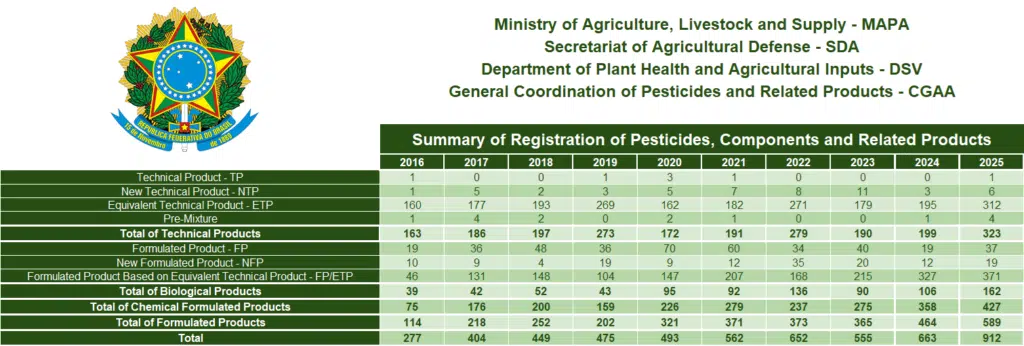
10 January 2026, Brazil: In 2025, Brazil reached a new record for approved pesticide registrations: 912 products, comprising 323 Technical Products (TP + NTP + ETP + pre-mix), 427 Chemical Formulated Products (FP + NFP + FP/ETP) and 162 Biological Products.
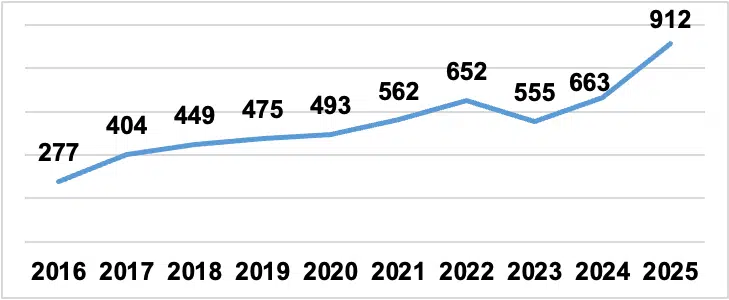

Compared to approvals in 2024, highlights include registrations of equivalent technical products (+60%), biological products (+53%) and the overall total of approved products (+38%).
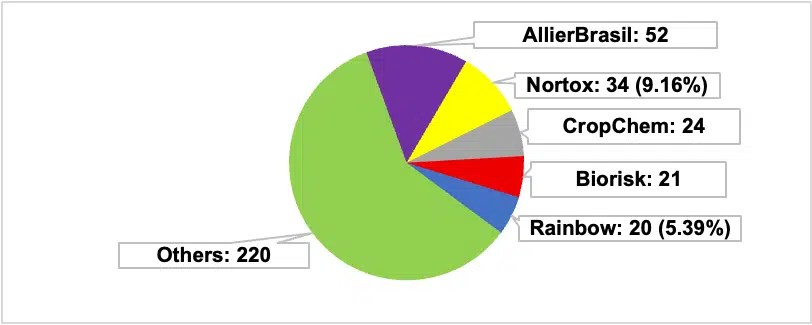
Among the approved Chemical Formulated Products, the vast majority are products based on Equivalent Technical Products, also referred to as “generics” (371, or 86.9% of Chemical Formulated Products). This product category is the most important for companies seeking to access the Brazilian market, especially companies from China and India, which are the main suppliers of generic products.
Companies with the most approvals of Equivalent Formulated Products in 2025
Average approval times are still very long: 63.4 months for Chemical Formulated Products and 14.5 months for Biological Products. For equivalent technical products (generics), the average was 67.4 months, a 24% increase versus the average of the last five years for the same category; and for generic formulated products, the average was 64.7 months.
Although the time necessary for registration remains long for chemical products, the gap versus biopesticides shows that sustainability is consolidating as a strategic pathway for the sector. The Bioinputs Law reinforces this trend: under Article 37, bioinputs will no longer be classified as pesticides and will have their own rules, better suited to their characteristics.
Companies with the most approvals of Biological Products in 2025
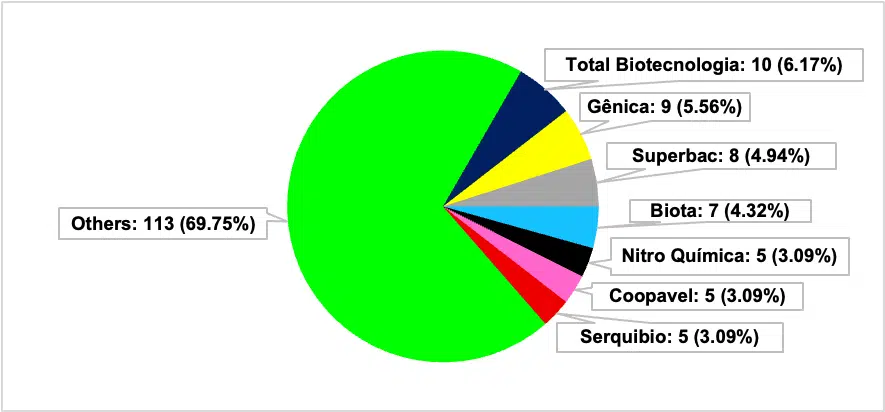
The increase in the number of approved registrations is not directly related to an increase in product use in the farms. However, there is an increase in use driven by greater availability of brands and suppliers, more competition and lower prices, thereby enabling more farmers to benefit from this type of technology at more affordable prices.
Also Read: India’s Pesticides Management Bill, 2025: How It Differs from the Insecticides Act, 1968
Global Agriculture is an independent international media platform covering agri-business, policy, technology, and sustainability. For editorial collaborations, thought leadership, and strategic communications, write to pr@global-agriculture.com