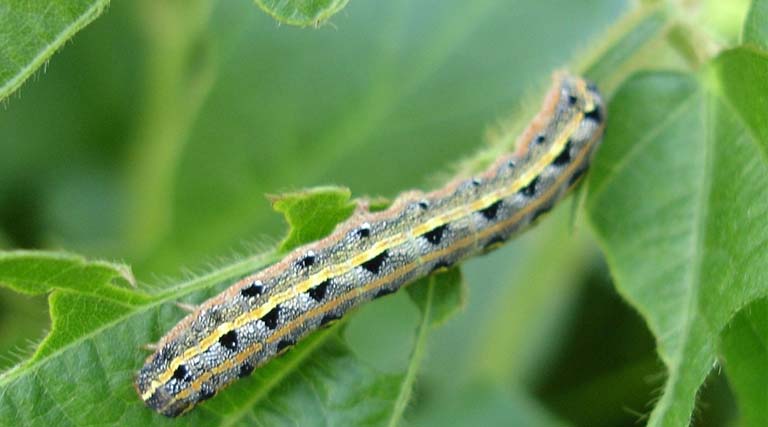
Migratory Ecotype Confirmed in Fall Armyworm: New Insights for Global Pest Monitoring
15 January 2026, Beijing: A new open-access study published in Insects (January 2026) provides strong scientific evidence that the fall armyworm (Spodoptera frugiperda), one of the world’s most destructive invasive crop pests, exists in two distinct forms, a migratory ecotype and a resident (non-migratory) ecotype. The findings have major implications for pest forecasting, early-warning systems, and regional crop protection strategies, particularly in Asia and Africa where the pest continues to cause widespread damage to maize and other crops.
Why migration matters in fall armyworm outbreaks
The fall armyworm’s ability to travel hundreds of kilometres with seasonal winds is the biological engine behind its explosive spread across continents. While its migration behaviour has been widely documented, scientists have long debated whether migratory individuals are biologically distinct from those that remain and reproduce locally. This new research settles that question by demonstrating stable, measurable morphological differences linked directly to flight performance.
What the researchers did
Scientists from leading Chinese agricultural research institutions compared:
- Wild migratory populations captured using high-altitude searchlight traps in Yunnan Province, a key migration corridor for fall armyworm entering China
- Laboratory-reared (resident) populations maintained for multiple generations
- Successive indoor generations (F1–F3) derived from migratory moths
They measured multiple traits including body size, wing dimensions, body weight, and flight capacity using precision morphometrics and flight-mill experiments.
Clear physical differences define migrants
The study found that migratory fall armyworm moths consistently showed:
- Longer and broader wings
- Greater body length and width
- Lower body weight compared to laboratory populations
These features translate into lower wing loading and higher aerodynamic efficiency, making migrants better suited for long-distance flight. In contrast, resident moths were heavier but had smaller wings, a combination less favourable for sustained migration.
Migration traits fade quickly without environmental cues
One of the most important findings is that these migratory traits are not genetically fixed. When migratory moths were reared indoors under stable conditions:
- The first generation (F1) retained strong migratory morphology and superior flight capacity
- By F2, most traits had weakened
- By F3, both morphology and flight performance were indistinguishable from resident laboratory moths
This rapid shift confirms that the migratory ecotype is driven mainly by environmental conditions, not permanent genetic divergence.
A practical tool for identifying migrants in the field
Beyond confirming the existence of a migratory ecotype, the researchers developed a simple, field-ready identification method using just two parameters:
- Wing Loading (WL) – the body mass carried per unit wing area
- Forewing Aspect Ratio (FA) – an indicator of flight efficiency
Using statistical modelling, the study showed that these two measurements can reliably distinguish migratory from resident individuals. When applied to field-caught moths, nearly 70% of individuals were identified as migratory, confirming that migration dominates peak-season populations.
Why this matters for global agriculture
For policymakers, extension agencies, and crop protection professionals, these findings are highly significant:
- Improved early warning: Identifying migratory moths allows better prediction of regional outbreaks
- Targeted control strategies: Resources can be focused on migration corridors and peak influx periods
- Smarter monitoring systems: Morphology-based screening can complement radar, traps, and forecasting models
In regions like South and Southeast Asia, where fall armyworm migration is closely tied to monsoon wind systems, such tools can help reduce crop losses before infestations escalate.
A step forward in migratory pest science
This study provides one of the clearest demonstrations to date that fall armyworm has adopted a migratory ecotype strategy to enhance survival and spread. By linking morphology, flight performance, and field applicability, it bridges fundamental insect ecology with real-world pest management needs.
As climate variability and global trade continue to reshape pest movement patterns, insights like these will be critical in building resilient, science-driven agricultural protection systems worldwide.
Also Read: Tagros Chemicals to Acquire Bayer’s Global Flubendiamide Business
Global Agriculture is an independent international media platform covering agri-business, policy, technology, and sustainability. For editorial collaborations, thought leadership, and strategic communications, write to pr@global-agriculture.com