Dietary Guidelines for Americans 2025–2030: Frequently Asked Questions (FAQ)
13 January 2026, Washington: The release of the Dietary Guidelines for Americans 2025–2030 marks a major shift in how the United States defines healthy eating over the next five years. Issued jointly by the U.S. Department of Health and Human Services (HHS) and the U.S. Department of Agriculture (USDA), the guidelines have wide-ranging implications not only for consumers, but also for farmers, food processors, nutrition programmes and global food systems.
Below are answers to the most important questions surrounding the new guidelines.
What are the Dietary Guidelines for Americans?
The Dietary Guidelines for Americans are the U.S. government’s official nutrition recommendations, updated every five years. They guide federal nutrition programmes, school meals, food assistance schemes, military rations and public health messaging, while also shaping consumer behaviour and food industry trends.
The 2025–2030 edition represents one of the most substantial revisions in decades, placing strong emphasis on real, minimally processed foods.
Why were the 2025–2030 guidelines updated so significantly?
The update responds to a growing national health challenge. Diet-related chronic diseases such as obesity, diabetes and cardiovascular conditions now account for the majority of U.S. healthcare spending. Rising prediabetes rates among adolescents and declining metabolic health among adults prompted policymakers to simplify nutrition advice and refocus on food quality rather than calorie counting alone.
What is the core message of the new guidelines?
The central message is clear and direct:
Eat real food, prioritise nutrient-dense choices, and reduce highly processed foods.
The guidelines reposition food—not pharmaceuticals—as the foundation of long-term health.
What foods are Americans encouraged to eat more of?
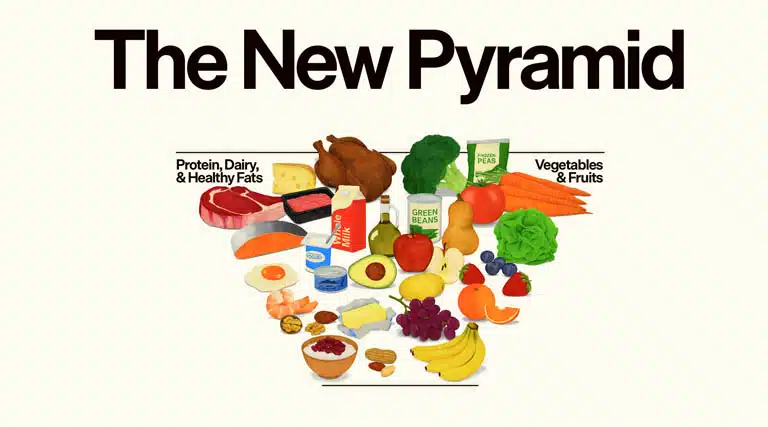
Americans are advised to increase consumption of:
- Protein-rich foods at every meal, including meat, poultry, fish, eggs, dairy, legumes, nuts and seeds
- Full-fat dairy products with no added sugars
- Whole fruits and vegetables consumed in minimally processed forms
- Healthy fats from whole foods such as seafood, eggs, nuts, seeds, olives and avocados
- Whole grains instead of refined carbohydrates
This shift is expected to influence both consumer demand and agricultural production priorities.
Why is protein emphasised so strongly in the new guidelines?
Protein is recognised as essential for muscle maintenance, metabolic health, satiety and healthy ageing. The guidelines acknowledge that inadequate protein intake contributes to poor health outcomes, especially among older adults and active populations.
By recommending protein at every meal, the guidelines support a more balanced approach to blood sugar regulation and long-term nutrition.
What is new about the guidelines’ stance on dairy?
Unlike earlier editions that strongly favoured low-fat options, the 2025–2030 guidelines endorse full-fat dairy, provided it contains no added sugars. Milk, yoghurt and cheese are recognised for their protein, calcium and micronutrient content, reflecting updated scientific understanding of dairy fats and metabolic health.
How do the guidelines treat fats and carbohydrates?
The new guidelines move away from blanket fat reduction and instead promote healthy fats from whole foods. These fats are recognised as vital for brain function, hormone balance and nutrient absorption.
Carbohydrates are not eliminated, but the focus is on quality over quantity. Whole grains are encouraged, while refined carbohydrates—especially those found in ultra-processed foods—are strongly discouraged.
What does the government say about ultra-processed foods?
Ultra-processed foods, added sugars and artificial additives are identified as major contributors to poor health outcomes. The guidelines urge Americans to significantly reduce their intake of such foods, linking them directly to obesity, diabetes and cardiovascular disease.
This position represents one of the strongest official critiques of ultra-processed foods to date.
What beverages are recommended under the new guidelines?
Water and unsweetened beverages are recommended as the primary sources of hydration. Alcohol consumption should be limited, reflecting growing evidence of its negative long-term health effects.
Do the guidelines recommend calorie counting?
No. Rather than fixed calorie targets, the guidelines encourage Americans to eat the right amount for their individual needs, based on age, sex, body size and physical activity. This approach aims to promote sustainable eating habits instead of restrictive dieting.
Are there specific recommendations for different population groups?
Yes. The guidelines provide tailored advice for:
- Infants and young children
- Adolescents
- Pregnant and lactating women
- Older adults
- Individuals living with chronic diseases
- Vegetarians and vegans
This life-stage approach ensures nutritional adequacy while allowing flexibility and cultural relevance.
How do the guidelines affect farmers and the agriculture sector?
The emphasis on protein, dairy, fruits, vegetables, whole grains and minimally processed foods signals increased demand for primary agricultural products. Farmers, ranchers and food producers are positioned as central to improving national health outcomes.
Public food programmes, school meals and procurement policies are expected to align with these priorities, influencing crop planning, livestock production and food innovation.
Will the guidelines influence global food systems?
Yes. As one of the world’s most influential nutrition frameworks, the U.S. Dietary Guidelines often shape international policy discussions, food trade patterns and global nutrition narratives. The renewed focus on real food and whole ingredients is likely to resonate beyond U.S. borders.
What makes the 2025–2030 guidelines different from previous editions?
The key difference lies in simplicity and clarity. Instead of complex nutrient targets, the guidelines focus on food-based principles, recognising that long-term health outcomes are driven by overall dietary patterns rather than isolated nutrients.
What is the broader goal of the 2025–2030 Dietary Guidelines?
The broader objective is to improve national health, reduce diet-related disease, and realign the food system with nutritional science. By placing farmers, food producers and real food at the centre of health policy, the guidelines aim to create a more resilient and healthier population.
Also Read: Brazil Approves 912 Pesticide Registrations in 2025
Global Agriculture is an independent international media platform covering agri-business, policy, technology, and sustainability. For editorial collaborations, thought leadership, and strategic communications, write to pr@global-agriculture.com