
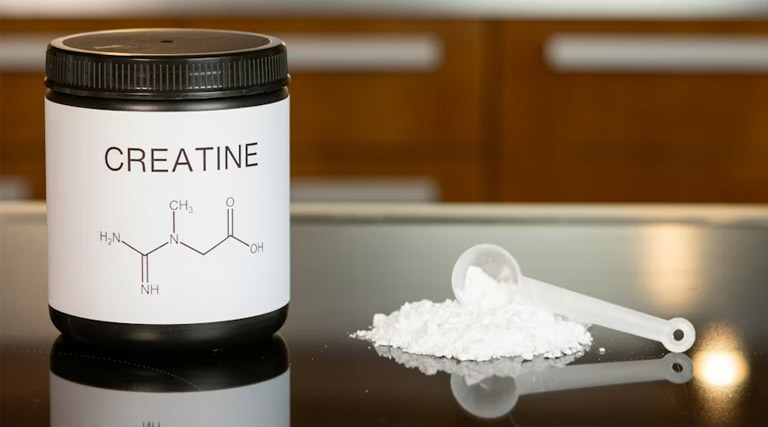
Creatine in 2026: Science, Hype, and the Truth About Muscle Building
24 February 2026, London: From gym locker rooms to mainstream wellness journalism, creatine has moved far beyond its earlier identity as a “bodybuilder’s supplement.” Media coverage now frames it as everything from a performance enhancer to a possible cognitive-health aid, reflecting a surge in public interest across demographics, including women and older adults.
Yet this visibility has also triggered a counter-narrative, with some recent studies questioning whether the supplement actually builds additional muscle beyond what resistance training alone can achieve.
Health experts quoted in lifestyle reporting continue to stress that creatine remains well-researched and generally safe at recommended intakes, even as debates over its real-world benefits intensify.
This tension between scientific validation and public exaggeration makes creatine one of the most misunderstood nutrients in modern sports nutrition.
What Creatine Actually Is and Why the Body Needs It
Creatine is not an artificial compound invented in laboratories. It is a naturally occurring molecule synthesized in the human body from the amino acids arginine, glycine, and methionine, primarily in the liver, kidneys, and pancreas.
Roughly 95 percent of the body’s creatine is stored in skeletal muscle, where it exists largely as phosphocreatine, a rapid-energy reserve used to regenerate ATP, the molecule that powers muscular contraction.
The body produces about 1–2 grams of creatine daily on its own, with additional amounts obtained through diet.
This dual sourcing explains why creatine is better understood not as a stimulant or drug, but as part of normal human metabolism.
In physiological terms, creatine functions as an “energy buffer.” During short bursts of intense effort like lifting a weight, sprinting, or performing repeated high-intensity movements and it helps replenish ATP more quickly, allowing muscles to sustain power output for longer durations.
What the Scientific Research Really Says About Muscle Growth
Creatine is often marketed as a shortcut to muscle gain, but the scientific literature paints a more nuanced picture.
A 2025 meta-analysis evaluating supplementation across multiple populations concluded that creatine significantly improves muscle strength, especially when paired with high-intensity training, with stronger effects observed in previously untrained individuals.
This distinction is critical: creatine appears to enhance the ability to train harder, rather than directly building muscle tissue on its own.
Clinical reviews report that supplementation enables athletes to perform more repetitions or sprints, indirectly supporting gains in strength and muscle mass through increased training volume.
In other words, creatine acts more like a performance amplifier than a growth trigger.
At the same time, newer controlled trials highlighted in media coverage found little difference in lean muscle gain between creatine users and non-users undergoing the same resistance program, suggesting earlier expectations may have been overstated.
Researchers increasingly describe creatine as an ergogenic aid, something that improves exercise capacity rather than a direct anabolic agent.
Safety Profile: One of the Most Studied Supplements in Sports Science
Few nutritional compounds have undergone as much scrutiny as creatine. Reviews covering hundreds of clinical trials report no clinically significant adverse effects at typical doses of 3–5 grams per day.
Risk-assessment models similarly identify chronic intakes up to 5 grams daily as having strong evidence of safety for healthy individuals.
Nevertheless, moderation matters. Excessive consumption can lead to gastrointestinal discomfort, bloating, or fluid retention, particularly when users adopt a “more is better” mindset.
The long-standing concern that creatine harms kidneys remains largely unsupported in healthy populations, though caution is still advised for individuals with pre-existing renal conditions.
Natural Dietary Sources: Can You Get Enough Without Supplements?
For individuals unwilling to rely on commercial powders, creatine is readily available in conventional foods though at far lower concentrations.
Fish and red meat are the richest sources, typically containing about 3–5 grams of creatine per kilogram of raw food.
Specific species such as herring, salmon, tuna, and cod show particularly high levels, while beef and pork are also substantial contributors.
A kilogram of red meat may supply roughly 5 grams of creatine, meaning a 200-gram serving provides about 1 gram.
Other analyses similarly identify beef, chicken, and fish as primary dietary contributors, while plant-based foods contain little to no creatine.
Typical omnivorous diets provide only about 0.25 to 1 gram per day, with the remainder synthesized internally by the body.
This explains why supplementation can raise muscle creatine stores beyond what diet alone usually achieves.
Why Supplements Deliver More Than Food Ever Could
The difference between dietary intake and supplementation is largely quantitative. Standard supplementation protocols provide 3–5 grams daily, intentionally exceeding normal dietary exposure to increase intramuscular stores.
Scientific investigations show that short loading phases can significantly elevate muscle creatine content, demonstrating that supplementation changes tissue saturation levels rather than simply replacing dietary intake.
This biochemical “super-saturation” is what may enhance repeated high-intensity performance, though it does not guarantee additional muscle hypertrophy without proper training stimulus.
The Media Boom vs. The Measured Reality
Creatine’s renewed popularity reflects broader cultural shifts toward strength training, longevity science, and functional fitness. Reports note its transition from a niche athletic aid into a mainstream wellness product discussed in relation to aging, cognition, and women’s health.
Yet scientists increasingly caution against oversimplified claims. Some recent studies suggest perceived muscle gains may partly reflect water retention rather than new muscle tissue, underscoring the importance of interpreting results carefully.
The emerging consensus is neither dismissal nor hype. Creatine is effective but within a specific physiological role.
A Journalist’s Bottom Line: Not a Miracle, Not a Myth
Creatine sits in a rare category: a supplement that is both heavily marketed and genuinely evidence-based. It is a naturally occurring energy compound, extensively studied, generally safe at recommended doses, and capable of improving strength performance when combined with resistance training.
However, it is not a standalone muscle-building solution. Training quality, total protein intake, recovery, and genetics remain the dominant drivers of hypertrophy. The science consistently shows creatine as a facilitator of effort, not a substitute for it.
For those who prefer not to purchase branded formulations, a diet rich in fish and meat already supplies meaningful amounts, complemented by the body’s own synthesis.
In the end, creatine’s story is less about supplementation and more about metabolism itself: a reminder that some of the most talked-about performance aids are, quite literally, already inside us.
Also Read: Bayer Launches Multi-Crop Seed Brand ‘newgold®’ to Help Farmers Tap the Low-Carbon Biofuel Economy
Global Agriculture is an independent international media platform covering agri-business, policy, technology, and sustainability. For editorial collaborations, thought leadership, and strategic communications, write to pr@global-agriculture.com