CCFO29 / Fats And Oils Committee “Not Just Regulating The Present But Preparing For The Future”
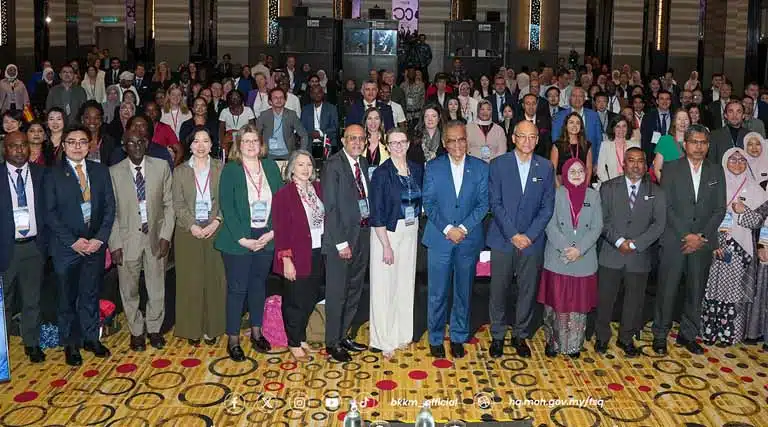
10 February 2026, Malaysia: The 29th session of the Codex Committee on Fats and Oils has officially opened in Kuala Lumpur, Malaysia. The opening ceremony was graced by the presence of Minister of Health Malaysia, Datuk Seri Dr Dzulkefly Ahmad, Director-General of Health Malaysia, Mahathar bin Abd Wahab, Vice Chairpersons of the Codex Alimentarius Commission (CAC), Jing Tian and Khaled al Zharani, and Sarah Cahill, CAC Secretary. The proceedings will be chaired this week by Deputy Director-General of Health, Food Safety and Quality, Ministry of Health Malaysia, Zailina Abdul Majid.
In his welcome remarks, the Minister of Health noted the meeting this week is attended by 157 delegates from 51 Member Countries and 20 observer organizations. “Malaysia has proudly served as the host government, chairperson and secretary for this Committee since 2007,” he said. “We remain deeply committed to this mandate because we believe that fats and oils are not just food commodities, they are central to the global diet, essential for nutrition and a cornerstone of the global economy.”
The Minister took the opportunity of his speech to congratulate FAO on its 80th anniversary and noted the anniversary theme “hand in hand for better foods and a better future”, which, he said “perfectly aligns with our mission here.” He went on to comment that “to achieve that ‘better future’, we must understand our present reality. The global trade for edible fats and oils is estimated at 269 million tons in 2025. Palm oil and soya bean oil remain the giants of this sector, with production reaching 85 million tons and 69 million tons respectively, accounting for 57 percent of total world production. As a major producer, Malaysia understands that standardization facilitates trade, but more importantly, standardization ensures that the food reaching the consumer is safe, authentic and nutritious.” He described CAC as a critical gatekeeper at the intersection of public health protection and international trade, setting science-based food standards that safeguard consumers while ensuring fair practices in global commerce.
Looking to this week’s agenda, the Minister underlined the importance of the Committee’s work, and noted particularly the upcoming work on trans-fatty acids (TFAs), limits for which have already been written into Malaysian law, and the new work proposals, all of which are of great interest, although he singled out the development of microbial omega-3 standards as “particularly exciting.” He explained: “This innovation offers a sustainable alternative to traditional marine sources, supporting both planetary health and human nutrition. It proves that this Committee is not just regulating the present but preparing for the future.”
Chairperson of the Codex Alimentarius Commission, Allan Azegele, addressed delegates by means of a pre-recorded video message in which he noted that “the Codex Committee on Fats and Oils plays a vital role in the Codex system.” Azegele added: “The products covered by this Committee are of global importance … In this context, the agenda before you, covering revision of existing standards on fats and oils to limit TFA intake, and consideration of new work among, other agenda items, underscore the importance of your collective effort.” He underlined “the importance of constructive dialogue, inclusiveness and consensus building in your deliberations.”
On behalf of WHO, Simone Moraes Raszl referenced the CCFO29 agenda and particularly the work on TFAs, the review of the list of acceptable previous cargoes, which “help ensure the safety and integrity of fats and oils throughout the supply chain”, and the recent infant formula contamination incidents, one of which related to contaminated arachidonic acid, a fatty acid, added as an ingredient to powdered infant formula, which has raised serious concerns globally. She noted that this issue would be included in upcoming WHO and FAO expert meeting in June 2026 on microbial hazards in infant formula, including the ingredients thereof, which is of particular relevance to CCFO. “Protecting public health must remain at the forefront of national and international decision making. Eliminating TFAs, ensuring the safety of fats and oils and preventing future contamination incidents are responsibilities we share. The standards developed in this Committee have the potential to reduce diseases, to build confidence in global food systems and to protect the most vulnerable,” she said.
On behalf of FAO, Angeliki Vlachou highlighted FAO’s commitment to contributing technical expertise and capacity development to the work of CAC and commended the work of the Committee. “Fats and oils are essential components of our diet and critical elements of international food trade,” she said. “Ensuring their safety, authenticity and nutritional quality is therefore fundamental to achieving FAO’s mandate of a better production, better nutrition, a better environment and a better life.” She thanked the Government of Malaysia for its hospitality and all delegates for their “continued commitment to Codex and to the principles that guide it.”
Also Read: Tanmiah Partners with PHYLA and RECYCLEE to Bolster Circular Economy and Food Security
Global Agriculture is an independent international media platform covering agri-business, policy, technology, and sustainability. For editorial collaborations, thought leadership, and strategic communications, write to pr@global-agriculture.com