Everything you need to know about the Dietary Guidelines for Americans, 2025–2030
14 January 2026, Washington: As the United States enters 2025, federal nutrition advice has undergone one of its most significant shifts in decades. The newly released Dietary Guidelines for Americans 2025–2030 by the U.S. Department of Health and Human Servicesand the U.S. Department of Agriculture redefine what healthy eating should look like for the next five years, placing real, minimally processed food back at the centre of the American plate.
The updated guidance arrives at a time when diet-related chronic diseases dominate national healthcare spending and increasingly affect younger populations. Rising obesity levels, early-onset metabolic disorders and declining overall nutritional quality have prompted policymakers to simplify the message. The emphasis now is not on complex dietary rules, but on a return to food that nourishes.
A Clear Shift Toward Real, Nutrient-Dense Foods
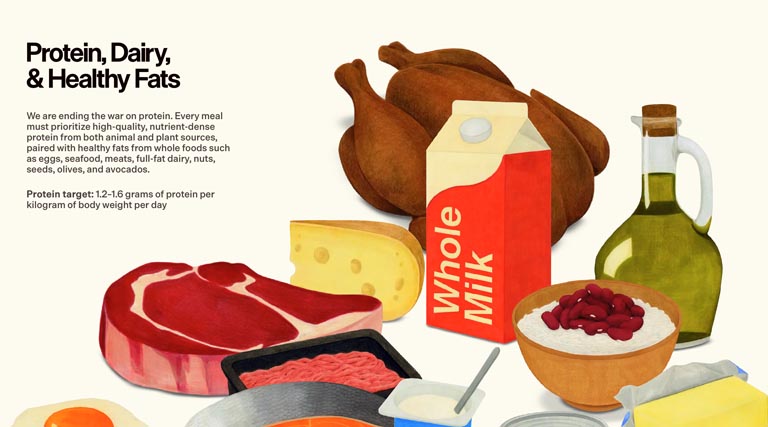
At the core of the 2025–2030 guidelines is a renewed emphasis on protein as a daily nutritional anchor. Americans are advised to consume sufficient protein at every meal, recognising its role in muscle health, metabolic stability and long-term wellbeing. Animal-based sources such as meat, poultry, fish, eggs and dairy are highlighted alongside plant-based options including legumes, nuts and seeds, offering flexibility rather than rigid dietary patterns.
One of the most notable changes is the acceptance of full-fat dairy, provided it contains no added sugars. Milk, yoghurt and cheese are recognised as nutrient-dense foods contributing protein, calcium and essential micronutrients, marking a departure from earlier low-fat–centric guidance.
Fruits and vegetables remain foundational, but the focus has shifted to whole and minimally processed forms. Rather than juices or heavily processed alternatives, Americans are encouraged to consume fruits and vegetables across meals in their natural state, preserving fibre and nutritional integrity.
Rethinking Fats, Carbohydrates and Processed Foods
The new guidelines also reframe how fats are viewed. Instead of broad fat avoidance, they promote healthy fats from whole foods, including seafood, eggs, meats, nuts, seeds, olives and avocados. These fats are recognised for supporting brain health, hormone balance and nutrient absorption.
Carbohydrates are not excluded, but quality is prioritised. Whole grains are encouraged, while refined carbohydrates—particularly those found in ultra-processed foods—are strongly discouraged. The aim is to support better blood sugar regulation and reduce long-term metabolic risk.
Perhaps the strongest language in the guidelines is reserved for ultra-processed foods, added sugars and artificial additives. Americans are urged to significantly reduce their intake, as these products are closely linked to obesity, diabetes and cardiovascular disease—conditions that account for a major share of national healthcare costs.
Hydration guidance has also been simplified. Water and unsweetened beverages are recommended as the primary sources of hydration, while alcohol consumption should be limited in light of growing evidence of its broader health impacts.
Eating for Life Stages, Not a One-Size-Fits-All Diet
Rather than prescribing uniform calorie targets or rigid meal plans, the guidelines emphasise eating the right amount for individual needs, based on age, sex, body size and physical activity levels. This approach is designed to encourage sustainable habits rather than short-term dietary compliance.
The recommendations extend across life stages, with tailored guidance for infants and young children, adolescents, pregnant and lactating women, older adults, individuals living with chronic diseases, and those following vegetarian or vegan diets. The objective is to ensure nutritional adequacy while allowing flexibility and cultural relevance.
Beyond individual health, the implications of the 2025–2030 dietary advice are far-reaching. Public food programmes, school meals, agricultural demand and food innovation are all expected to align with the renewed focus on protein, dairy, fruits, vegetables, whole grains and minimally processed foods. For farmers and food producers, the message is clear: nutrition policy is increasingly tied to how food is grown, raised and produced.
As America resets its eating advice for 2025–2030, the direction is unmistakable. Better health is not being pursued through complexity or restriction, but through a return to simple, nourishing food rooted in fundamentals.
Also Read: Yara Capital Markets Day 2026: Driving Resilient Earnings and Sustainable Growth towards 2030
Global Agriculture is an independent international media platform covering agri-business, policy, technology, and sustainability. For editorial collaborations, thought leadership, and strategic communications, write to pr@global-agriculture.com