Global Agriculture Companies List (2026): Seeds, Agrochemicals, Fertilisers, Machinery & AgTech Giants
16 February 2026, New Delhi: Modern agriculture is no longer driven only by farmers and land—it is powered by a vast global ecosystem of seed developers, fertiliser producers, agrochemical innovators, machinery manufacturers, and digital agriculture companies. Together, these organisations determine what farmers grow, how they grow it, and how efficiently food reaches nearly 8 billion people.
For readers trying to understand the sector—whether journalists, policymakers, agribusiness professionals, or investors—the global agriculture landscape can feel fragmented. In reality, it is a highly structured value chain, where each category of company plays a distinct role.
This article maps that structure and identifies the most influential global agriculture companies by segment, explaining what they actually do and why they matter.
Understanding the Agricultural Value Chain
Before listing companies, it helps to understand how agriculture functions industrially. The system can be divided into five major layers:
- Genetics & Seeds – Decide crop potential (yield, resilience, nutrition).
- Crop Protection & Biologicals – Protect crops from pests, disease, and climate stress.
- Fertilisers & Soil Nutrition – Feed plants and maintain soil productivity.
- Machinery & Mechanisation – Enable scale, efficiency, and labour replacement.
- Digital & Precision Agriculture – Use data to optimise every decision.
- Trading & Integrated Agribusiness – Move commodities from farm to global markets.
Each layer is dominated by specialised multinational companies.
1. Global Seed Companies (The Genetics Powerhouses)
Seed companies sit at the top of the agricultural pyramid because genetics determine up to 50% of yield outcomes. These firms invest billions into plant breeding, biotechnology, hybridisation, and climate adaptation.
Leading Global Seed Companies
- Corteva Agriscience (USA) – One of the world’s largest proprietary seed developers (Pioneer brand).
- Bayer CropScience (Germany) – Strong in biotech traits, maize, cotton, and oilseeds.
- Syngenta Group (Switzerland/China) – Global presence in row crops and vegetables.
- Limagrain (France) – Farmer-owned cooperative and major cereal seed breeder.
- KWS SAAT (Germany) – Leader in sugar beet, maize, and cereals.
- Sakata Seed (Japan) – Major vegetable and horticulture genetics company.
- Takii & Co. (Japan) – Premium vegetable breeding.
- Rijk Zwaan (Netherlands) – Specialist in high-value vegetable seeds.
- DLF Seeds (Denmark) – Global leader in forage and turfgrass seeds.
- East-West Seed (Thailand) – Dominant in tropical vegetable markets.
These companies shape global food systems by deciding which varieties are available to farmers.
2. Agrochemical & Biological Companies (Crop Protection Leaders)
These companies ensure crops survive weeds, pests, fungi, and emerging climate threats. The sector is shifting rapidly from traditional chemicals toward biological and regenerative solutions.
Major Crop Protection Companies
- Syngenta Crop Protection
- BASF Agricultural Solutions
- Bayer CropScience
- FMC Corporation (USA)
- UPL Ltd. (India) – A major global supplier of generics and biosolutions.
- ADAMA (Israel/China)
- Nufarm (Australia)
- Sumitomo Chemical (Japan)
These firms are increasingly investing in:
- Bio-stimulants
- Carbon-smart farming inputs
- Resistance management technologies
3. Fertiliser & Plant Nutrition Companies (Feeding the Soil)
Fertiliser companies operate at massive industrial scale, often linked to mining, energy, and geopolitics because nutrients like nitrogen, phosphate, and potash are resource-dependent.
World’s Largest Fertiliser Producers
- Nutrien (Canada) – Largest crop input company globally; dominant in potash.
- Yara International (Norway) – Pioneer in sustainable nitrogen solutions.
- OCP Group (Morocco) – Controls a major share of global phosphate reserves.
- Mosaic Company (USA) – Key phosphate and potash supplier.
- ICL Group (Israel) – Speciality plant nutrition and fertigation products.
- CF Industries (USA) – Nitrogen manufacturing giant.
- EuroChem (Switzerland)
- K+S (Germany)
These companies are now investing in:
- Green ammonia
- Low-carbon fertilisers
- Precision nutrient delivery systems
4. Agricultural Machinery & Tractor Manufacturers (Mechanisation Drivers)
Mechanisation companies transformed agriculture from labour-intensive to productivity-driven systems. Today, they are evolving into technology companies on wheels.
Leading Global Farm Machinery Companies
- John Deere (USA) – Precision farming leader integrating AI, sensors, and autonomy.
- CNH Industrial (UK/Netherlands) – Owner of Case IH and New Holland.
- AGCO Corporation (USA) – Brands include Fendt, Massey Ferguson, Valtra.
- CLAAS (Germany) – Harvesting technology specialist.
- Kubota (Japan) – Dominant in compact and mid-size tractors worldwide.
- SDF Group (Italy) – SAME Deutz-Fahr tractors.
- Yanmar (Japan)
- Mahindra & Mahindra (India) – World’s largest tractor manufacturer by volume.
- Escorts Kubota (India/Japan) – Growing global footprint.
Mechanisation companies now sell:
- GPS-guided tractors
- Autonomous equipment
- Data-driven implements
5. Digital & Precision Agriculture Companies (The Fastest-Growing Segment)
This is agriculture’s newest frontier—where satellites, AI, and sensors meet agronomy.
Key AgTech & Precision Farming Firms
- Climate LLC (Bayer) – Data-driven farm decision platforms.
- Trimble Agriculture – GPS, automation, and farm analytics.
- Topcon Agriculture – Machine control and precision systems.
- Raven Industries (CNH) – Autonomous farming technologies.
- Ag Leader Technology
- Taranis (Israel) – AI-powered crop intelligence.
- Farmers Edge (Canada)
- Planet Labs (Satellite imaging for agriculture)
These companies are reshaping agriculture into a data-driven biological manufacturing system.
6. Integrated Agribusiness & Commodity Giants (The Market Movers)
These firms connect production to global food supply chains—buying, processing, transporting, and exporting crops.
The Global Grain & Supply Chain Majors
- Cargill (USA)
- Archer Daniels Midland – ADM (USA)
- Bunge (USA)
- Louis Dreyfus Company (Netherlands)
Known collectively as the ABCD companies, they influence:
- Global commodity prices
- Trade flows
- Storage & logistics infrastructure
Key Trends Reshaping Global Agriculture Companies
The Age of the Mega-Agriculture Company Has Arrived
A generation ago, a farmer might have bought seeds from one company, fertiliser from another, chemicals from a third, and advice from the local extension officer. That world is disappearing. Today’s agriculture giants want to be everywhere on the farm at once. Through mergers, acquisitions, and strategic tie-ups, companies have grown into vast ecosystems that control genetics, inputs, advisory platforms, and sometimes even the route to market. The result is not just bigger corporations, but a fundamental shift in influence. Decisions made in boardrooms in St. Louis, Basel, or Oslo now ripple directly into what gets planted in Madhya Pradesh, Mato Grosso, or the American Midwest.
Scale is no longer about selling more products. It is about owning the system.
Chemistry Built the Industry. Biology Is Rewriting It.
For decades, the story of agricultural progress was written in molecules synthesised in laboratories. Now, the narrative is being rewritten by microbes, enzymes, and living systems. Agriculture companies are investing aggressively in biological solutions that promise productivity without the ecological cost associated with older chemistries. The language of the sector is changing. Words like “resilience,” “soil microbiome,” and “regenerative” are appearing alongside traditional yield metrics.
This is not a marketing shift. It is a scientific pivot. Firms that once introduced blockbuster pesticides are now racing to discover bacteria that can unlock nutrients naturally or protect crops by strengthening plant immunity. The laboratory has started to look more like a greenhouse than a chemical plant.
The Tractor Has Become a Computer That Happens to Move
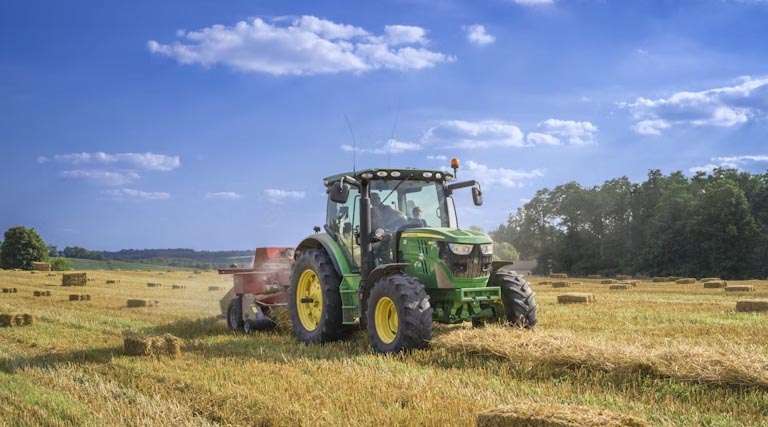
Walk up to a modern high-horsepower tractor and you are no longer looking at a machine in the traditional sense. You are looking at a rolling data centre. Sensors measure soil variability. Satellites guide movement to the centimetre. Algorithms decide how much fertiliser to apply before the operator even realises a decision was needed.
Machinery companies are quietly transforming into technology companies, competing not just on horsepower but on software ecosystems. The value proposition is shifting from iron to intelligence. Farmers are buying fewer standalone machines and more connected platforms that promise efficiency, traceability, and predictive insight.
Agriculture is becoming less mechanical and more digital, even though the fields look the same from a distance.
Climate Pressure Is Now the Industry’s Biggest R&D Department
No government directive has pushed innovation as forcefully as unpredictable weather. Longer droughts, sudden floods, shifting pest cycles, and fragile soils have created an urgency that no market forecast ever could. Agriculture companies are redesigning seeds to tolerate stress that did not exist thirty years ago. Fertiliser producers are exploring low-carbon production methods not only for sustainability commitments, but because energy economics demand it. Equipment manufacturers are engineering machines suited for conservation agriculture and minimal soil disturbance.
Climate change is not a future risk in corporate presentations anymore. It is the daily operating environment shaping research budgets, product pipelines, and investment flows.
From Selling Inputs to Selling Outcomes
Perhaps the most profound transformation is philosophical. The industry once measured success by how many tonnes of product it sold. Now it is trying to measure how well a farmer performs. Companies increasingly talk about “solutions,” “programmes,” and “end-to-end support.” They bundle seeds with nutrition plans, digital monitoring, financing options, and sustainability metrics, aiming to embed themselves across the entire crop cycle.
In doing so, they are redefining their identity. They are no longer just manufacturers of agricultural goods. They are positioning themselves as productivity partners, risk managers, and data interpreters.
The transaction is evolving into a relationship.
Also Read: JK Tyre Launches ‘Shresth Plus’ Tractor Tyre for Modern Agricultural Applications
Global Agriculture is an independent international media platform covering agri-business, policy, technology, and sustainability. For editorial collaborations, thought leadership, and strategic communications, write to pr@global-agriculture.com