Concerns in the Agricultural Sector After the India–U.S. Trade Agreement
Guest Author: Madhukar Powar, Agriculture Expert
20 February 2026, New Delhi: These days, a sharp debate has emerged between the Government of India and opposition parties over the recently concluded India–United States trade agreement. The government is presenting the pact as a “historic opportunity,” while opposition leaders and several farmer organizations across the country have expressed strong reservations. The lack of clear and detailed responses from concerned ministers has further strengthened apprehensions among these groups that the agreement may not adequately safeguard farmers’ interests.
According to the government, the agreement will open large markets for Indian agricultural products, boost exports, enhance farmers’ incomes, and bring modern technology and investment into the country. Official statements repeatedly assert that no compromise has been made on sensitive crops or farmer welfare. However, specific provisions within the agricultural chapters—such as tariff concessions, import-export quotas, sanitary and phytosanitary standards, intellectual property rights, and subsidy-related issues—have generated unease among farmers.
Farmer organizations argue that U.S. agriculture is heavily supported by subsidies, advanced mechanization, and large-scale corporate production systems. If American agricultural goods enter Indian markets at lower prices, small and marginal farmers may struggle to compete. Concerns have been raised about potential increases in imports of maize, soybean, cotton, dairy products, and horticultural commodities. In particular, the U.S. dairy sector benefits from significant government support and operates through large farms, which could adversely affect millions of small dairy farmers in India whose livelihoods depend on this sector.
While government representatives continue to describe the agreement as historic and maintain that “farmers’ interests are paramount,” they have not provided precise explanations on several substantive aspects. Their statements often remain limited to general assurances such as “there will be no harm” or “all stakeholders were consulted.” Farmer groups, however, allege that neither extensive consultations were held nor was the draft agreement made public. This perceived lack of transparency has deepened mistrust, leaving many stakeholders dissatisfied with official clarifications.
Opposition parties have labeled the agreement “anti-farmer” and “pro-corporate,” claiming it has been concluded under external pressure. They question why Indian farmers—already grappling with indebtedness, climate change, and market volatility—should be exposed to intensified global competition at such a vulnerable time.
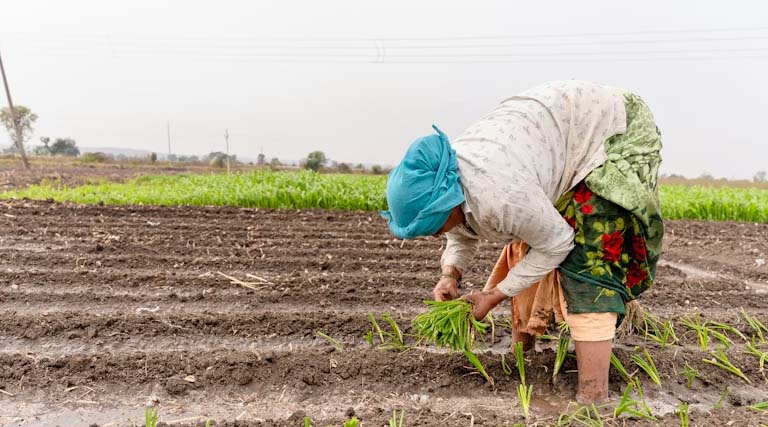
India’s agricultural structure itself is highly unequal. Nearly 85 percent of the country’s farmers are small and marginal, with limited storage capacity and little direct access to international markets. The potential export gains from such agreements are likely to benefit larger producers, agri-processing companies, and exporters, while increased imports could directly impact smaller farmers. If domestic prices decline due to cheaper imports, the first to suffer will be these smallholders. It must also be recognized that U.S. farmers and dairy industries receive substantial subsidies; consequently, imported products could be priced lower than those produced by Indian farmers, creating a serious competitive imbalance. Once such an agreement is finalized, policy reversals become difficult.
Another important reality is that most farmers in India remain largely unaware of the agreement’s details. At present, the opposition is being led mainly by organized farmer groups. This provides the government with an important opportunity to proactively inform farmers about the agreement, make its provisions public, and engage transparently with states and farmer organizations to arrive at a broadly acceptable framework.
There is also a need for written assurances that Minimum Support Price (MSP)-based procurement and existing subsidies will continue without dilution. Special safeguards must be designed for small and marginal farmers. Mechanisms similar to Madhya Pradesh’s Bhavantar scheme could be developed to compensate farmers affected by import-driven price fluctuations. In addition, farmers’ seed rights must be protected through clear constitutional and legal guarantees.
The India–U.S. trade agreement is not merely an economic document; it is closely tied to the future of Indian agriculture and the livelihoods of millions of farmers. The current climate of protest, dissatisfaction, and concern signals a widening gap between policy intent and ground realities. If farmers’ voices are not meaningfully addressed, the agreement could become a source of new challenges rather than growth. However, with transparency, dialogue, and adequate safeguards, it may yet evolve into an opportunity. A cautious approach—possibly through the formation of an expert committee for wider consultation—would help ensure that long-term national and farmer interests remain protected.
Also Read: FMC and the Two-Engine Dilemma: When the Present Devours the Future
Global Agriculture is an independent international media platform covering agri-business, policy, technology, and sustainability. For editorial collaborations, thought leadership, and strategic communications, write to pr@global-agriculture.com