
India Speeds Up Pesticide Testing, Cuts Sample Delivery Time to 72 Hours
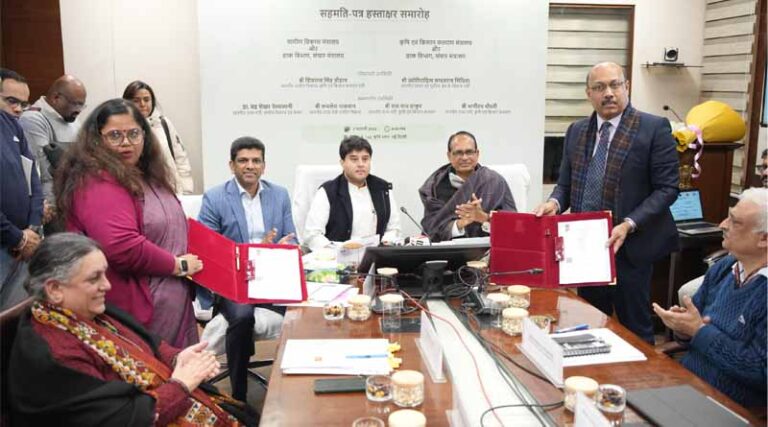
08 January 2026, New Delhi: In a move set to significantly tighten quality enforcement across agri-input markets, the Department of Agriculture & Farmers Welfare (DA&FW) has signed a Memorandum of Understanding with the Department of Posts to create a nationwide logistics backbone for the movement of pesticide, seed and fertiliser samples to authorised laboratories.
The MoU was formalised in the presence of Union Minister for Communications and Development of North Eastern Region Jyotiraditya M. Scindia and Union Minister for Agriculture & Farmers’ Welfare Shivraj Singh Chouhan.
For pesticide manufacturers and formulators, the collaboration signals a sharper, faster and more transparent regulatory environment. Leveraging India Post’s vast logistics footprint over 1.60 lakh post offices, with nearly 1.40 lakh in rural areas—the new mechanism aims to ensure secure, traceable and time-bound transportation of samples collected by enforcement officials across the country.
The logistics framework will be integrated with the PAN-India Online Pesticide, Seed and Fertiliser Quality Management System being developed by Centre for Research and Industrial Staff Performance (CRISP). The platform is designed to digitise workflows, improve transparency and enable quicker laboratory testing of agricultural inputs.
Under the arrangement, India Post will provide end-to-end logistics support, including designated booking and consolidation points, specialised packaging protocols for sensitive pesticide samples, and QR code-based address masking to maintain confidentiality. End-to-end digital tracking will allow regulators to monitor sample movement in real time, while temperature-sensitive consignments will be transported under digitally monitored conditions where required.
According to the Agriculture Minister, delays in sample movement have historically weakened enforcement, allowing fake and substandard pesticides to remain in circulation. With the new system, sample transit time earlier stretching to 10–15 days is expected to come down to 48–72 hours, enabling faster testing, quicker regulatory action and improved deterrence against spurious products.
Also Read: Government Of India Invites Public Comments on Draft Pesticides Management Bill, 2025
Global Agriculture is an independent international media platform covering agri-business, policy, technology, and sustainability. For editorial collaborations, thought leadership, and strategic communications, write to pr@global-agriculture.com


