Multifunctional Landscapes for Agroecological Transition and Climate Resilience
From Food Surplus to Resilient Agrifood Systems: Why Multifunctional Landscapes Matter
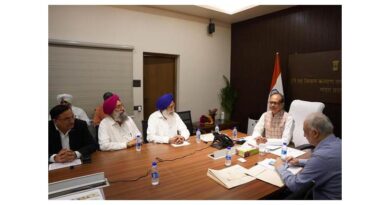
20 January 2026, New Delhi: India has successfully moved to the status of a surplus food-producing nation, ensuring overall food availability and stability. However, agriculture now faces multiple and interconnected challenges, including climate change, water scarcity, soil degradation, pest pressure, and low farm incomes. To discuss integrated pathways, a Special Session on “Multifunctional Landscapes” was organized during the 6th International Agronomy Congress, focusing on how agriculture can simultaneously support food production, climate resilience, water security, biodiversity, and livelihoods. Although held at an international forum, the deliberations primarily addressed India’s transition pathways. The session highlighted the Multifunctional Landscape (MFL) approach to plan and manage land beyond individual fields, linking farms, water bodies, forests, and settlements. Through technical sessions and a panel discussion, experts from CGIAR Centres, India’s National Agricultural Research and Education System (NARES), universities, development agencies, civil society organizations (CSOs), and field programs shared experiences and lessons from diverse landscapes.
Key Messages from the Deliberations
Three Parallel Pathways for Agroecological Transition
The session agreed that India needs more than one pathway for agroecological transition. Because farming systems differ widely across the country, multiple pathways must progress at the same time, each suited to local conditions and risk levels.
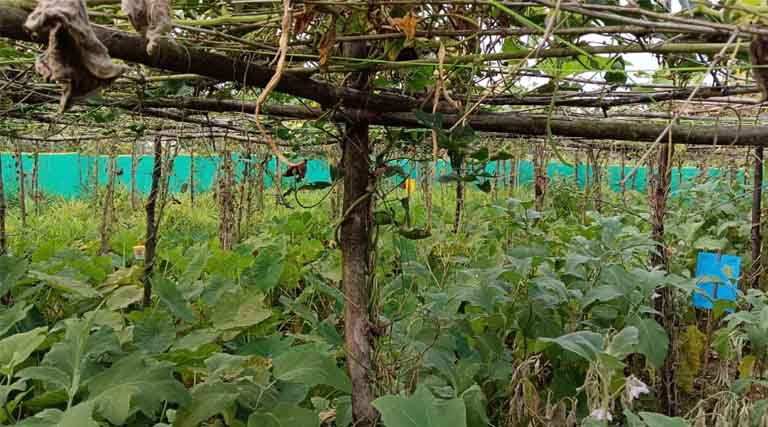
- Agroecological homestead systems were identified as the lowest-risk entry point. Managed close to the home and largely by women, homesteads provide quick benefits such as better household nutrition, small but regular income, and increased confidence. These visible results help build trust in agroecological practices.
- Rainfed farming systems were highlighted as the highest-priority pathway for scaling. With lower chemical input use and high exposure to climate risks, these regions can benefit directly from diversification and ecological practices.
- A gradual and efficiency-led transition was suggested for intensive irrigated systems. Focus should be on reducing chemical inputs by about 15–20%, improving input efficiency, strengthening soil biology, and promoting bio-resource centres and circular bioeconomy practices, while protecting productivity and food security.
Together, these complementary pathways can support the development of resilient, inclusive, and multifunctional landscapes across India.
Seed Quality Is a Major Challenge
Poor quality seed and inputs were identified as a major barrier in transitioning.
The session suggested:
- Participatory seed and variety trials so farmers can see results in their own fields
- Using both locally adapted varieties and good improved varieties
- Creating community seed banks to ensure regular access to quality seed
- Designing specific seed development program for agroecology including natural farming
- A balanced approach is needed. Using only local seeds may reduce yields, while mixing local and improved seeds can increase farmer trust and adoption.
More Scientific Evidence Is Needed
Many agroecological practices are being promoted across India, but strong and widely accepted scientific evidence is still limited, especially across different agroecological settings. Participants emphasized that this evidence gap is a major barrier to wider adoption and policy support.
The session recommended:
- Establishing a scientific task force to generate evidence across diverse agroecological conditions
- Standardizing input preparation and application procedures, while allowing enough flexibility to adapt practices to local contexts
- Developing common methods and indicators to test agroecological materials and practices
Biology Must Be Central to Agroecology
Agroecology and the Multifunctional Landscape (MFL) approach depend strongly on biological processes, such as soil organisms, plant diversity and natural pest–predator balance and microbial-mediated plant-atmosphere interaction. However, these critical biological aspects are often not studied in sufficient detail. The session highlighted the need to:
- Study biological processes more systematically across different agroecological settings
- Design management practices based on ecological and biological understanding
- Give special attention to biotic stresses, which may newly emerge or change under agroecological systems
Water Bodies and Wetlands Are Part of the Landscape
Water bodies, wetlands, and low-lying areas were recognized as important components of multifunctional landscapes. Traditional systems such as Rice–Fish farming, capture fisheries in streams and water bodies, and local processing practices including fish smoking, which were once common in many regions, were discussed as strong examples of integrated land–water systems. These systems can:
- Increase overall productivity
- Enhance income, especially for women
- Improve household nutrition
- Support biodiversity
- Build climate resilience
The session emphasized that such integrated land–water systems should be revived, and systematically integrated into landscape-level planning.
Water Security Is the Foundation of Resilient Landscapes
Water security was recognized as central to all landscape functions. The session highlighted that mainstreaming agroecological practices is crucial for water security, as these practices generally use less water and achieve higher water productivity.
The session emphasized:
- Water-budget–based crop planning to match crops and practices with available water
- Balancing groundwater recharge and withdrawal
It was also suggested that:
- Krishi Vigyan Kendras (KVKs) may actively demonstrate water budgeting and water-efficient agroecological practices
- Capacities of KVK staff and line department officials should be strengthened to support planning, training, and scaling of water-smart agroecological systems
Natural Farming Inputs in Homestead Systems
Local microbial and botanical formulations were discussed as key inputs in natural farming, particularly within Agroecological Homestead Models (AHM). These include:
- Microbial preparations made from cow dung, cow urine, gram flour, jaggery, and other locally available materials, such as Jeevamrit and Beejamrit
- Botanical extracts and formulations prepared from neem, karanj, dhatura, garlic, chili, and other plant leaves and spices, including Agniastra and Brahmastra
- Fermented buttermilk-based preparations, such as Mathastra, and other locally prepared formulations
Field observations and farmer-reported experiences (n = 20) suggested that weekly application of botanical plant extracts combined with garlic and chili, along with Mathastra, in AHMs resulted in a 60–80% reduction in insect–pest incidence, thereby limiting economic damage
However, preparation and application methods vary across locations, leading to differences in field performance.
Branding Agroecological Produce Matters
The panel discussion highlighted that agroecological products need better visibility in markets. Good branding effort involving prominent public figure was seen as an important support for agroecological transitions.
Key Takeaway
The session clearly showed that agroecological transition is not only about changing practices, but about changing how we plan and manage landscapes. The Multifunctional Landscape approach provides a practical framework to link ecology, livelihoods, water, and climate goals through science, partnerships, and farmer participation.
Also Read: Beyond the Grain: How Rice-Field Ponds are Forging Climate Resilient Livelihoods in Cambodia
Global Agriculture is an independent international media platform covering agri-business, policy, technology, and sustainability. For editorial collaborations, thought leadership, and strategic communications, write to pr@global-agriculture.com