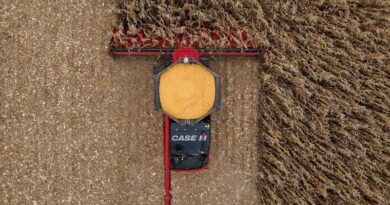
EIMA Agrimach, Focus On Training
01 December 2025, New Delhi: Indian agriculture is undergoing modernization. The transformation of the primary sector is increasing the demand for highly specialized professionals, but the training gap within the workforce could prevent the agricultural sector from fully seizing the opportunities offered by the technological transition.
New professional skills and training were the focus of the third day of EIMA Agrimach, the exhibition of machinery and agricultural technologies for India and Southeast Asia, which concludes today in New Delhi.
This topic – highly relevant for a country that is digitalizing its agricultural economy – was at the centre of the conference titled “Skilling Rural Youth and Farmers for a Mechanized and Digital Agriculture Future”, held as part of the agri-mechanical event organized by the Italian Federation of Agricultural Machinery Manufacturers (FederUnacoma) and the Federation of Indian Chambers of Commerce and Industry (FICCI).
Moderated by Ruchira Saini, Head of Advocacy and Government Relations for India and South Asia at Corteva Agriscience, the event featured V.N. Kale, Additional Commissioner for Machinery and Technologies at the Department of Agriculture and Farmers’ Welfare; D.K. Singh, Senior Researcher and Principal Supervisor at the AgriPV Centre of Excellence; Mukesh Jain, Director of the Northern Region Farm Machinery Training & Testing Institute (NR-FMTI); Satender Singh Arya, CEO of the Agriculture Skill Council of India (ASCI); Varun Yadav, Manager at the Syngenta Foundation for Sustainable Agriculture; and Shruti Aggarwal, Senior Manager at YARA International.
Mechanization and digitalization are the two driving forces guiding the transformation of Indian agriculture, which today increasingly relies on drones, software platforms, and AI-based services. These cutting-edge technologies, however, require highly specialized skills to be used effectively, skills that are not always readily available.
The subcontinent’s workforce remains predominantly rural and shows gaps in the use of modern machinery and digital platforms, as well as in leveraging new opportunities linked to agribusiness. The training deficit – speakers emphasized – affects even the younger age groups, who should be more inclined toward innovation. Bridging this gap is therefore essential to increase the productivity of the agricultural economy, but also to improve living conditions in rural areas and ensure inclusive growth.
For this reason, it is necessary not only to identify innovative training models – developed through partnerships between industry, universities, and institutions – but also to outline a roadmap that, as highlighted in the event’s conclusion, will enable farmers to contribute even more actively to the modernization of Indian agriculture.
Also Read: India: Agricultural Innovation Driven by Start-Ups
📢 If You’re in Agriculture, Make Sure the Right People Hear Your Story.
From product launches to strategic announcements, Global Agriculture offers unmatched visibility across international agri-business markets. Connect with us at pr@global-agriculture.com to explore editorial and advertising opportunities that reach the right audience, worldwide.