How ReGen Works: Inside Netafim’s Fully Circular Drip Irrigation Model
26 November 2025, London: Global food production is under increasing pressure to deliver more with finite resources, and Orbia’s Precision Agriculture business, Netafim, remains at the forefront of this transformation.
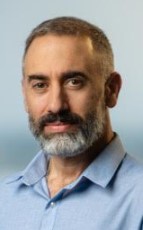
In this interview, Nimish Gangrade, Editor of Global Agriculture, speaks with Ido Raanan, who leads Global Circularity (ReGen Program) and Machinery Products at Orbia Precision Agriculture (Netafim). Raanan reflects on how the company’s enduring philosophy of “growing more with less” has evolved into a comprehensive circularity strategy, the development of the ReGen Program and the innovations driving the next phase of sustainable irrigation worldwide.
1. Netafim pioneered drip irrigation in 1965, a technology that transformed global farming. How has the philosophy of “growing more with less” evolved over the years to lead to innovations like the ReGen Circularity Program?
Long before it became a trend, we learned to do more with less, over 30 years ago. “Grow more with less” was our founding principle and has since become a driver of global sustainability. Over six decades, the company grew to become the largest provider of precision irrigation solutions in the world, with solutions that help farmers reduce water use by up to 70% and energy by 50%, while boosting yields significantly. This philosophy has expanded beyond water efficiency to encompass broader agricultural resource stewardship and climate resilience.
Our founding DNA remains within us: precision, respect for resources and zero waste. ReGen is built on that same foundation: honoring nature’s resources and the materials that help us grow more with less. We keep our environment clean and ensure that plastic remains an asset, not waste.
The ReGen Circularity Program is a core component of Orbia Netafim’s efforts to expand sustainability: it ensures that every meter of dripline continues to deliver value rather than becoming waste. By closing the loop on plastic use, ReGen transforms irrigation from a linear model into a fully circular system—aligning with UN Sustainable Development Goals (SDGs) and global decarbonization targets.
2. How did the idea for the ReGen program come about and what specific environmental and agricultural challenges does it aim to address?
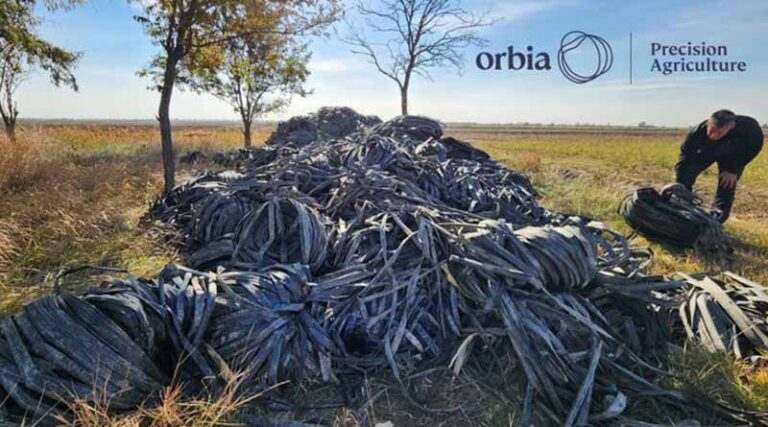
The ReGen program was born from the need to address a major opportuntity in farming sustainability: the disposal of used driplines. In the past, without other sustainable solutions across the industry, these lines were burned, buried or left to degrade, contributing to plastic pollution and greenhouse gas emissions. To tackle this, Orbia Netafim launched ReGen in 2019 alongside the Streamline X ReGen dripline, which is made from recycled driplines, creating a fully circular solution.
The program brings value to farmers (taking back the used driplines), eliminates plastic waste from the fields and reduces landfill use and emissions. Farmers are also provided with efficient retrieval methods that cut cleanup time and labor costs. By meeting increasingly strict sustainability standards, ReGen supports farmers in maintaining operational efficiency and accessing export markets.
3. ReGen is described as the only fully circular program in the irrigation industry. How does Orbia Netafim ensure that used driplines are efficiently collected, recycled, and transformed into high-quality new products that meet global standards?
Orbia Netafim ensures full circularity through a rigorous, closed-loop recycling process. Used driplines are collected via take-back programs, then shredded, washed and pelletized to remove contaminants and restore material integrity in advanced recycling facilities. These pellets are reintegrated into new dripline production without compromising performance—often exceeding the stability of virgin materials.
Quality is safeguarded through advanced testing protocols, including proprietary methods that assess material cleanleness, lifespan and reliability, setting global benchmarks for circular irrigation standards. This seamless process not only meets strict dripline performance but also keeps fields clean, reduces farming’s carbon footprint and transforms plastic from a disposable item into a valuable, reusable asset.
The quality of our circular process is achieved through careful attention at every stage of agricultural practice, starting from the installation of irrigation pipes in the field, designed to enable efficient collection, continuing with the use of specialized tools and machinery for clean and resource-efficient extraction and retrieval, followed by advanced recycling processes developed in Orbia Netafim over many years. These engineered methods bring the recycled plastic to exceptional levels of purity, allowing its excellent properties to be fully effective.
The entire process is monitored through unique quality control routines developed at Orbia Netafim, ensuring that dripline products containing recycled material meet and often exceed the quality of those made from virgin plastic.
4. Beyond environmental sustainability, how are farmers and agribusinesses benefiting economically and operationally from participating in the ReGen program, especially in regions like Turkey, South Africa, and Mexico? Can you also include costs for the program incurred by a farmer.
Farmers and agribusinesses participating in the ReGen program benefit far beyond environmental gains. By streamlining the retrieval of used driplines, ReGen reduces cleanup time and labor costs, helping farmers operate more efficiently. It also eliminates landfill fees and minimizes equipment wear, translating into tangible cost savings. Importantly, compliance with sustainability standards opens access to premium export markets, while some regions offer opportunities for carbon and plastic credits. Although farmers may incur modest costs for bundling and collection services, these are typically offset by operational savings and reduced disposal expenses, making ReGen a practical and economically advantageous solution for growers in regions such as Turkey, South Africa and Mexico.
We offer different business models across territories, tailored to the local economy, geography, regulations and available alternatives. ReGen operates only where farmers see true value in it.
Farmers tend to adopt new routines gradually, so in some markets we provide partial models, always with the goal of maximizing value for all stakeholders.
The value for farmers may come in the form of time savings, reduced labor costs or savings on alternative disposal methods for used pipes. In certain cases, Orbia Netafim also supports farmers by helping finance collection equipment, depending on local conditions.
5. As Orbia Netafim aims to achieve 45% recycled content in its production by 2030, what future innovations or partnerships do you foresee driving the next phase of circular agriculture globally?
To achieve our goal of 45% recycled content in production by 2030, Orbia Netafim is driving innovation across multiple fronts. The company is scaling recycling capacity by expanding facilities, improving recycling technologies and water recirculation systems. We invest in product development, creating driplines that can contain higher recycled content and with material engineering explore polymers that will shape the next generation of sustainable irrigation solutions.
Yet, a leap forward will be achieved by the whole ecosystem-strategic partnerships with global agribusinesses, certification bodies and governments (like the emerging circularity act by the EU) will help standardize circular practices and incentivize more adoption worldwide.
Also Read: African Development Fund Commits $14 Million Grant To Scaling Up Climate Resilience Across The Sahel
📢 If You’re in Agriculture, Make Sure the Right People Hear Your Story.
From product launches to strategic announcements, Global Agriculture offers unmatched visibility across international agri-business markets. Connect with us at pr@global-agriculture.com to explore editorial and advertising opportunities that reach the right audience, worldwide.