ACT / Cambodia Strengthens Capacity on Costing and Budgeting for its Multi Sectoral Action Plan on AMR
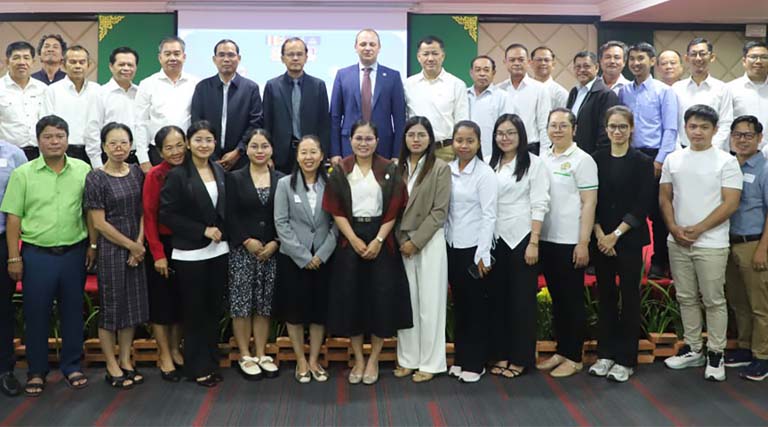
28 February 2026, Rome: The Food and Agriculture Organization of the United Nations (FAO), through the Action to support implementation of Codex AMR texts (ACT) project funded by the Ministry of Food and Drug Safety of the Republic of Korea, successfully completed a three‑day training on Costing and Budgeting for the Multi‑Sectoral Action Plan (MSAP) on Antimicrobial Resistance (AMR) 2025–2029, in Siem Reap, Cambodia.
More than 40 government officials from Cambodia’s Ministry of Health (MOH), Ministry of Agriculture, Forestry and Fisheries (MAFF), Ministry of Environment (MOE), and academic institutions participated in the training. The workshop aimed to strengthen national capacities for evidence‑based financial planning to effectively support the implementation of Cambodia’s MSAP on AMR.
The opening ceremony featured remarks from Dr Pen Buntheoun, Deputy Director, Provincial Department of Agriculture, Forestry and Fisheries (PDAFF), Siem Reap, who said “This training is essential for strengthening provincial and national capacity to plan, cost, and implement AMR activities effectively. A well‑budgeted MSAP ensures that Cambodia can respond to AMR in a systematic and coordinated way across all relevant sectors to safeguard the fast-growing commercial farms, feeds and veterinary drug depots”
In his remarks, Dr Alessandro Patriarchi, AMR Regional Coordinator, FAO Regional Office for Asia and the Pacific, commended Cambodia’s efforts, saying “Cambodia’s commitment to developing a robust and well‑costed AMR action plan demonstrates strong leadership in the region. FAO is pleased to support this process, ensuring that financial planning is aligned with technical priorities as in line with RENOFARM initiatives and global standards to protect human, animal, and environmental health.”
The speakers highlighted the importance of a coordinated, multisectoral, and well‑costed national strategy to combat AMR and emphasized the role of strong institutional collaboration in protecting public health, food safety, animal health, and environmental sustainability.
“AMR is a complex challenge that no single sector can solve alone. By strengthening our skills in costing and budgeting, we are ensuring that the upcoming MSAP is both realistic and actionable, enabling Cambodia to make meaningful progress in addressing AMR at national and sub‑national levels. GDAHP wished to see regulation under the ACT to be submitted to the government as soon as possible,” said Dr Nou Vonika, Deputy Director General, General Directorate of Animal Health and Production (GDAHP)
This training workshop is part of FAO’s ongoing support under the ACT project to strengthen Cambodia’s governance, planning, and technical capacities in addressing AMR using a One Health approach, ensuring that all sectors work together toward effective and sustainable AMR mitigation.
Also Read: Cargill Opens Largest Dairy Feed Plant in South Asia in Punjab
Global Agriculture is an independent international media platform covering agri-business, policy, technology, and sustainability. For editorial collaborations, thought leadership, and strategic communications, write to pr@global-agriculture.com