VB–G RAM G Act, 2025 Passed: 10 Key Updates That Redefine Rural Employment and Infrastructure in India
22 December 2025, New Delhi: Parliament has passed the Viksit Bharat—Guarantee for Rozgar and Ajeevika Mission (Gramin) Act, 2025 (VB–G RAM G Act), marking a decisive shift in India’s rural employment and development policy. The Act formally repeals the Mahatma Gandhi National Rural Employment Guarantee Act (MGNREGA), 2005 and replaces it with a broader, future-oriented framework aligned with the national vision of Viksit Bharat @2047.
The new law not only enhances the statutory employment guarantee but also repositions rural public works as a central pillar for climate resilience, livelihood creation, and infrastructure saturation anchored firmly at the Gram Panchayat level and powered by digital governance.
A Structural Reset in Rural Employment Policy
At the heart of the VB–G RAM G Act is the statutory guarantee of 125 days of wage employment per rural household per financial year, up from the earlier 100 days. Unlike earlier schemes that focused largely on wage support, the new Act embeds employment within a planning-led, convergence-based rural development architecture.
All works under the Act will originate from Viksit Gram Panchayat Plans, prepared through participatory processes and integrated with PM Gati Shakti and geospatial systems. These plans will be aggregated upward Block, District, State and consolidated into a Viksit Bharat National Rural Infrastructure Stack, ensuring alignment with national priorities and preventing duplication across schemes.
Balancing Farm Labour and Rural Works
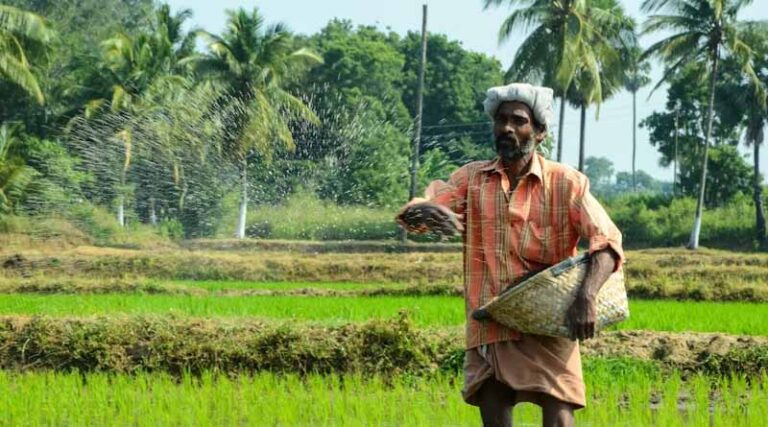
A significant policy correction in the Act is the explicit protection of agriculture. States are mandated to notify up to 60 days annually as peak agricultural seasons, during which no scheme works can be executed. This provision aims to ensure adequate labour availability during sowing and harvesting, addressing long-standing concerns of farmers regarding labour diversion.
Technology, Transparency, and Accountability
The VB–G RAM G Act introduces one of the most comprehensive transparency frameworks seen in a rural programme. Biometric attendance, geo-tagged works, mobile-based and dashboard monitoring, weekly public disclosures, and strengthened social audits by Gram Sabhas are now statutory requirements. Artificial Intelligence is envisaged for planning support, audit analytics, and fraud-risk mitigation.
Grievance redressal has been institutionalised with time-bound, multi-tier mechanisms at the Gram Panchayat, Block, and District levels, supported by digital escalation and independent ombudspersons.
Federal Design and Fiscal Commitment
The Act will operate as a Centrally Sponsored Scheme, with a 60:40 Centre–State funding pattern for most States, 90:10 for North-Eastern and Himalayan States, and 100% Central funding for Union Territories without legislatures. States exceeding their normative allocations will bear the additional financial burden.
As per the Financial Memorandum, the estimated annual outlay is ₹1.51 lakh crore, including a Central share of approximately ₹95,692 crore, underscoring the scale of the Government’s commitment to rural India.
Orderly Transition from MGNREGA
The repeal of MGNREGA comes with detailed savings and transitional provisions. All ongoing works, wage liabilities, job cards, muster rolls, assets, audits, and legal proceedings will continue seamlessly under the new Act, ensuring that workers face no disruption during the transition.
10 Key Updates in the VB–G RAM G Act, 2025
- 125 days of guaranteed wage employment per rural household annually, replacing the 100-day entitlement under MGNREGA.
- MGNREGA, 2005 formally repealed, with full protection for ongoing works, payments, and liabilities.
- Viksit Gram Panchayat Plans made mandatory as the sole source of work planning.
- Creation of the Viksit Bharat National Rural Infrastructure Stack to unify rural public investments.
- Four priority work domains: water security, core rural infrastructure, livelihood infrastructure, and extreme weather mitigation.
- Mandatory protection of peak agricultural seasons, with up to 60 no-work days notified by States each year.
- Statutory unemployment allowance if work is not provided within 15 days of demand.
- Technology-driven transparency, including biometrics, geo-tagging, real-time dashboards, and weekly public disclosures.
- New institutional architecture, with Central and State Gramin Rozgar Guarantee Councils and Steering Committees.
- Massive fiscal scale, with an estimated annual expenditure of ₹1.51 lakh crore to drive rural transformation.
Why the Act Matters
The VB–G RAM G Act, 2025 signals a philosophical and operational shift from employment as a relief measure to employment as a driver of durable rural assets, climate resilience, and livelihood diversification. Its success will ultimately depend on execution capacity at the Panchayat level, digital readiness of States, and the quality of convergence across schemes.
Also Read: BASF | Nunhems Launches Percyst Carrot Variety with Nematode Resistance for the U.S. Market
Global Agriculture is an independent international media platform covering agri-business, policy, technology, and sustainability. For editorial collaborations, thought leadership, and strategic communications, write to pr@global-agriculture.com