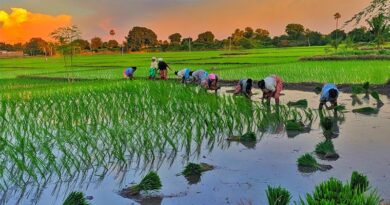
19 October 2026, New Delhi: India’s farm ministry has lowered its foodgrain production target for 2026-27 to 373.93 million tonnes, about 2.63 million tonnes below the previous year’s estimated output, as a patchy and below-normal monsoon combines with a strengthening El Nino to cut into the kharif harvest. Fresh state-level numbers out of Rajasthan this week illustrate how unevenly the damage is landing on the ground.
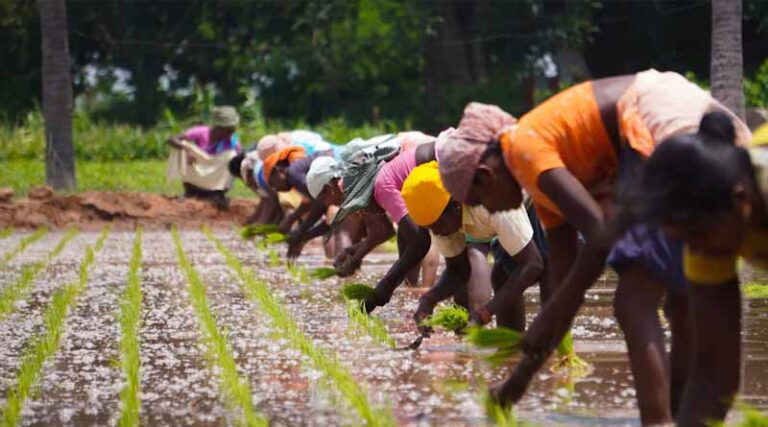
The Union Ministry of Agriculture and Farmers’ Welfare set the lower target with a rabi-season component of 177.72 million tonnes still to come. Nationally, the kharif sown area stood at 109.65 million hectares as of mid-September, down 1.6 million hectares on the year, with paddy accounting for most of the decline as Karnataka, Telangana and Andhra Pradesh each posted meaningful drops in rice acreage. Officials are now encouraging farmers in low-rainfall tracts to shift away from water-intensive paddy toward pulses and oilseeds, including planting pulses on fields left fallow after an aborted paddy season.
Behind the numbers is a weather pattern that has been building since late summer. The World Meteorological Organization says the current El Nino is firmly established in the tropical Pacific and is expected to persist through February 2027. India’s national rainfall deficit stood at about 12% in late September, an improvement from roughly 15% a week earlier, though that national figure masks far sharper local shortfalls.
The India Drought Monitor, maintained by IIT Gandhinagar, found that just over half the country’s land area was dry or in drought by mid-September, up sharply from under 40% a month earlier, and Maharashtra alone declared 265 of its 358 administrative blocks drought-hit. Union Agriculture Minister Shivraj Singh Chouhan told reporters in late September that there was “no major crisis,” describing the situation instead as “a problem in some areas.”
Rajasthan’s harvest is splitting in two directions
State agriculture department estimates released this week show just how unevenly that “problem in some areas” is playing out within a single state. In Rajasthan, bajra (pearl millet) output is projected to fall to about 4.94 million tonnes this kharif season from 5.37 million tonnes last year, as sown area shrank from 4.35 million hectares to 3.96 million hectares.
Guar, the cluster bean widely grown in the state’s arid west, is expected to decline to 1.79 million tonnes from 1.97 million tonnes on a similarly reduced area. Yet in the same season, groundnut production is set to rise to 2.82 million tonnes from 2.12 million tonnes, as farmers in better-watered pockets expanded plantings. A Jaipur-based guar trader, Ramotar Khandelwal, said roughly half the state faced a severe rainfall deficit this year, with parts of western Rajasthan receiving almost no rain at all. State officials cautioned that the figures remain provisional while mandi arrivals are still being tallied.
Global Agriculture is an independent international media platform covering agri-business, policy, technology, and sustainability. For editorial collaborations, thought leadership, and strategic communications, write to pr@global-agriculture.com