Sabanto Adds Autonomous Planting Support for Precision Planting’s Gen 3 20|20
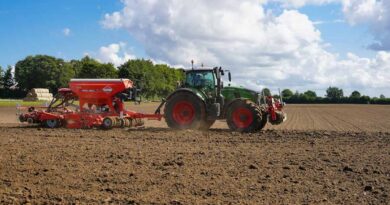
30 October 2026, Iowa, USA: Sabanto, an Ames, Iowa-based company that retrofits existing tractors with self-driving hardware and software, announced on October 29 that its autonomy system now works directly with Precision Planting’s Gen 3 20|20 planter monitor. The combination, the company says, lets growers run row-crop planters with no one in the cab and no separate crew needed to watch planting quality in real time.
Sabanto does not build its own tractors or planters. Instead, it sells a retrofit kit, sensors, computing hardware and software, that a grower bolts onto equipment already on the farm, turning it into a machine that can plant, till or spray without a human driver. Precision Planting’s 20|20 monitor is a widely used add-on in North American row-crop farming that tracks what a planter is actually doing row by row: seed spacing, population, downforce on each row unit and how closely the planted outcome matches the prescription the grower set. Until now, growers running Sabanto’s autonomous tractors needed a way to separately confirm that the planter itself, not just the tractor driving it, was working correctly. The new integration closes that gap by letting Sabanto’s software read the 20|20 data directly.
Two new pieces of software sit at the center of the announcement. The first, called the Vehicle Operating System, or vOS, runs on the autonomous tractor and continuously checks the row-by-row data coming from the 20|20 monitor against tolerances the grower has set in advance. If a row drifts outside that tolerance, for example if seed spacing becomes uneven or a row unit’s downforce falls out of range, vOS reacts automatically and flags the problem. The second piece, Vehicle Mission Control, or vMC, is the interface growers and, where needed, a remote operator use to set those tolerances and to supervise the fieldwork from outside the cab. If vMC flags an issue, a person watching remotely can check the underlying 20|20 data, work out what went wrong, make an adjustment, or call the tractor back to the edge of the field for a closer look. Precision Planting’s Panorama subscription service, which already lets growers view 20|20 data remotely, is also compatible with the new setup.
Why Catching Planting Errors Matters
Autonomous steering, the ability of a tractor to drive itself across a field, has existed in various forms for years. The harder problem in unmanned planting has been catching the kind of on-the-go errors, skipped seeds, poor seed-to-soil contact, inconsistent spacing, that a human operator would normally notice by watching a monitor in the cab. Left uncorrected, those errors can cost yield well before harvest, since a planter that drifts out of calibration for even part of a field can leave uneven stands that never fully recover. By building on top of an existing, already-trusted monitor rather than developing its own planter-sensing hardware from scratch, Sabanto is betting that growers already comfortable with Precision Planting’s data will trust the same data to run a planter with nobody watching it in person.
Craig Rupp, Sabanto’s founder and chief executive, said the technical work of making a tractor steer itself was never the hardest part of the problem. The harder barrier, in his telling, has been earning growers’ confidence that an unattended machine would actually get the job done correctly. Quint Pottinger, a Kentucky grain farmer who has used Sabanto’s equipment since earlier this year to autonomously plant his own corn crop, is quoted in the announcement crediting the technology with freeing up money, time and attention that he has been able to redirect elsewhere on his operation.
Sabanto says support for the Precision Planting Gen 3 20|20 integration is planned for the 2027 spring planting season. The company has not released pricing, specific cost-savings figures or acreage targets tied to the new feature. It does say, without quantifying the claim, that building on existing, already-owned monitoring hardware rather than requiring growers to buy a separate proprietary system lowers the capital cost of going autonomous. The company also states explicitly that it is not affiliated with or endorsed by Precision Planting or AGCO, Precision Planting’s parent company; the link between the two systems is a software compatibility layer built by Sabanto.
The announcement follows an oversubscribed Series B funding round Sabanto closed earlier in 2026, led by Leaps by Bayer, Bayer’s venture investment arm, which the company has said it will use to scale its retrofit autonomy business across more of the row-crop belt.
Also Read: India Tops $4.39 Billion Emerging-Market AgTech Funding
Global Agriculture is an independent international media platform covering agri-business, policy, technology, and sustainability. For editorial collaborations, thought leadership, and strategic communications, write to pr@global-agriculture.com